For watching rugby in a bright living room, first check how the specific model handles direct light and reflections. Motion handling also matters when the action is fast. Mini LED LCD and OLED TVs could both be suitable, but the panel type, peak brightness and advertised gaming refresh rate alone won’t tell you how well a rugby broadcast will look. If you have several viewing positions, you’ll also want to consider viewing angles and choose a screen size that suits the layout of your room.
Who this guide is for
Rugby fans with a window opposite
If you watch during the day and can see windows or lights reflected on the screen, reflection handling and visibility in ambient light are important things to check. RTINGS.com notes that TVs reflect light in bright rooms.
Fans of fast-paced action
If you follow the ball, players and camera pans, check motion handling with sports or TV content rather than relying on an advertised gaming refresh rate alone. RTINGS.com describes response time as one factor affecting motion blur and ghosting.
Hosting a rugby get-together
If guests will be watching from several seats, compare the specific model’s viewing angles with your seating arrangement and screen size. RTINGS.com notes that a wide viewing angle is useful when watching sport together.
What to look for when buying
Rank your criteria according to what matters most in your room: direct light, fast-paced action, seats off to the side, the right screen size or energy consumption.
| What matters |
What to check when buying |
Who it matters most to |
| Reflections and daylight |
Compare the position of your windows with model-specific tests for reflections and brightness. |
If you watch during the day with a window opposite, you’ll want to minimise how much ambient light obscures the game. Around 29% of consumers put reflection handling and daylight visibility first. |
| Clarity in motion |
Check the specific model’s motion handling and response time with sports or TV content. |
If fast runs and camera pans matter most to you, focus on how the picture looks in motion rather than gaming specifications alone. Around 23% of consumers prioritise how fast-paced action is displayed. |
| Seats off to the side |
Look at viewing-angle tests and take the furthest seats in the room into account. |
If you watch with guests, you’ll want the picture to look good from seats off to the side too. Around 18% of consumers prioritise viewing angles for group viewing. |
| The right screen size |
Check that the space available, viewing distance, TV dimensions and energy consumption suit the size you’re considering. |
If you’re choosing a TV for a particular spot in your living room, the screen size needs to work with your seating arrangement and available space. Around 18% of consumers put the right size and placement first. |
| Energy consumption |
Compare the SDR and HDR figures in kWh per 1,000 hours for the specific model and size. |
If your TV is on frequently, you’ll want to estimate its energy use alongside your viewing hours and electricity tariff. Around 12% of consumers prioritise energy consumption. |
Common buying misconceptions
-
Assuming HDR peak brightness or an ‘anti-glare’ claim tells you everything about daytime viewing
Brightness and reflection handling are different things. Even a bright screen can reflect a window opposite.
Compare both features for the specific model and consider where you plan to put the TV.
-
Assuming gaming refresh rates mean better rugby broadcasts
A single gaming specification doesn’t tell you how pixel response and motion processing work together with sports or TV content.
Look for model-specific motion tests using sport or TV content.
-
Assuming similarly named models are the same version without checking
TCL lists the 65Q8C’s native refresh rate as 144 Hz, while a Joybuy listing gives 120 Hz. The figures don’t match.
Check the model name and key specifications in the specific listing before comparing versions.
-
Looking only at the energy efficiency class
The energy label shows consumption for SDR and HDR, and screen size also matters when comparing TVs.
Compare the energy figures in kWh per 1,000 hours for the specific models and sizes you’re considering.
Key brands at a glance
Samsung
The German Neo QLED QN90F and OLED S99H ranges take different approaches to TVs for bright rooms.
- Samsung advertises its Glare Free feature on the GQ65QN90FATXZG. HIFI.DE gives the S99H a positive review for bright rooms.
- This doesn’t prove that the two models handle reflections in the same way. Claims of up to 165 Hz relate specifically to gaming.
TCL
The German 65Q8C is a QD Mini LED model for buyers comparing large screens and local dimming features.
- TCL lists the 65Q8C’s native refresh rate as 144 Hz and advertises its brightness and dimming.
- These are manufacturer specifications, not independent tests of rugby broadcasts. Bear in mind the different 120 Hz figure in a Joybuy listing when comparing models.
Hisense
The German 65U8Q is a Mini LED model for which Hisense advertises an anti-reflection feature.
- Hisense lists Anti-Reflection PRO and a 165 Hz gaming feature.
- These specifications don’t independently confirm how the model will perform in your living room or with a rugby broadcast.
LG
The OLED65G56LS is an OLED option that’s also worth considering beyond the specific scenario of watching in daylight.
- LG advertises Brightness Booster Ultimate and lists up to 4K at 165 Hz for gaming.
- These specifications don’t tell you how well it handles reflections in your room or the frame rate of a TV broadcast.
Sony
BRAVIA 5 is another Mini LED range to consider when comparing picture processing and connections.
- Sony lists Mini LED, Local Dimming and 120 Hz for the K-65XR5.
- The specifications don’t list X-Anti Reflection as a feature. If your bright room has direct window reflections, check the TV’s suitability separately.
Joybuy TVs for rugby in a bright living room
This selection includes TVs in different sizes and with different display types. Compare each screen size with your viewing distance and available space. Advertised features are no substitute for checking the lighting and seating in your room.
 No image available
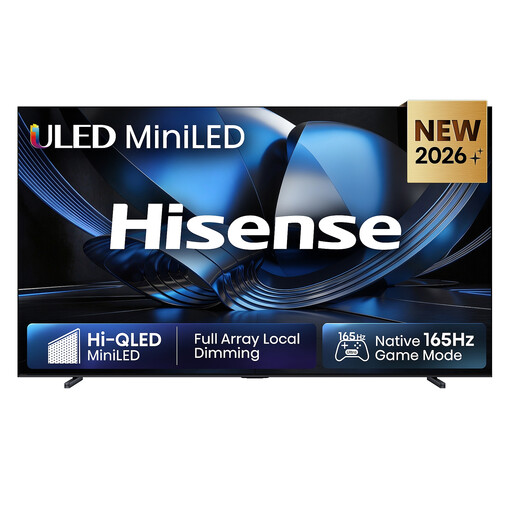
Hisense 100U7DSE, 100-inch ULED Mini LED 4K Smart TV
A 100-inch screen is only worth considering if you have enough space and the viewing distance suits your living room.
The product name and details specify a 100-inch screen, 4K and Mini LED.
View at Joybuy
 No image available
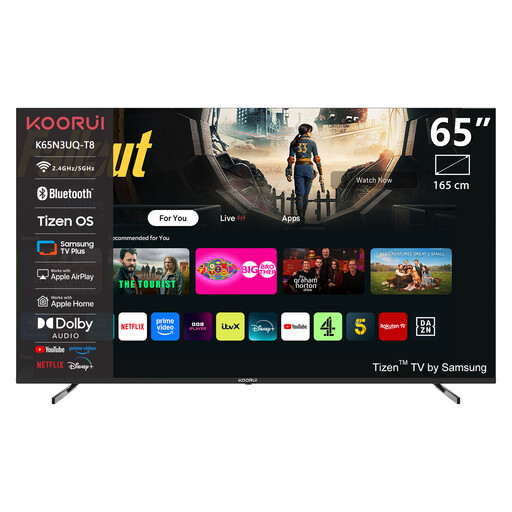
KOORUI K65N3UQ-T8, 65-inch 4K UHD QLED Smart TV
Compare the 65-inch screen size with your seating, viewing distance and available space.
The product name lists a 65-inch screen, 4K UHD and QLED.
View at Joybuy
 No image available
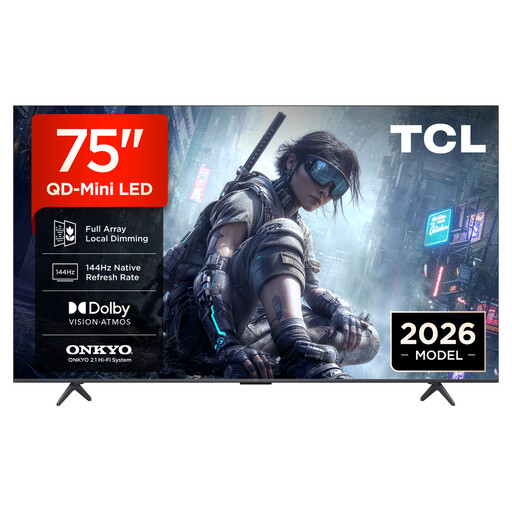
TCL 75T8D, 75-inch QLED TV with QD Mini LED
Check that a 75-inch screen suits your seating arrangement and the space available.
The product name lists a 75-inch screen, QD Mini LED and 4K. It also lists 144 Hz VRR.
View at Joybuy
 No image available
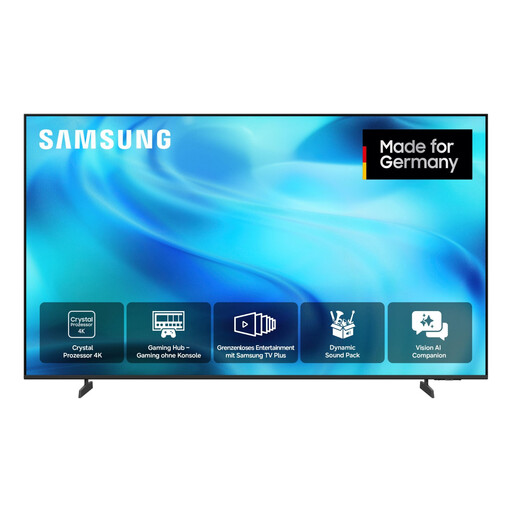
Samsung GU65U8079H Crystal UHD U8079H, 65-inch 4K Smart TV
Compare the 65-inch screen size with the viewing distance and seating in your living room.
The product name lists a 65-inch screen and UHD 4K.
View at Joybuy
 No image available
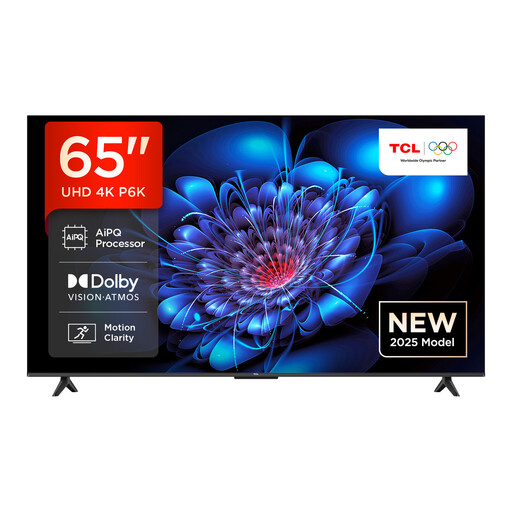
TCL 65P6K, 65-inch Direct LED TV, 4K HDR
If you’ll be using several seats, check that the specific model’s viewing angle suits your seating arrangement.
The product name lists a 65-inch screen, Direct LED and 4K HDR.
View at Joybuy
Frequently asked questions
Is a particularly high advertised refresh rate enough for rugby?
No. A high gaming refresh rate alone doesn’t prove that motion will look good during rugby. Check how the specific TV displays sports or TV content.
What should I check before setting up or connecting my TV?
First, plan where the TV will go and where people will sit, so you can account for window reflections and make sure guests have a clear view. Check which connections your existing devices need; the Verbraucherzentrale describes HDMI as an important connection for modern external video sources.
How do I compare energy consumption?
Compare the SDR and HDR figures in kWh per 1,000 hours on the EU energy label for the exact screen size. To estimate your own costs, you’ll also need your viewing hours and electricity tariff.
What energy labelling applies when buying a TV online?
TVs covered by EU regulations must carry an energy label, which must also be visible when sold online. The label doesn’t tell you which efficiency class to choose.
Are statutory consumer rights and a manufacturer’s warranty the same thing?
No. If a product is faulty, your statutory consumer rights apply against the seller. A warranty is a voluntary offer and is subject to its own terms and conditions.


