What should you look for when buying?
First, compare how easy the screen is to see in your room’s lighting. Then assess picture quality, seating positions and energy use. RTINGS.com distinguishes SDR brightness from reflected light, while the consumer advice centre also highlights viewing distance and angle when considering screen size.
| Priority |
What to check when buying |
Who it matters to |
| Visibility in daylight |
Check SDR brightness and reflection handling separately, and take the position of your windows into account. |
If I watch during the day, I don’t want light sources to wash out dark documentary scenes. Around 36% of consumers are likely to put daytime visibility first. |
| Detail and contrast |
Compare bright and dark scenes on each model in similar lighting. Don’t treat manufacturer claims as independent measurements. |
If fine textures and transitions between bright and dark footage matter to me, I want to assess both. Around 29% of consumers are likely to share this priority. |
| Screen size and multiple seats |
Measure your viewing distance, available space and the position of the furthest seat to the side. Check the specific TV from an angle, too. |
If several people watch from the sofa, the screen size should suit the viewing distance and the picture should remain clear from the side. Around 21% of consumers are likely to consider seating positions and screen size first. |
| Energy use and access to documentaries |
Compare SDR and HDR consumption on the EU energy label, and check that the TV platform supports the streaming service you want to use. |
If power consumption and access to my documentaries matter to me, I check the energy label and app support for the exact model. Around 14% of consumers are likely to make this their priority. |
Joybuy models for a big 4K picture
The models below feature large 4K screens and Mini LED or Micro RGB specifications. In a bright living room, reflection handling, viewing distance and the features of each model remain important points to check.
 No image available
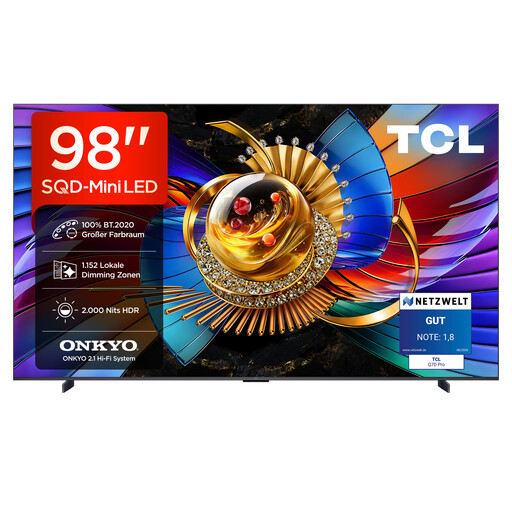
TCL 98Q7D PRO, 98-inch
The listed Anti-Reflection features make it worth checking the screen surface and SDR visibility on the specific TV in similar room lighting.
The product name lists 4K SQD-Mini LED, 1,152 local dimming zones, 2,000 nits HDR, 144 Hz, Dolby Vision IQ and Dolby Atmos. The stated dimensions are 2.18 × 1.29 × 0.42 m, and the listed weight is 54.5 kg.
View at Joybuy
 No image available
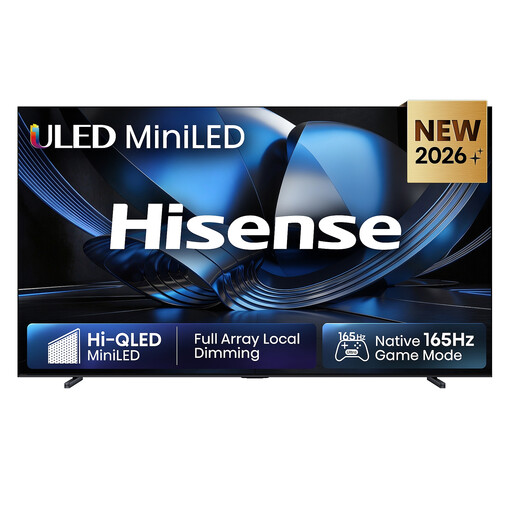
Hisense 100U7DSE, 100-inch
With its 100-inch screen, this is a large-format option. Before choosing it, check that the viewing distance, available space and viewing angle work for your room.
The product specifications list ULED Mini LED, 4K, 165 Hz, Dolby Atmos and VIDAA Smart OS, as well as automatic brightness control. The energy label lists class F for SDR and G for HDR.
View at Joybuy
 No image available
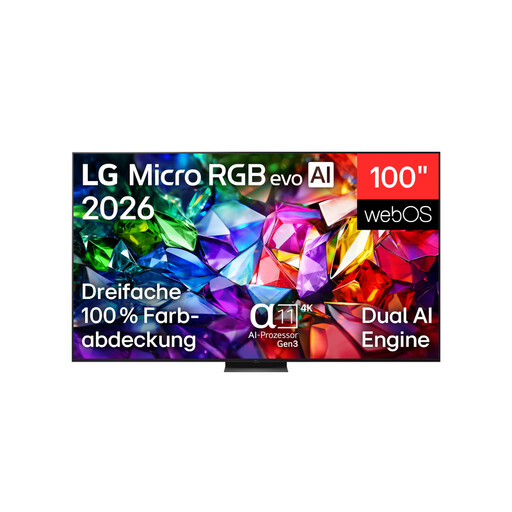
LG 100MRGB96B9.AEU, 100-inch
With a 100-inch screen, you’ll need enough space and a suitable viewing distance. The recommended viewing distance for this model is around 2.5 to 4 m.
The specifications list 4K Micro RGB evo, AI Brightness Control, Dolby Vision and 144 Hz. According to the product details, it weighs 67.3 kg; installation by a qualified professional is recommended for wall mounting.
View at Joybuy
 No image available
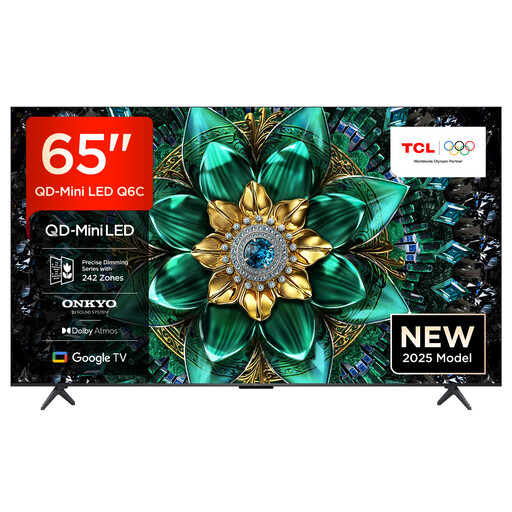
TCL 65Q6C, 65-inch
The product description lists a matte HVA panel and a wide viewing angle. Check the picture from your side seats and see how the screen handles reflections in your room’s lighting.
Features listed include QLED Mini LED, 4K, HDR Premium, Dolby Vision IQ and 144 Hz.
View at Joybuy
 No image available
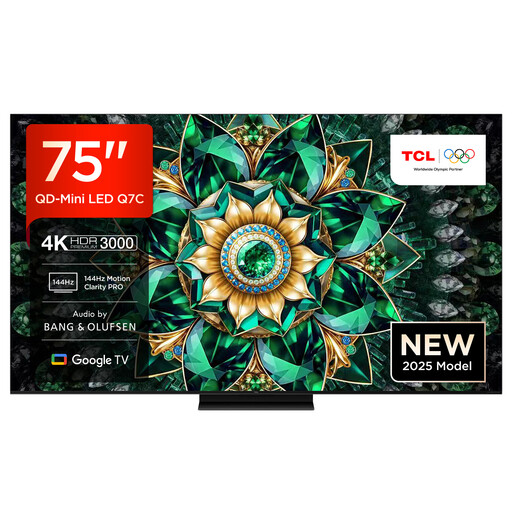
TCL 75Q7C, 75-inch
If you compare bright and dark areas of the picture, you can assess the listed local dimming feature on the specific model using suitable scenes.
The specifications list QLED Mini LED, 4K HDR Premium, Dolby Vision IQ and 144 Hz VRR.
View at Joybuy
Frequently asked questions
Is “4K” enough for watching science documentaries?
No. Resolution alone doesn’t tell you how the screen handles reflections or how bright it is in SDR. Also check the resolution of the source you actually use, and choose a screen size to suit your viewing distance and the quality of the source.
How do I choose the right screen size and position?
Measure your viewing distance and available space, then check the lighting and the view from the seat furthest to the side. The consumer advice centre lists distance and source quality as factors. There’s no one screen size that suits every living room.
How can I watch documentaries on the ARD Mediathek on my TV?
Check that the TV’s specific platform supports it. According to ARD Help, HbbTV requires a TV that is internet-connected and HbbTV-enabled. ARD also describes compatible additional devices and other ways to watch.
Which energy figures should I compare when buying a TV?
Compare the SDR and HDR figures on the EU energy label for the specific model. The European Commission explains energy labelling for electronic displays. It’s a labelling requirement for products covered by the rules, not a requirement to buy a particular efficiency class.
What are my rights if a product is faulty or I buy online?
In Germany, your statutory consumer rights against the seller are separate from a voluntary manufacturer’s warranty. According to the consumer advice centre, online purchases usually come with a 14-day right to cancel. The conditions of your specific purchase will apply.


