
Lieferung heute & morgen

Qualitätsgarantie

Willkommens-Angebote freischalten: KOSTENLOSE Lieferung | Bis zu 80 % RABATT | Kostenlose 30-Tage-JoyPlus-Testphase
App herunterladen
Choosing a new TV stand can be a challenge. It not only needs to complement your television but also blend harmoniously into your living space, offer ample storage, and conceal the inevitable cable clutter. The sheer volume of designs, materials, and features can often make the decision complicated.
As your Joybuy Product Recommendation Officer, my role is to provide you with clear, objective information. This guide is designed to help you understand the options and find a TV unit that meets both your functional requirements and aesthetic preferences.
Three key aspects will help you narrow down your choices and identify the right piece of furniture for your home.
Proportions are crucial for a cohesive look. A stand that's too small can make a large TV look unstable and top-heavy, while an oversized model can overwhelm the room.
A basic rule of thumb: the TV unit should be at least 10–20 cm wider than the television on each side. For a 65-inch TV, which is about 145 cm wide, a 150 cm TV stand or wider is a suitable choice. Before buying, carefully measure both your TV and the available wall space. The height of the stand should be chosen so that the center of the screen is at eye level when you're sitting on the sofa—this typically means a furniture height between 40 and 55 cm.
A modern entertainment center needs to do more than just hold the TV. Consider which devices you need to accommodate. Gaming consoles, receivers, soundbars, and accessories all require adequate space.
A modern TV cabinet often offers a thoughtful combination of open shelves for devices that need ventilation and closed drawers or doors for accessories, games, and DVDs. A unit with storage ensures a tidy appearance. Models with integrated cable cutouts on the back panel are essential for keeping things organized. A lowboard with LED lighting can also create a pleasant, indirect ambiance in the room and visually enhance the media experience.
The design of the lowboard should complement your interior decor. The choice of material and color has a significant impact on the room's overall feel.
Based on functionality, design, and material, we have compiled a selection of models that meet different requirements.

Why it stands out: This model is specifically tailored to the needs of gamers and media enthusiasts. The integrated RGB LED lighting, featuring 7 colors and 22 dynamic modes controllable via remote, creates an immersive atmosphere. With a width of 140 cm, it's designed for TVs up to 65 inches and includes a dedicated compartment for consoles like the PS5.
Pros:
Who is it for? For users seeking a functional, modern entertainment center with tech features like customizable LED lighting, who also value organized storage for their gaming hardware.
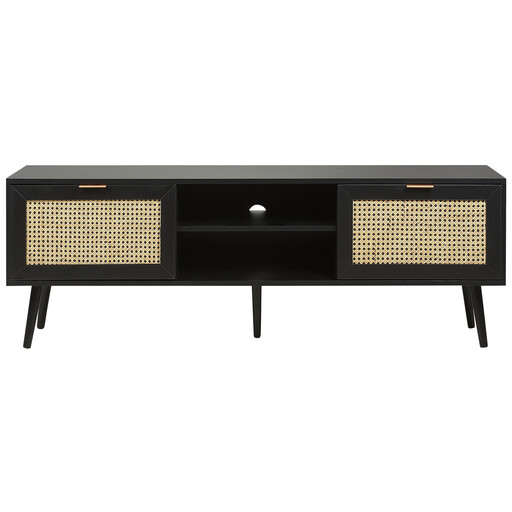
Why it stands out: The OPOCO lowboard combines a black frame with rattan cane webbing fronts and elegant gold handles. This mix of materials makes it an eye-catcher that fits well with modern, boho, or Japandi interior styles. With a width of 150 cm, it is ideal for 65-inch TVs.
Pros:
Who is it for? For style-conscious individuals looking for a piece of furniture with character. It's an excellent choice for anyone wanting to combine functionality with an exceptional design that radiates warmth and elegance.
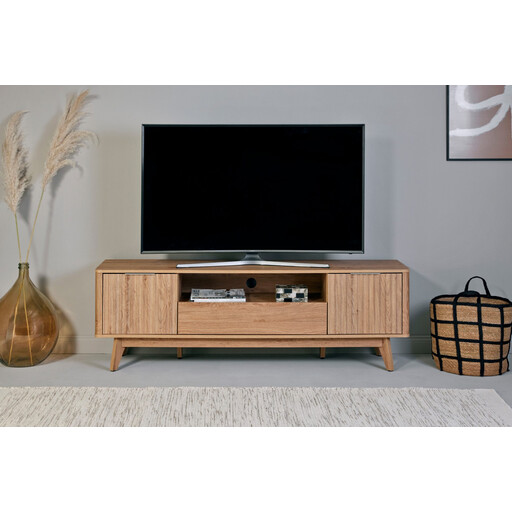
Why it stands out: With a generous width of almost 170 cm, the WAVE model from Jahnke offers plenty of space for large TVs and extensive accessories. The design, in a wood-effect TV table finish (Montana Oak) with rounded corners and subtle aluminum handles, gives it a high-quality, timeless retro-style appeal.
Pros:
Who is it for? For families and users with large TVs who are looking for a durable and spacious storage solution. Its classic yet modern design complements many interior styles.
The models featured here cover common requirements, but every living space is unique. Sometimes, the room's layout calls for a special solution.
Perhaps a corner model is the perfect solution for your space. Explore our selection of traditional corner TV stands to find more options.
The ideal height depends on your seating height. As a rule of thumb, the center of the TV screen should be at eye level when you are sitting comfortably. For most living room sofas, this means a stand height between 40 cm and 55 cm.
For a balanced look, the stand should extend at least 10 to 20 cm beyond the TV on each side. For a 65-inch TV with a device width of about 145 cm, a 150 cm TV stand or wider is recommended. This provides visual stability and offers additional surface area.
The main difference lies in their height and primary purpose. A TV lowboard, as the name suggests, is low (typically under 60 cm high) and specifically designed to house media equipment. A sideboard is generally taller and serves as a general-purpose storage unit, often used in dining or living rooms for dishes, books, or other items.