
Lieferung heute & morgen

Qualitätsgarantie

Willkommens-Angebote freischalten: KOSTENLOSE Lieferung | Bis zu 80 % RABATT | Kostenlose 30-Tage-JoyPlus-Testphase
App herunterladen
Getting a new television is often the first step in redesigning a living space. But the search for the right TV stand can quickly become complicated. The market is filled with options whose true quality only becomes apparent after the purchase. Many buyers face problems that could have easily been avoided during the selection process.
This guide focuses on the crucial criteria that will help you make an informed decision. We'll highlight three common pitfalls and show you what to look for to find a functional and durable piece of furniture.
The 3 Most Common Mistakes When Buying a TV Stand:
To avoid these mistakes, you should focus on three objective parameters. These will help you separate the good from the bad and choose a piece of furniture that excels in both aesthetics and functionality.
The durability of a TV stand is directly linked to its material and construction. Pay close attention to the specified maximum load capacity. It should safely support the weight of your TV and any additional devices (games console, soundbar).
A clearly stated load capacity is an indicator of thoughtful product design.
The right size is crucial for a balanced look and the safety of your device. A basic rule of thumb is that the TV stand should be at least 10 cm wider than the television on each side.
Before buying, be sure to accurately measure not only your TV but also the intended space in the room.
Modern TV stands offer more than just a surface to place things on. Consider which features are relevant to you.
Here are some product suggestions tailored to different needs and living situations.
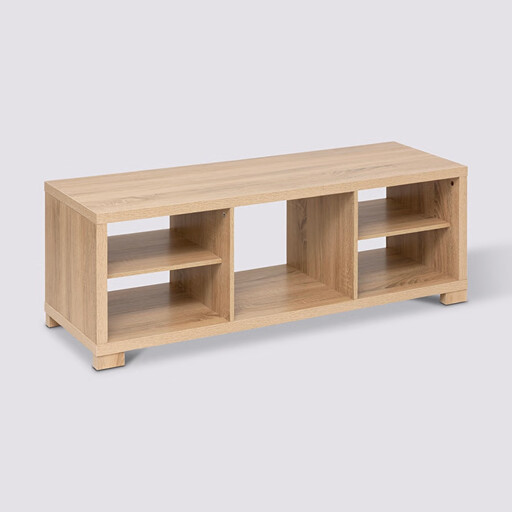
Why This Fits Their Persona: Ideal for a first apartment or for users looking for a straightforward, functional base without a large financial investment. The design is simple and focuses on core functionality.
The clearly defined maximum load capacity of 60 kg prevents the common pitfall of a sagging surface. The MDF construction is designed for stability.
Solid core functionality with a high load capacity and open shelves for easy access to devices.
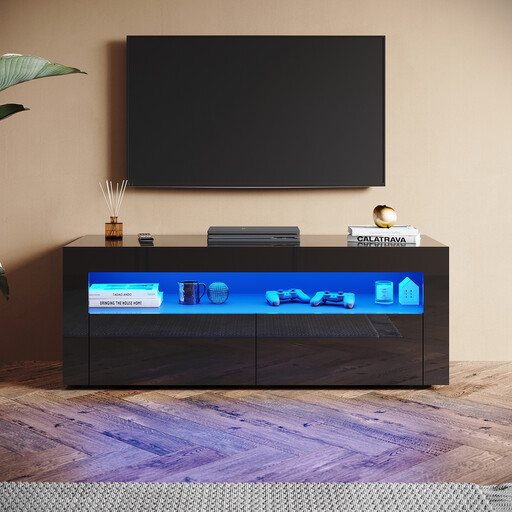
Why This Fits Their Persona: Perfect for anyone wanting to upgrade their living room with a contemporary, tech-savvy piece of furniture. The high-gloss look and integrated LED lighting are key design elements.
This model combines design with function. With a drawer and open glass shelves, it offers thoughtful storage, thus avoiding the trap of being purely decorative but impractical.
A combination of a high-gloss finish, atmospheric LED lighting in 16 colours, and practical storage space.
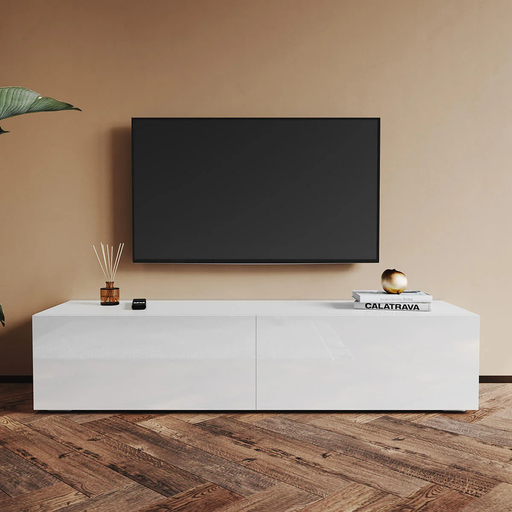
Why This Fits Their Persona: For those in smaller spaces or lovers of a clean, floating design. This wall-mounted lowboard maximises the perceived room size and creates a crisp, modern line.
Wall mounting bypasses issues with wobbly feet or instability on uneven floors from the outset. It requires a solid installation, resulting in a permanently secure solution.
Space-saving, floating design for a minimalist aesthetic. The floor remains clear, which makes cleaning significantly easier.
We have compiled a complete, real-time list of products that fully satisfy these strict selection criteria and UK safety regulations.
As a rule of thumb, the TV stand should extend at least 10 cm beyond the television on each side. This not only ensures a balanced look but also provides a stable base for the device if it's not wall-mounted. Measure the width of your TV and add at least 20 cm to determine the ideal minimum width for your TV stand.
The maximum load capacity, specified in kilograms (kg), indicates the maximum weight that the top surface of the unit can safely and permanently support. It's crucial to know the weight of your TV and ensure it is below this limit. Also, consider the weight of any additional devices you plan to place on the unit, such as soundbars or games consoles.
A mobile TV stand offers maximum flexibility. Thanks to its wheels, it can be easily moved around the room and is ideal if the TV will be viewed from different angles or if there isn't enough space for a wide lowboard. However, unlike a TV cabinet or lowboard, it typically offers little to no storage space for accessories. It is a functional solution that prioritises screen placement.