
Lieferung heute & morgen

Qualitätsgarantie

Willkommens-Angebote freischalten: KOSTENLOSE Lieferung | Bis zu 80 % RABATT | Kostenlose 30-Tage-JoyPlus-Testphase
App herunterladen
A TV stand can position your television flexibly in the room, keep cables organised or provide additional storage. The choice may seem straightforward at first, but some specifications are often overlooked when buying. The right model should not only complement your living room visually, but also be compatible with your screen size, mounting method and available floor space.
The specification “26 to 55 inches” or “50 to 90 inches” initially describes the intended screen range. However, it does not automatically mean that every television can be mounted mechanically. The following factors are also important:
A television may fall within the stated inch range and still have an incompatible VESA pattern. For this reason, you should compare the television’s technical specifications with those of the mount before buying.
Depending on its design, a freestanding TV stand may rest on feet, a base plate or castors. Its stability can vary on uneven parquet flooring, delicate floors or deep-pile carpets. On a mobile TV stand, the castor locks are also important. They can limit movement during everyday use, but they do not replace careful assembly or compliance with the maximum load.
With a TV wall mount, the type of wall and the appropriate fixing materials are also important. Concrete, solid brick, plasterboard and lightweight walls require different solutions. Wall plugs and screws should be suitable for both the wall and the intended load.
A TV unit or TV lowboard needs to offer enough space for a receiver, games consoles, soundbar and cables. Closed compartments can provide some protection from dust, but they may restrict ventilation. Before buying, you should therefore check:
For a TV stand for 26 to 55 inches, the stated screen range should match your model. For larger televisions, TV stands for 50–90 inches may be suitable. Screen size is measured diagonally and does not indicate the actual width. You should therefore also take the television’s footprint into account.
The VESA pattern is usually specified as the distance between the mounting holes in millimetres, for example horizontally and vertically. This information is often found in the television’s instruction manual or technical data sheet. In addition, the weight of the device must not exceed the mount’s permitted load.
The ideal height depends on your seating position, room layout and screen size. For comfortable viewing, the centre of the screen should be roughly at eye level when you are sitting in your usual position. A TV base stand with adjustable height allows the screen to be adapted more easily to different pieces of furniture or seating areas.
A swivel or tilt mechanism is useful if the television is not positioned directly opposite the sofa. You should check that the desired range of movement actually suits your room layout. A fixed construction may be the better choice if the television will remain in the same place permanently.
Metal constructions can offer a clean, streamlined look, while TV furniture made from MDF or wood-based materials integrates the television more closely into your interior. Clear information about dimensions, materials, assembly and cleaning is important.
Furniture should be placed on a level surface. Screw connections must be tightened according to the assembly instructions and checked after the first period of use. A TV cabinet with storage should not be overloaded, particularly where drawers, shelves or feet are designed to support only specific loads.
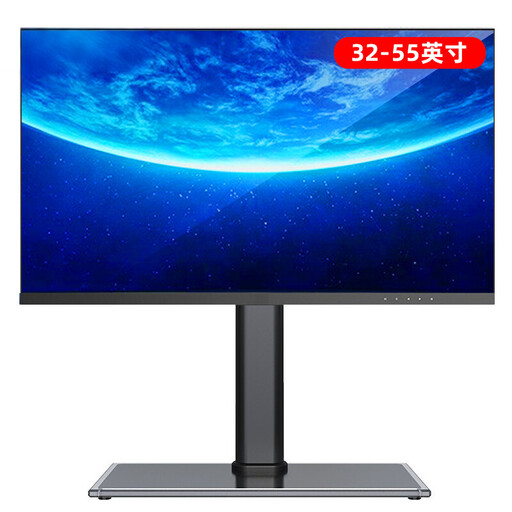
Why this product suits this profile: The combination of a fixed mount and TV base is intended for households that want to position a television measuring between 26 and 55 inches and do not need a mobile solution. You should check the VESA pattern and load capacity against your own device before buying.
The fixed design avoids unnecessary castors or swivel functions when the television is intended to remain in one place. The relevant screen range is clearly specified.
Intended for screens measuring 26 to 55 inches; fixed TV mount with TV base in one product combination.
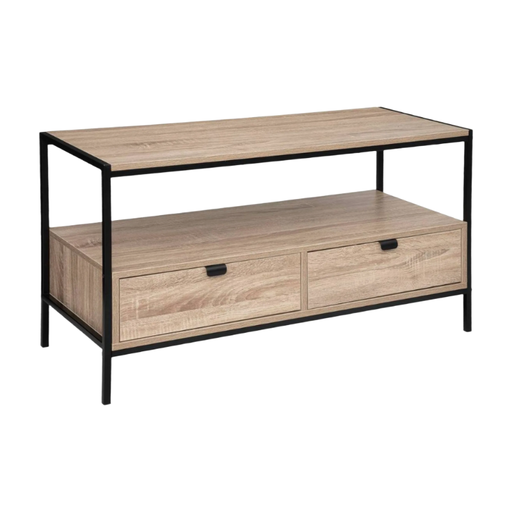
Why this product suits this profile: This TV unit is aimed at people who want to combine their television with storage and a homely surface. According to the product information, it is made from MDF with a natural oak-effect finish and iron legs.
The stated dimensions make it easier to check the available floor space: 100 × 40 × 54 cm. This lets you confirm in advance whether the unit will fit in the intended area.
One drawer, one open compartment, an MDF body, 12 cm-high iron legs and stated external dimensions of 100 × 40 × 54 cm.
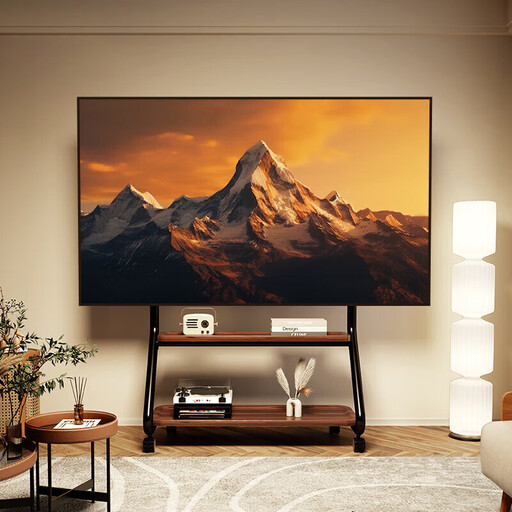
Why this product suits this profile: The mobile TV stand is designed for larger screens measuring between 50 and 90 inches. It is suitable for households where the television needs to be positioned flexibly depending on how it is being used or on the room layout.
The stated size prevents a model designed for smaller televisions from being used inappropriately. Before use, you should check the VESA pattern, load capacity and how the mobility function works.
Mobile TV stand for 50 to 90 inches; a product type designed for positioning larger televisions flexibly.
We have put together a complete, regularly updated list of products that fully meet these strict selection criteria and the safety regulations applicable in the EU.
The TV stand should be suitable for your television’s screen size and weight. The footprint must also be wide and deep enough. With a mount, the VESA pattern and load capacity are more important than the inch specification alone.
That depends on your living situation. A TV stand or freestanding TV stand can usually be set up without drilling into the wall and, if suitably designed, moved to another position. A TV wall mount saves floor space, but requires a suitable wall, the correct fixing materials and precise installation.
Its service life depends on the materials, construction quality, load, assembly and surroundings. If the stated load capacity is observed and the screw connections and base surfaces are checked regularly, typical sources of wear can be identified early. With a TV cabinet offering storage, shelves and drawers should not be loaded beyond their intended limits.