
Lieferung heute & morgen

Qualitätsgarantie

Willkommens-Angebote freischalten: KOSTENLOSE Lieferung | Bis zu 80 % RABATT | Kostenlose 30-Tage-JoyPlus-Testphase
App herunterladen
A TV stand with LED lighting can be the centrepiece of a modern living room or gaming room. It combines functionality with atmosphere. But the market is flooded with models of widely varying quality. Many buyers only realise after assembly that the high-gloss finish is delicate, the storage space is impractical, or the lighting doesn't live up to its promises.
This guide will help you spot common pitfalls and make an informed decision. We focus on the objective criteria that separate a great piece of furniture from an unsuitable one.
Before you choose a model, you should be aware of these three common problems that often only become apparent during everyday use:
To avoid these mistakes, you should base your selection on three core parameters. These are crucial in determining the durability and practical utility of your new TV stand.
The choice of material is critical for stability and ease of care. Most TV stands in this segment are made from engineered wood products.
When it comes to the finish, the distinction between lacquer and foil is important. A high-gloss white lowboard or a high-gloss black TV stand with a genuine lacquer finish is generally more durable and visually superior to a foil-coated version, which can be more prone to scratches and peeling.
The proportions have to be right. As a rule of thumb, the TV stand should be at least 10–15 cm wider than the television on each side. This creates a harmonious look and provides additional stability.
A well-designed sideboard with lighting offers more than just a surface to place things on. Consider which devices you want to accommodate.
Here are some recommendations tailored to different user profiles that take the above criteria into account.

Why This Fits Their Persona: This model is specifically tailored to the needs of gamers. It offers a dedicated compartment for consoles like the PS5, ensuring adequate ventilation, and a versatile RGB LED system to create the right atmosphere.
It solves the problem of impractical storage with a well-thought-out layout featuring open compartments and adjustable shelves. Discreet cable openings at the back ensure a tidy setup.
The LED system offers 7 colours and 22 dynamic modes via remote control. According to the manufacturer, the top panel has a high load capacity of up to 72 kg.
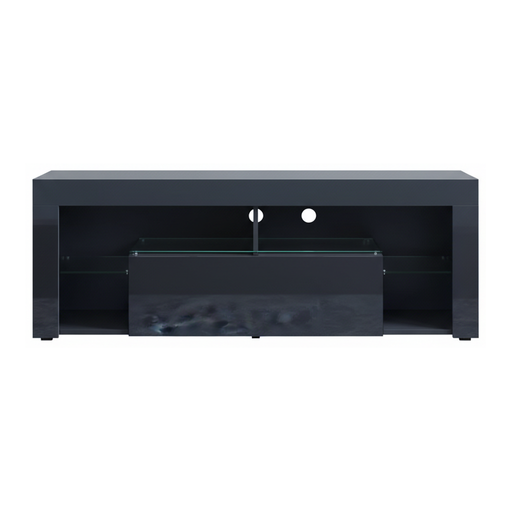
Why This Fits Their Persona: For those who prefer an extremely clean and minimalist aesthetic. The handleless design and continuous high-gloss front with a flap door conceal all devices and cables, creating a calm, uncluttered atmosphere.
The closed front solves the problem of visible cable and device clutter. The construction from MFC and MDF promises a solid base for the high-gloss finish.
The handleless design with a flap door ensures a flawless look. The 12-colour LED lighting is discreetly integrated under the glass shelf, creating indirect ambient light.
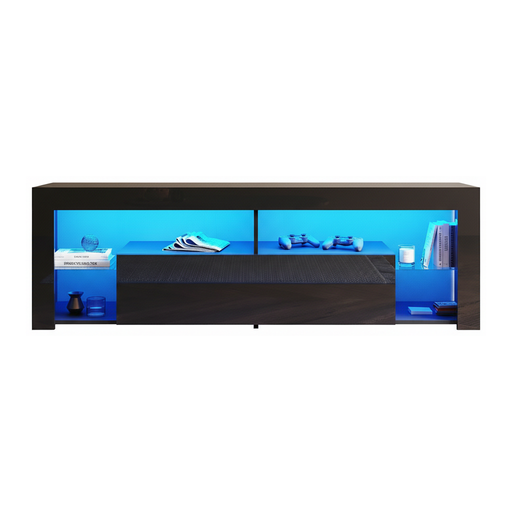
Why This Fits Their Persona: Ideal for owners of large TVs who need a stable and wide base. The combination of a drawer and open compartments offers flexible storage for various media devices and accessories.
With a width of 160 cm, this lowboard provides a secure surface even for 65-inch TVs, thus avoiding the risk of instability. The mix of open and closed storage is practical for everyday use.
The generous width and clear suitability for large TV sets are the main advantages. The 16-colour LED system and high-gloss fronts offer a modern aesthetic.
We have compiled a complete, up-to-date list of products that fully meet these strict selection criteria and safety regulations.
For cleaning, use only a soft, lint-free cloth (e.g., microfibre) that is slightly damp. Wipe without applying strong pressure. Absolutely avoid abrasive cleaners, harsh chemicals, or dry, rough cloths, as these can permanently damage the surface.
Most TV stands are delivered for self-assembly. The effort required varies depending on the model and its complexity. As a rule, plan for 1.5 to 2.5 hours and, ideally, assemble it with a second person. Detailed instructions and the necessary hardware are usually included. Place a blanket underneath during assembly to prevent scratches on the furniture and the floor.
No, the power consumption of LED systems in furniture is typically very low. LEDs are known for their high energy efficiency. Consumption is usually in the range of a few watts, so the lighting can be operated for extended periods without a noticeable impact on your electricity bill.