When watching tennis during the day, start by checking how a specific model handles reflections from windows and bright room lighting; a high brightness rating alone won’t tell you that. For fast rallies, motion handling and the signal you’re actually watching matter too. If several people are sitting to the sides, viewing angle is also important – neither OLED nor Mini LED is automatically the right choice regardless of the model or room.
Which features are useful for different viewers?
Tennis fans watching in daylight
If you mostly watch during the day and can see windows or lamps reflected on the screen, look at how well the TV handles reflections and performs in a bright room rather than focusing only on its peak brightness rating. RTINGS points out that TVs reflect light; its recommendations for bright rooms are based on specific models it has tested.
Fans of fast rallies
If blurry movement bothers you, assess rallies and camera pans using sports footage, ideally through the source you plan to watch. A panel specification alone won’t tell you how that particular tennis signal will look.
Watching together
If you’re spread out around the living room, check how the picture looks from seats to the sides. RTINGS highlights wide viewing angles as an important factor when watching sport together.
What to consider when buying
For watching tennis in a bright German living room, it’s worth assessing picture quality, seating arrangements and how you’ll actually receive the broadcast separately.
| What to consider |
What to look for |
Who should consider it? |
| Reflections in daylight |
Compare reflection and bright-room tests for the specific model, and take the position of your windows into account. |
If I want to follow the match clearly despite windows or lamps, how the picture looks in my room matters to me. Around 33% of consumers say reflections are their top buying priority. |
| Fast movement |
Check independent motion tests and, where possible, watch sports footage through the source you intend to use. |
If I want to follow the ball and fast camera pans clearly, I look at how well the specific model handles motion. Around 27% of consumers put motion first. |
| Seats to the side |
Check the viewing angle for the specific model and consider your living room’s actual seating arrangement. |
If we watch the match from different seats, the picture should still look good from the side. Around 20% of consumers say side seating is their top priority. |
| Access to the broadcast |
Check in advance which service is showing the match you want and whether you’ll use an app, an external device or your existing TV connection. |
If I want to watch a particular tennis event, it needs to be available through the way I receive TV. Around 13% of consumers check access to the broadcast first. |
| Everyday electricity consumption |
For new EU TVs, compare the SDR and HDR figures on the energy label; the label must also be visible when the TV is sold online. |
If I want to take energy use into account when choosing a TV, I compare the label details of suitable models. Around 7% of consumers put electricity consumption first among their day-to-day considerations. |
Common buying misconceptions
-
Choosing based only on the advertised peak brightness
Even a bright TV can show direct reflections, distracting you from the match. RTINGS points out that light reflections can’t be avoided completely.
Compare reflection tests for the specific model and take the position of your windows into account, rather than judging its suitability for daylight by brightness alone.
-
Assuming a high refresh rate means the tennis signal has the same frame rate
A panel specification alone doesn’t tell you how rallies will look through your chosen source. For example, TCL lists a native refresh rate of 144 Hz for the 65Q8C; this doesn’t mean a particular live stream is broadcast at that frame rate.
Consider independent motion tests and the source you plan to use when choosing a TV.
-
Choosing the TV before checking how you’ll watch the match
The apps available on a TV and broadcast rights are separate issues. ARD points out that online rights can limit the availability of individual live streams; this doesn’t tell you anything about the rights to a particular tennis match.
Check which provider is showing the specific broadcast and how you’ll receive it before buying.
-
Confusing the manufacturer’s guarantee with your statutory rights
A voluntary guarantee doesn’t replace your statutory rights against the seller. Verbraucherzentrale clearly distinguishes between these rights.
Keep your proof of purchase and guarantee terms, and if a fault develops, check who you need to contact for the relevant claim.
Key brands at a glance
Sony
The BRAVIA 9 II is an RGB LED model range worth considering when comparing TVs for rooms with bright lighting. RTINGS includes it in a selection for bright rooms; its assessment is based on the model tested.
- This model range is worth checking when comparing TVs for a specific bright room.
- When buying, match the screen size and full German model number to the version tested; the results don’t automatically apply to every Sony TV.
Samsung
The German GQ65S95HFTXZG is an OLED option if you watch sport from seats to the side. RTINGS highlights the reflection handling and viewing angle of the S95H it tested.
- The specific S95H model is worth considering for reflection handling and viewing from the side.
- Samsung’s claims about its Glare-Free feature are manufacturer specifications; don’t assume they apply to other OLED models.
TCL
The German 65Q8C is a QD Mini LED model for which TCL specifies a native refresh rate of 144 Hz.
- The manufacturer’s specification may be useful when comparing panel features.
- The refresh rate isn’t a substitute for an independent test using sports footage, and doesn’t tell you the frame rate of a particular live stream.
LG
For the German OLED65G67LW, LG specifies a display designed to reduce reflections. It’s an option to consider if you’re looking at OLED models with this feature.
- The specified display finish may be worth considering when comparing TVs for a living room with window light.
- The manufacturer’s specification alone doesn’t prove that the TV handles sport better or ranks above other models.
Panasonic
According to Panasonic, the German TV-65W95BEG combines Mini LED with Fire TV and built-in TV reception, making it worth considering if traditional TV connections are part of your setup.
- You can compare the listed TV reception features with your own connection and how you plan to use the TV.
- Panasonic’s statements about sports performance and brightness are manufacturer claims, not independent proof of how the TV will look in your room.
Joybuy products for watching tennis
This selection includes LED and Mini LED models, as well as an OLED TV, to consider for watching tennis in daylight, fast-moving action and watching together.
 No image available
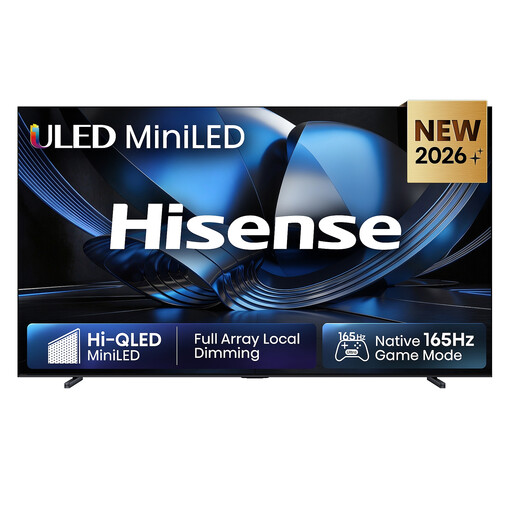
Hisense 100U7DSE ULED Mini LED 4K Smart TV, 100 inches
This model is worth considering for tennis in a room with changing light if you’re looking for an extra-large screen; the product description mentions automatic brightness control.
The product description lists a refresh rate of 165 Hz.
View at Joybuy
 No image available
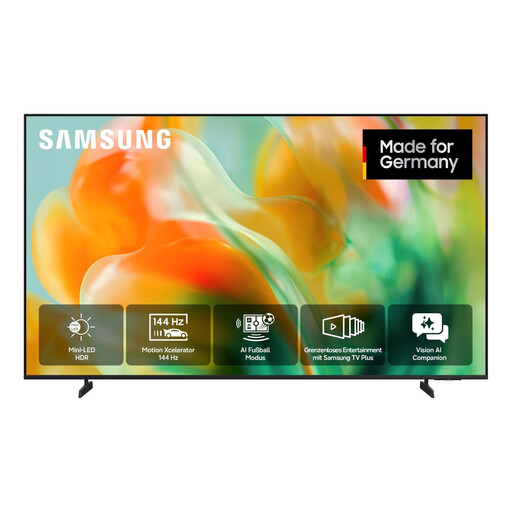
Samsung GU65M80H Mini LED M80H 4K Smart TV, 65 inches
If you want to compare Mini LED models and high panel refresh rates, this 65-inch model is one to consider.
The product description lists a native refresh rate of 144 Hz and Motion Xcelerator; these specifications alone don’t tell you how your tennis signal will look.
View at Joybuy
 No image available
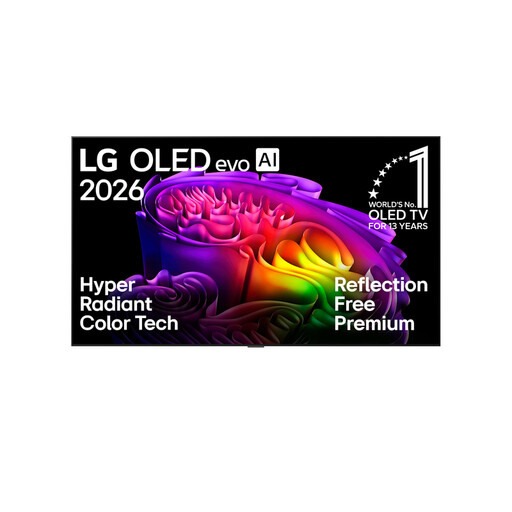
LG OLED77G67LW OLED evo AI G6 4K Smart TV, 77 inches
If you’re considering an OLED TV for a living room with window light, the product description specifies a “Reflection Free Premium” display finish.
The description lists a native refresh rate of 120 Hz and up to 165 Hz. According to the description, a stand isn’t included; the supplied wall bracket is intended for mounting the TV.
View at Joybuy
 No image available
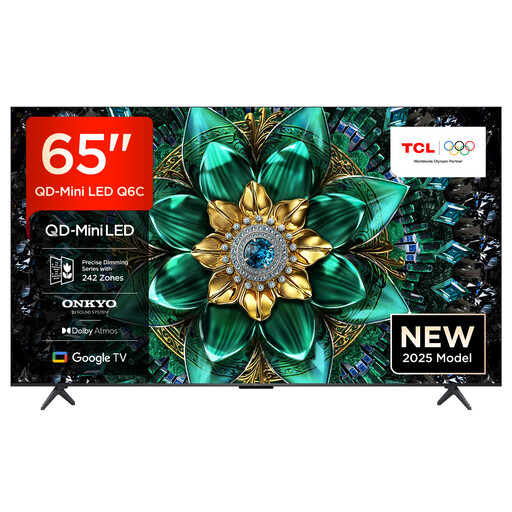
TCL 65Q6C QLED Mini LED TV, 65 inches
For comparisons in rooms with window light and seats to the side, the product description mentions a matte HVA panel and a wide viewing angle.
The description lists a refresh rate of 144 Hz and HDR peak brightness of 1000 nits; these specifications aren’t a substitute for a sports test of the specific model.
View at Joybuy
 No image available
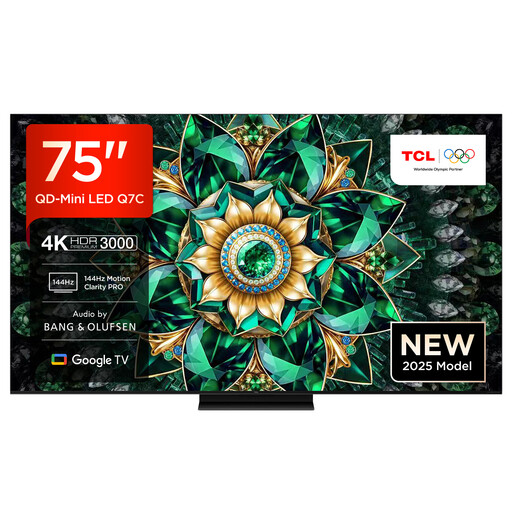
TCL 75Q7C QLED Mini LED TV, 75 inches
If several people sit in different parts of the room, you can consider this model based on the wide viewing angle listed in the product description.
The description lists QD Mini LED and a refresh rate of 144 Hz. These specifications alone don’t show how tennis will look through your chosen source.
View at Joybuy
Frequently asked questions
Is 144 Hz enough for a sharp tennis broadcast?
No, the panel specification alone isn’t enough to answer that. TCL lists a native refresh rate of 144 Hz for the 65Q8C; RTINGS also assesses sports performance by looking at motion handling. If possible, compare the specific model using footage from the source you plan to watch.
Where should I put the TV in a room with window light?
Before mounting it, check whether windows or lamps are reflected directly on the screen from where you sit. If you can move the TV, test how the picture looks at the time of day you usually watch tennis. As RTINGS explains, even a TV tested as having low reflections will still reflect some light.
Is every live tennis stream available through a TV app?
No. Check how to watch the specific broadcast and which service you’ll need independently of your TV purchase. ARD points out that online rights can limit the availability of individual live streams; this doesn’t tell you anything about the rights to a particular match.
What does the energy label on a new TV show?
For new TVs sold as products on the EU market, the energy label includes information for both SDR and HDR, among other details. The European Commission and Your Europe explain the EU requirements; the label must also be visible when the TV is sold online.
Can I return a TV bought online if reflections are a problem at home?
Online contracts generally come with a right to cancel, usually within 14 days of entering into the contract or receiving the goods. Verbraucherzentrale explains this time limit; check the details that apply to your contract. Cancelling because you’ve changed your mind is different from making a claim about a fault.


