Tennis fans with windows opposite the screen
If you watch during the day, pay particular attention to direct reflections across the court. RTINGS.com explains why reflections from large windows can be distracting in bright rooms.


First, check whether the tall windows are reflected in the screen from your usual seat. Effective anti-reflection treatment and sufficient brightness matter more here than peak HDR brightness alone. Then compare how well the TV handles fast-moving action, how it looks from side-on seats and how you’ll receive your channels. Depending on your room and seating arrangement, both Mini LED LCD and OLED could be suitable.
If you watch during the day, pay particular attention to direct reflections across the court. RTINGS.com explains why reflections from large windows can be distracting in bright rooms.
In fast-paced scenes, clear motion and smooth camera pans matter. The Verbraucherzentrale (German consumer advice centre) notes that a higher refresh rate can make fast movement look smoother, but it isn’t the only factor to consider.
If several people will be sitting to the side of the TV, assess the picture from their actual seats and check that the screen size suits the available space.
A good fit if: Your windows face the screen, or the room is very bright during the day, and the specific model has suitable anti-reflection treatment.
Consider: A manufacturer’s peak HDR brightness figures alone don’t show how bright a large tennis image will look. Reflection handling and viewing angles vary by model.
A good fit if: You also want the characteristic OLED picture, and distracting window reflections can be managed where the TV will be set up.
Consider: OLED alone doesn’t guarantee a good view when windows face the screen. Check the brightness and reflection handling of the specific model.
A good fit if: You can reduce direct reflections by moving the TV or limiting the amount of incoming light.
Consider: Terms such as “4K” or “QLED” don’t, by themselves, tell you how a specific model handles reflections or motion.
The percentages show how the four main priorities described here rank for this viewing scenario. Each consumer is counted only under their most important priority.
| Priority | What to check when buying | Who it matters most to |
|---|---|---|
| Window reflections and daylight | Check the window position, as well as the specific model’s reflection handling and brightness with light-coloured content. | People watching during the day in front of tall windows will want to minimise distracting reflections across the court. Around 36% of consumers put reflection handling first. |
| Ball movement and camera pans | Watch a sports broadcast to check for blurred ball outlines and distracting motion effects; distinguish the native refresh rate from figures used in advertising. | If you want to follow fast rallies clearly, consider the model’s motion handling and the quality of the broadcast. Around 29% of consumers prioritise motion. |
| Viewing from side-on seats | Assess the picture from your actual seating positions, and measure the space available for the TV and the viewing distance. | When several people are sitting to the side, a comfortable picture from those positions matters just as much as choosing the right screen size. Around 21% of consumers put this first. |
| Overall costs and TV reception | Compare the EU energy label for TVs of similar screen sizes, and check which channels or streaming services you want, as well as how you’ll receive them. | If your main concern is balancing the cost of the TV and its running costs with access to the tennis coverage you want, check what the reception service includes. Around 14% of consumers prioritise this. |
A high advertised peak brightness figure alone doesn’t tell you how distracting direct reflections from windows will be, or how bright a large tennis image will look.
Check the window position, reflection handling and brightness with light-coloured content separately for the specific model.
The refresh rate alone doesn’t show how well a TV handles fast movement or how the incoming broadcast will look.
If possible, watch tennis footage with rallies and distinguish the native refresh rate from figures used in advertising.
Buying a TV doesn’t automatically give you access to every match. You should also consider electricity consumption and, where applicable, the cost of a TV service.
Compare the EU energy label and check the packages offered by the channel or streaming service you need before you buy.
Samsung’s QN90F range in Germany includes Mini LED TVs. If you have a bright room, the GQ75QN90FATXZG model’s features are worth considering.
According to TCL, the 65Q8C sold in Germany combines QD Mini LED, a CrystGlow WHVA panel and a native 144 Hz refresh rate.
The BRAVIA 9 II is a range of RGB LED models sold in Germany that you could consider when looking for a TV for a bright room.
The OLED65G59LS sold in Germany is an OLED alternative if you value the characteristic OLED picture as well as performance in daylight.
This selection includes Mini LED TVs in different screen sizes and with a range of stated refresh rates. If you have windows opposite the screen, check the specific model’s reflection handling and make sure its size and placement suit your room.
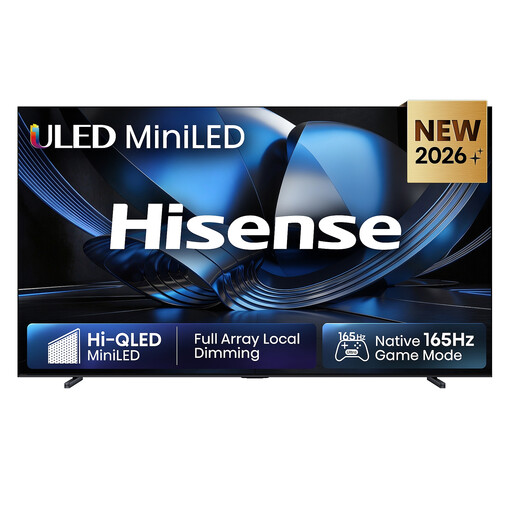 No image available
The stated 100-inch screen size could be a good choice for watching together; check that it suits your viewing distance and available space.
4K; 165 Hz; Dolby Atmos; VIDAA Smart OS.
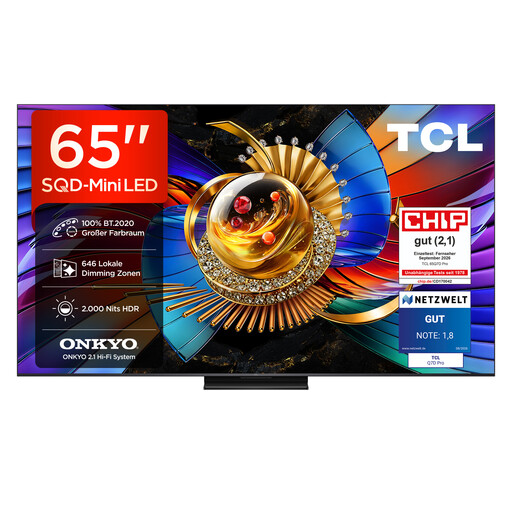 No image available
The stated anti-reflection features are worth considering if your windows face the screen. Check how well they work in the room where you plan to set up the TV.
4K; 646 Local Dimming Zones; 2.000 Nits HDR; Anti-Reflection; 144 Hz.
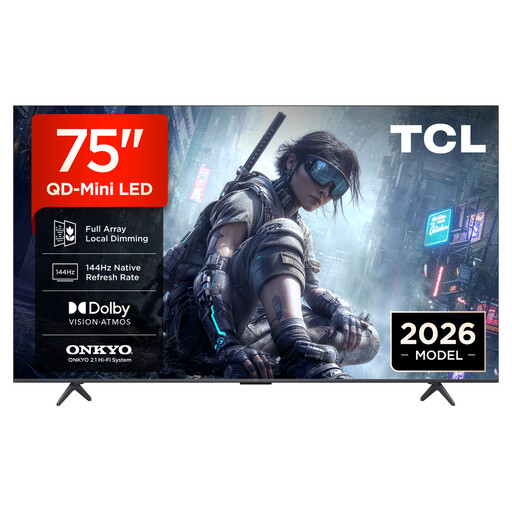 No image available
With a stated screen size of 75 inches, check that you have enough space and that it suits your viewing distance, especially if you’ll be watching with others.
QD Mini LED; 4K; 144 Hz VRR.
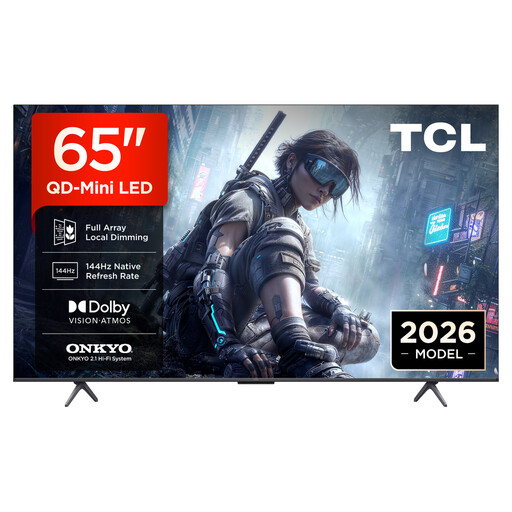 No image available
Compare the stated 65-inch screen size with your viewing distance and the space you have available.
QD Mini LED; 4K; 144 Hz VRR.
 No image available
The stated 100-inch screen size makes it especially important to check your viewing distance and available space.
4K; Vision AI; Smart TV.
No. A higher native refresh rate can make fast movement look smoother, but it doesn’t, by itself, tell you how well a specific model handles motion or how good the incoming broadcast will look. The 144 Hz figure for the TCL 65Q8C is a manufacturer claim.
From your usual seat, check whether the windows are reflected directly in the screen. If possible, move the TV or limit the amount of incoming light. Assess the TV’s reflection handling and brightness separately.
Compare the TV’s EU energy label, which also includes information for HDR. Check the contract for any TV service you need, too, as buying a TV doesn’t automatically include its channels.
No. The Bundesnetzagentur lists DVB-T2, IPTV and satellite as alternatives. The tennis coverage you can watch will also depend on the programmes available and, where applicable, whether you have a subscription.
No. Your statutory rights are claims against the seller; a manufacturer’s guarantee is an additional voluntary service with its own terms and conditions.