For tennis nights in a house share, your TV should suit both your seating arrangement and the daylight in the room. If people sit to the side, a stable viewing angle matters; in bright rooms, look at brightness and how well the screen handles reflections. For fast rallies, also check how the specific model handles motion rather than relying on an advertised refresh rate alone. Screen size, space for the TV, reception method and energy consumption all need to suit your home too. The Verbraucherzentrale recommends considering viewing distance and reception before you buy.
Which TV is right for you?
House shares with plenty of seating
If you watch from the sofa as well as from seats to the side, consider how well the picture holds up away from the centre of the screen. RTINGS.com highlights viewing angle as an important factor for wide seating arrangements.
Tennis fans following fast rallies
For fast-moving balls and camera pans, it’s how well the specific model handles motion in tests that matters. RTINGS.com notes that fast-moving images can look blurry or show ghosting if the response time is poor.
House shares with a bright or compact living room
If you have daylight, reflections or limited space, weigh up brightness, viewing distance and the TV’s dimensions together. The Verbraucherzentrale recommends checking your usual viewing distance and reception method before you buy.
What should you look for when buying?
First decide what matters most in your room: a clear view from several seats, sharp rallies, performance in daylight, a size that fits or reliable reception.
OLED TVs
A good choice if: You sit in different places and a test of the specific model confirms that it looks good from your viewing angles and performs well in the light levels of your room.
Things to consider: The panel type alone doesn’t guarantee sufficient brightness or low reflectivity. Compare the energy information for each model too.
Mini LED or other LCD TVs
A good choice if: Your room gets plenty of daylight and a test of the specific model gives it a good rating for brightness, handling reflections and motion.
Things to consider: Viewing angles vary depending on the LCD panel and model. Manufacturer figures for peak HDR brightness are no substitute for a test using standard TV content.
| Buying priority |
What to check |
Who it matters most to |
| Viewing from several seats |
Compare a viewing-angle test of the specific model with your seating arrangement. |
If we can’t all sit facing the screen, I want to be able to follow the match from seats to the side too. That’s why viewing from different angles is the top priority for around 25% of consumers. |
| Fast rallies |
Look for tests of the specific model’s motion handling when watching standard TV. |
When the ball moves quickly across the screen, I want to follow the action as clearly as possible. That’s why around 25% of consumers focus on how fast rallies are displayed. |
| Daylight and reflections |
Check the specific model’s brightness and how it handles reflections in tests. |
For afternoon matches in a bright living room, I want the picture to remain easy to see in daylight. For around 20% of consumers, a picture that’s easy to see in daylight is the top priority. |
| Size, space and budget |
Measure your viewing distance and the TV’s dimensions; compare energy information for similar models. |
If the TV needs to fit on a piece of shared furniture, I want to weigh up the space, the TV’s dimensions and our shared budget together. Around 15% of consumers put space and budget first. |
| Reception and ongoing costs |
Check how you’ll watch the specific match and which connections or apps you’ll need. |
Before we choose a TV, I want to know how we’ll watch the match we’re interested in and what ongoing costs are involved. For around 15% of consumers, reception and ongoing use are the main considerations. |
Avoid common buying mistakes
-
Assuming a high refresh rate guarantees sharp rallies
The advertised refresh rate alone doesn’t show how clearly fast movement appears when watching standard TV. Pixel response can also affect blurring and ghosting.
Look for tests of motion handling for the exact model, and check whether the assessment uses standard TV settings.
-
Judging the picture only from directly in front
In a house share, people sitting to the side see the picture from a different angle. So a model that looks bright from the front may not suit everyone in your seating area.
Compare a viewing-angle test for the specific model with the seats you’ll actually use.
-
Assuming the TV guarantees access to the match
Aerial, cable and internet-based services each have different technical requirements. Whether the tennis match you want to watch is being shown also depends on the provider.
First check where the specific match is being shown, then make sure the TV supports your chosen reception method.
-
Considering only screen size and upfront cost
A larger TV takes up more space and, as a rule, uses more electricity, according to the Verbraucherzentrale. The EU energy label lets you compare specific models.
Measure the space where you’ll put the TV and your viewing distance, then compare the energy information for the models you’re actually considering.
Key brands at a glance
TCL
The C8L range includes Mini LED models. The 55C8L is one specific model worth looking at more closely for a bright room.
- TCL lists 1.008 dimming zones and up to 3.000 nits peak HDR brightness for the 55C8L.
- These manufacturer figures don’t prove how visible the screen is in daylight or how well it performs at an angle. The independent comparison is for the 55C8L, not all TCL TVs.
Hisense
The 55UR8DS and 55U7DS Pro are options to consider if brightness is important.
- COMPUTER BILD rates both of the test models mentioned as bright, with strong contrast.
- The review notes that viewing-angle stability could be better. Its assessment applies to these models, not the entire range.
Samsung
The GQ55S85HAEXZG is a 55-inch OLED model to consider for shared viewing.
- Samsung confirms that this model is OLED and measures 55 inches.
- These details alone don’t tell you how it performs for viewing angles, reflections or motion in a shared living room.
LG
The OLED55B68LA is another 55-inch OLED option.
- LG lists OLED and 4K playback at up to 120 Hz for this model.
- The 120 Hz figure alone doesn’t tell you how well it displays a tennis match. Check motion handling and performance in your room’s light levels for the specific model.
Sony
According to its model specifications, the BRAVIA 5 K-55XR5 combines a 55-inch screen with Mini LED and Local Dimming.
- Sony lists four HDMI inputs and a panel refresh rate of 120 Hz.
- The technical specifications shown don’t include a viewing-angle figure. On their own, they don’t tell you whether it’s suitable for seats to the side.
Joybuy TVs for tennis nights in a house share
This selection includes TVs in a range of sizes and LCD technologies. For each model, check the space available, viewing distance and picture features that matter to your house share.
 No image available
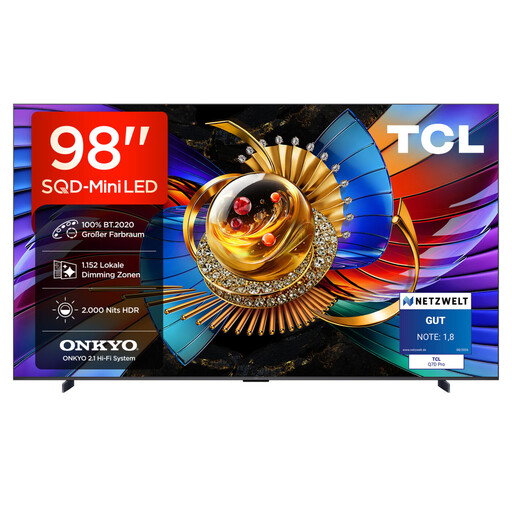
TCL 98Q7D PRO, 98-inch, 4K SQD-Mini LED
For a house share with enough room for a particularly large screen; measure the space carefully beforehand.
The product name lists 98 inches, 4K and 144 Hz. According to the product information, the TV needs a stable surface; a suitable wall bracket is not included.
View at Joybuy
 No image available
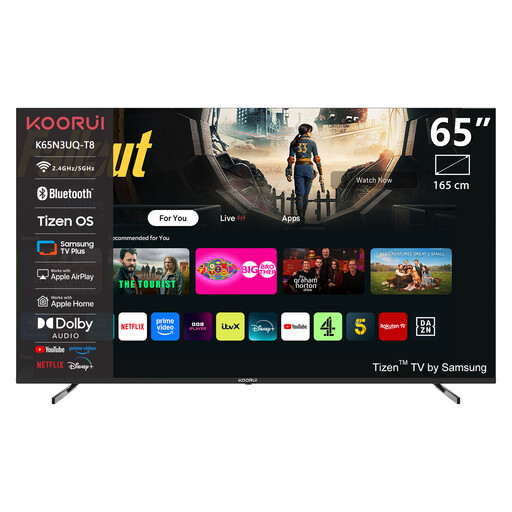
KOORUI K65N3UQ-T8, 65-inch, 4K UHD QLED Smart TV
A 65-inch option for house shares where the available space and viewing distance suit this screen size.
The product name lists 4K UHD, QLED and Tizen OS.
View at Joybuy
 No image available
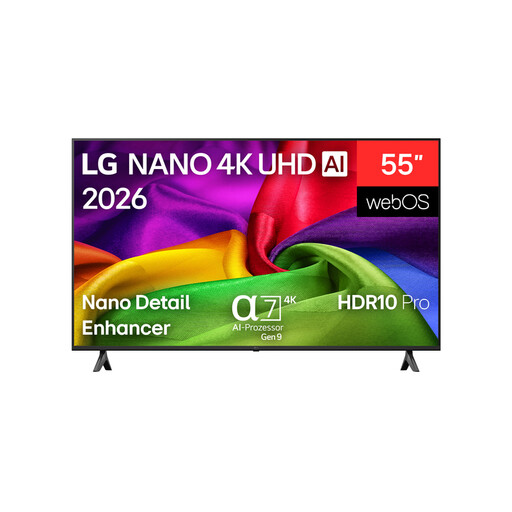
LG 55NU800B6LA, 55-inch, 4K NANO UHD AI TV
For house shares looking for a 55-inch TV with 4K resolution, and planning to check reception and motion handling separately.
The product name lists HDR, 60 Hz and webOS.
View at Joybuy
 No image available
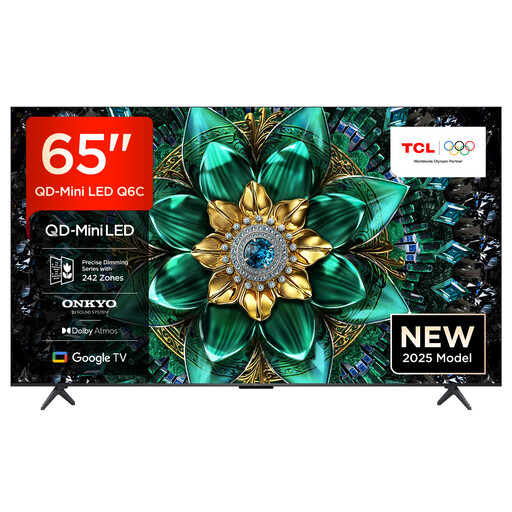
TCL 65Q6C, 65-inch, QLED Mini LED, 4K HDR
A 65-inch Mini LED option for a room where there’s enough space for a TV of this size.
The product name lists 144 Hz; this figure is no substitute for a test of motion handling during tennis broadcasts.
View at Joybuy
 No image available
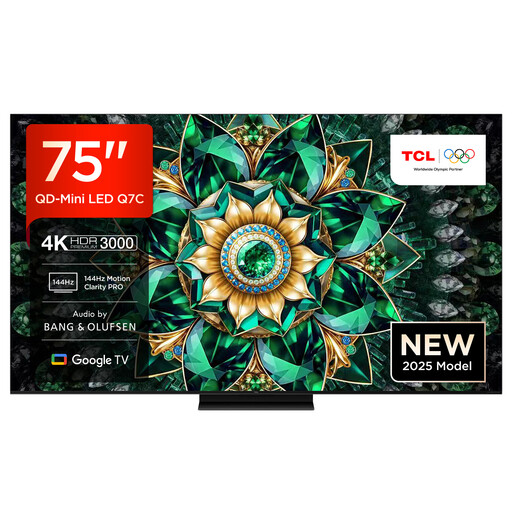
TCL 75Q7C, 75-inch, QLED Mini LED, 4K HDR
For a house share where a 75-inch screen suits the viewing distance and available space.
The product name lists 144 Hz VRR. This alone doesn’t prove that fast tennis rallies have been tested on the TV.
View at Joybuy
Frequently asked questions
Do we need a specific tuner to watch tennis through an indoor aerial?
According to ARD, DVB-T2 HD requires a suitable TV or receiver that supports DVB-T2 and HEVC. Check separately with the provider whether the match you want to watch is available through this reception method.
Does everyone in the house share have to pay the broadcasting fee because we’ve bought a new TV?
No. According to the Beitragsservice, a single broadcasting fee account is generally held for each home or house share, regardless of the number of devices or people living there.
Is the cable connection already covered by our service charges?
Don’t assume it is. The Bundesnetzagentur explains that monthly fees for TV services can no longer be charged through service charges under the previous rules since 1 July 2024. Before choosing how to receive your TV, check which connection is available and whether you need your own contract.
What should we check before setting up the TV and looking at its energy use?
Measure your viewing distance and the space available, including the stand. Compare the EU energy label for the models you’re considering. You’ll also need an internet connection for smart TV features.
What’s the difference between statutory rights and a guarantee?
Your statutory rights are separate from a voluntary guarantee. The Verbraucherzentrale explains that these are different entitlements; which rules apply in a specific case depends on the circumstances of the purchase and the problem.


