
Lieferung heute & morgen

Qualitätsgarantie

Willkommens-Angebote freischalten: KOSTENLOSE Lieferung | Bis zu 80 % RABATT | Kostenlose 30-Tage-JoyPlus-Testphase
App herunterladen
A TV unit for TVs up to 65 inches needs to do more than support your television. It should suit the size of your room, offer enough space for a receiver and games consoles, and stand securely. Many TV units also feature LED lighting, high-gloss fronts or extra storage, but don’t always make the practical limitations clear.
“Up to 65 inches” primarily describes the intended TV size, not the ideal width of the TV unit. The inch measurement refers to the screen’s diagonal. A TV’s width can vary depending on its frame and stand.
Before you buy, check:
A TV unit that’s 140 to 150 cm wide may suit many TVs up to 65 inches. However, the most important thing is to compare its dimensions with those of your specific TV.
A TV cabinet with doors can keep devices, cables and accessories out of sight. But if the compartments are too small or difficult to access, it can make everyday use more awkward. For games consoles and receivers, check the internal dimensions, cable routing and ventilation options.
Open compartments make it easier to reach your devices, but leave cables and equipment on show. Closed doors create a tidier look, but need extra space to open. A TV unit with storage is therefore most useful when its layout suits your devices.
A TV unit with LED lighting can add to the look of your room. But lighting shouldn’t be your only selection criterion. Check whether the LED components are protected from moisture, where the power supply is located and whether the cable routing works with your socket.
High-gloss surfaces also have practical considerations: they can show fingerprints and dust more readily than matt finishes. For many coated fronts, a soft, slightly damp cloth is more suitable than abrasive cleaning products.
Measure not only the width of the wall, but also the depth of the space. A TV stand around 40 to 48 cm deep will need a little extra room for cables and connections. If you’re choosing a TV cabinet for a bedroom, consider the viewing angle from your usual position in bed too.
The height affects your line of sight. Low TV units have a modern look, while taller TV cabinets can offer more storage and raise your TV higher. Place the unit on a flat, stable surface and follow the assembly instructions.
The models featured here use materials including MDF, chipboard and coated wood-based panels. Check the following:
For taller furniture or homes with children, an additional anti-tip device may be a good idea. Make sure the fixings are suitable for your type of wall.
A TV cabinet with doors is a good choice if you want to keep devices and accessories mostly out of sight. Sliding doors need less clearance than hinged doors. Flap doors can make it easier to reach your devices, but shouldn’t catch on anything that’s plugged in.
Open glass shelves are handy for remote controls, speakers or consoles. Make sure cables aren’t pulled tight, and plan which side the power and HDMI cables will come in from before you assemble the unit.
The selection below matches specific models to different homes and ways of using your TV unit. Details of dimensions, materials and features are based on the relevant product information.
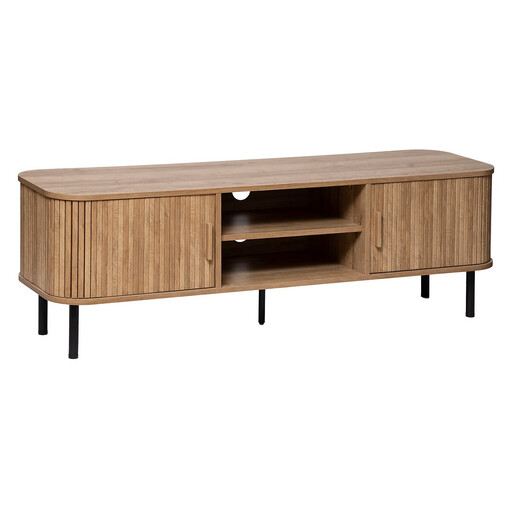
Why this product suits this profile: At 140 cm wide, with two sliding doors, it’s a straightforward option for a living room or bedroom if you’re looking for a functional TV unit with concealed storage.
The listed dimensions make it easy to work out how much floor space you’ll need before you buy. The sliding doors don’t need any extra clearance to swing open.
MDF and chipboard with a wood-effect finish, two sliding doors, dimensions of 140 × 40 × 53 cm and a product weight of 22 kg.
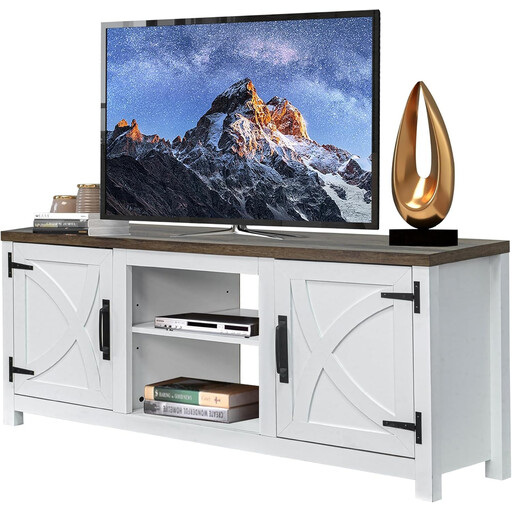
Why this product suits this profile: This TV unit combines open compartments with concealed storage. Its adjustable shelf gives you more flexibility to arrange devices of different sizes.
The mix of two open compartments, two enclosed sections and an adjustable shelf gives you more flexibility than a fixed storage layout.
147.3 × 40.6 × 61.7 cm, maximum weight capacity of 54 kg, two doors and a white MDF design.
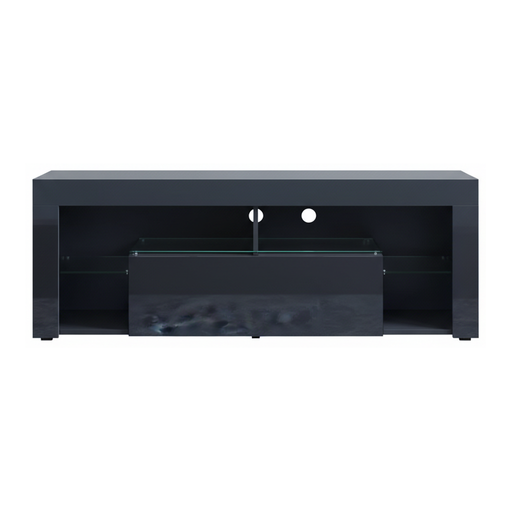
Why this product suits this profile: If you’re after a low, modern unit with a distinctive design feature, this TV stand combines a glass shelf with LED lighting in 12 colours.
The features are clearly set out: a flap door, glass shelf, width of 151.1 cm and LED lighting with twelve adjustable colours.
High-gloss finish, handle-free design, glass shelf and LED lighting; assemble according to the instructions.
We’ve put together a complete, regularly updated list of products that meet these strict selection criteria and fully comply with the safety regulations in force in the EU.
When assembling a TV unit, fit and tighten all the fixings according to the instructions. Don’t stand the unit upright until the frame is fully assembled. For a TV cabinet with doors, adjust the fronts afterwards so they close evenly.
Also remember to:
The unit should be at least as wide as the actual TV. Extending beyond the TV at either side can create a balanced look, but it isn’t essential. Also check the position of the feet and the maximum weight capacity of the top panel.
It depends on your seat height, the distance from your sofa and your preferred viewing position. Low TV units are often around 15 to 55 cm high, while taller TV cabinets can offer more storage. The key is to be able to watch the screen without having to tilt your head for long periods.
Running costs depend on the power consumption, how long you use the lights each day and your electricity rate. Switch the lights off completely when you don’t need them, and check whether there’s a separate switch or remote control. Treat LED lighting as an extra feature, not a substitute for checking the size, stability and storage space.