
Lieferung heute & morgen

Qualitätsgarantie

Willkommens-Angebote freischalten: KOSTENLOSE Lieferung | Bis zu 80 % RABATT | Kostenlose 30-Tage-JoyPlus-Testphase
App herunterladen
A 32–65-inch TV wall mount can free up space in the living room, bedroom or office while allowing you to adjust the viewing angle to your seating position. However, your choice should not be based solely on screen size or a low price. The decisive factors are your TV’s technical specifications, the condition of the wall and the level of flexibility you need.
The “32–65 inches” specification only describes the supported screen-diagonal range. It does not automatically mean that the mount is compatible with your TV. For example, a 55-inch OLED may have a different mounting pattern and weight than a similarly sized LCD TV.
Before buying, check the following:
A stated load capacity of, for example, 45 kg refers to the mount under the specified installation conditions. The wall must also be able to safely support the combined weight of the TV and mount. With a tilting and swivelling TV wall mount, extending the arm creates additional leverage.
Concrete and solid-brick walls are fundamentally different mounting surfaces from plasterboard. With a timber-stud wall, the fixing points must be located in the load-bearing studs. Mounting directly to plasterboard alone is not suitable for many models.
“Full Motion” or “180° swivel” sounds comprehensive, but it is only practical if there is enough space around the TV. Furniture, window reveals and cables can restrict the range of movement. An ultra-slim TV wall mount, on the other hand, saves space but usually offers no lateral adjustment.
The VESA measurement specifies the horizontal and vertical distance between the threaded mounting holes on the back of the TV, measured in millimetres. A mount with VESA 100 × 100 to 400 × 400 mm covers many televisions in the 32–65-inch range. The measurement should be taken directly from your TV’s user manual or data sheet.
Compare the TV’s weight with the mount’s maximum load capacity. A TV wall mount rated for up to 45 kg is not automatically suitable for every TV weighing up to 45 kg if the wall or fixings are not designed for that load. For large and heavy TVs, installation by two people is recommended. The screws and wall plugs included with the product should only be used if they are suitable for the wall material in question.
For LED, LCD and OLED TVs, display technology alone is not the deciding factor. The VESA mounting pattern, weight, casing design and suitable screws must all be compatible.
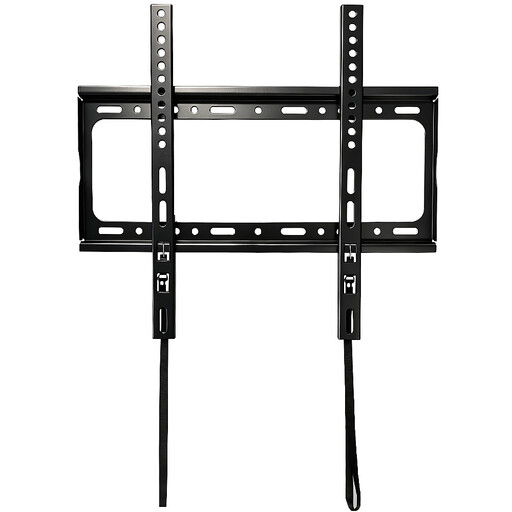
Why it’s a good fit: For users who want to mount their TV on a suitable wall in a space-saving way without a swivelling function.
The specifications clearly state support for 32–65-inch TVs, VESA up to 400 × 400 mm and a load capacity of up to 45 kg. The wall type and TV specifications must still be checked.
Fixed design, compact dimensions of 49.5 × 22.7 × 2.9 cm and compatibility with concrete, brick and timber-stud walls.
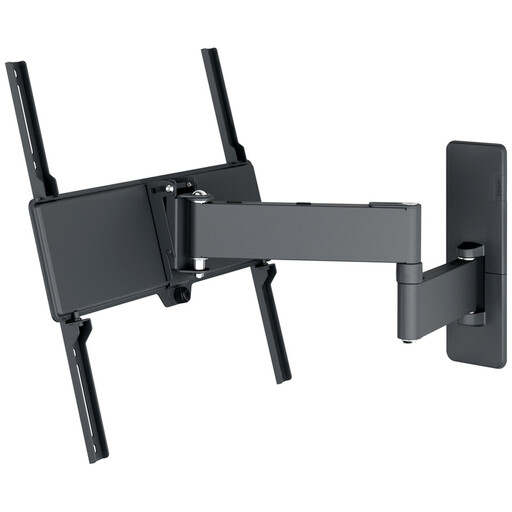
Why it’s a good fit: For living rooms where multiple seating positions require different viewing angles.
The range of movement is specified precisely: up to 180° of swivel, up to 15° of tilt and 5.5–49 cm of wall clearance.
VESA 100 × 100 to 400 × 400 mm, integrated cable management and a stated load capacity of up to 35 kg.
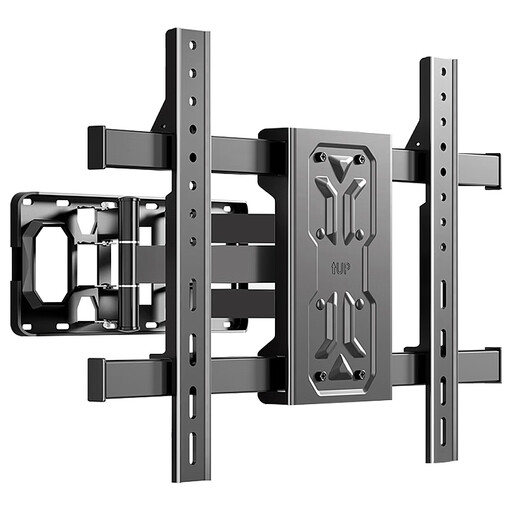
Why it’s a good fit: For installations where the TV should sit close to the wall initially but be pulled farther out when required.
The 42–340 mm wall-clearance range makes the space required fully transparent. When the arm is extended, furniture and cables should have sufficient clearance.
Supports up to 45 kg, VESA up to 400 × 400 mm and concrete, brick and timber-stud walls.
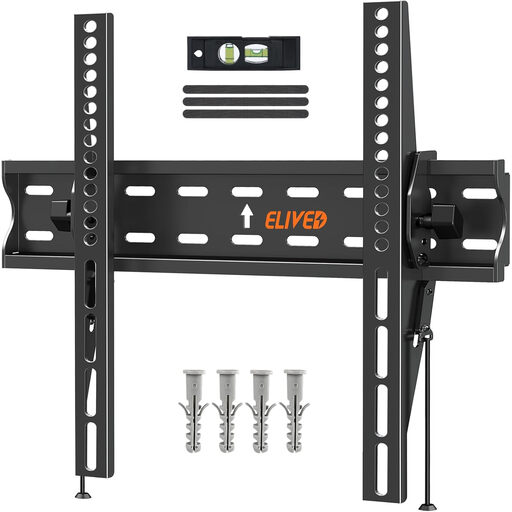
Why it’s a good fit: For bedrooms, offices or living rooms where minimal wall clearance and a slight tilt are required.
The data sheet specifies a wall clearance of 38 mm, a tilt range from 0° to −8° and the required installation on concrete, brick or timber studs.
VESA 75 × 75 to 400 × 400 mm and a load capacity of up to 45 kg; suitable for many flat or curved LCD, LED and OLED TVs.
We have compiled an up-to-date selection of products that meet these technical criteria for installation in German homes and workplaces.
Measure the desired screen height before drilling and allow for the final wall clearance. With a swivelling mount, check the entire range of movement. HDMI, antenna and power cables must not be placed under tension when the TV is swivelled.
Use only fixings that are suitable for the wall material. For heavy TVs, two people should carry out the mounting and lifting process. After installation, check all screws and inspect them at regular intervals to ensure they remain tight. These mounts are intended for indoor use and should not be installed in damp environments or outdoors.
Screen size alone is not enough. Check the VESA measurement, weight and the mount manufacturer’s specifications. Many 32–65-inch models support VESA up to 400 × 400 mm, but not every 50-inch TV uses this mounting pattern.
No. A full-motion TV mount creates additional leverage when the arm is extended. The wall must be structurally sound; with timber-stud walls, the screws must be centred in the studs. Mounting directly to plasterboard alone is excluded for many models.
That depends on the design. A fixed or ultra-slim TV mount usually sits close to the wall. A tilting or swivelling TV wall mount requires additional space for movement and cables. Therefore, check not only the minimum clearance but also the maximum extension.