
Lieferung heute & morgen

Qualitätsgarantie

Willkommens-Angebote freischalten: KOSTENLOSE Lieferung | Bis zu 80 % RABATT | Kostenlose 30-Tage-JoyPlus-Testphase
App herunterladen
A TV wall mount not only creates a clean, modern ambiance in your living room but also optimizes your viewing experience. Mounting your TV on the wall saves valuable furniture space and can enhance safety by keeping the device out of reach of children and pets.
However, choosing the right mount can be a challenge given the wide array of models, technical specifications, and compatibility questions. This guide is designed to help you understand the key criteria for a secure and functional installation and presents a selection of models for various needs.
Before making a decision, there are three fundamental aspects to consider to ensure the mount is compatible with your TV and your space.
The VESA standard is an international benchmark that defines the spacing of the threaded mounting holes on the back of your TV. This specification is crucial for compatibility with a wall mount. The dimensions are given in millimeters, for example, VESA 400x400. You can find your device's VESA standard in its manual or on the manufacturer's website.
Equally important are the weight and screen size of your TV. Every wall mount has a specified maximum weight capacity and is designed for certain screen sizes. Do not exceed these limits to ensure a secure installation.
TV wall mounts can be divided into three main types, each offering distinct advantages:
The stability of the entire setup depends on the type of your wall. Solid concrete or brick walls offer the most secure support, especially for a wall mount for large TVs. Special care is required for drywall or plasterboard walls. Here, the mount must be anchored directly into the wood or metal studs behind the wall. Check the mount's product description carefully, as some models are explicitly not intended for installation on drywall alone.
Here is a selection of wall mounts that cover different needs in terms of functionality and design.
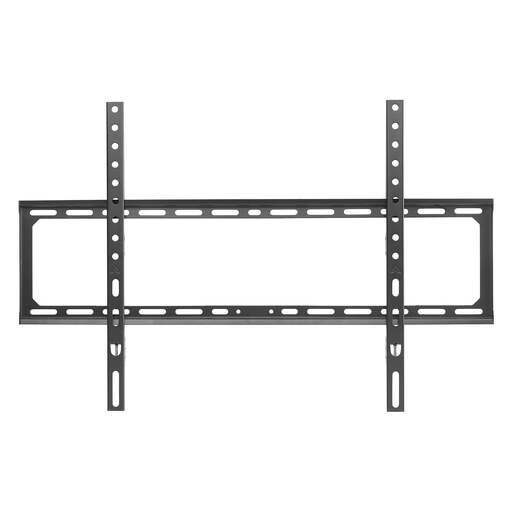
Why it stands out: This model is distinguished by its ultra-slim profile. With a wall distance of only approx. 22 mm, it provides a minimalist look, allowing the TV to sit nearly flush with the wall.
Advantages:
Who it's for: For users who prefer an extremely low-profile and stable mount for large TVs and do not need swivel or tilt functions. Ideal for a fixed viewing position in a living room or home theater.
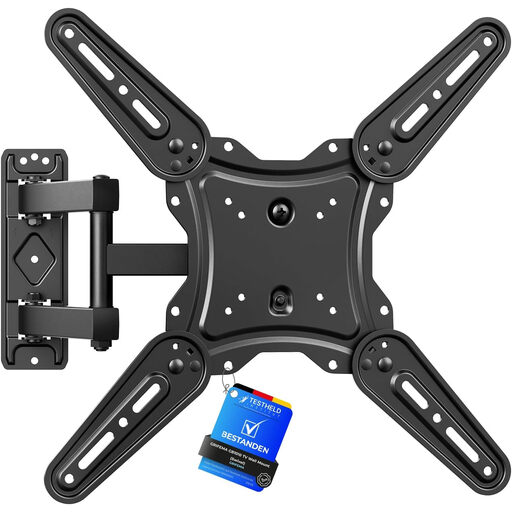
Why it stands out: This mount offers a full range of motion. The extendable arm allows for flexible positioning of the TV, making it especially versatile for various room layouts. It is suitable for both flat and curved screens.
Advantages:
Who it's for: For users who need maximum flexibility to adjust the viewing angle, avoid glare, or mount the TV in a corner.
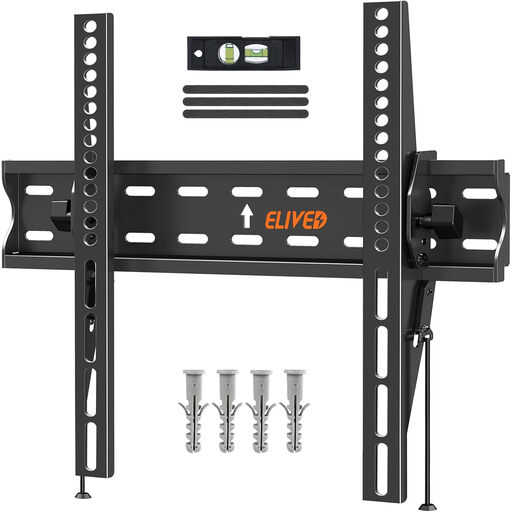
Why it stands out: This model combines a slim design with a convenient, tool-free tilting feature. The TV stays close to the wall at 38 mm, yet can be effortlessly tilted to optimize the viewing angle.
Advantages:
Who it's for: For users who want an unobtrusive, low-profile installation but don't want to give up the ability to slightly tilt the screen down to reduce glare.
Didn't find the right model for your needs in our selection? Every home and every TV is different. To find the ideal solution for your specific situation, it's worth exploring other options.
Discover Our Full Range of TV Wall Mounts
The VESA (Video Electronics Standards Association) standard defines the standardized spacing of the four mounting holes on the back of a TV. A specification like "VESA 200x200" means the holes form a 200 mm by 200 mm square. Compatibility between your TV's VESA standard and the wall mount is essential for installation.
No. Most standard wall mounts are designed for installation on solid walls like concrete or solid brick. Mounting on drywall (plasterboard) alone is not safe, as the material cannot support the weight. For such walls, the mount must be anchored into the wood or metal studs behind it. Carefully read the manufacturer's installation instructions and warnings.
As a general rule of thumb, the center of the screen should be at eye level when you are seated in your primary viewing spot. This ensures an ergonomic and comfortable viewing position. Measure your seated eye level and plan the mounting height accordingly before you start drilling.