
Lieferung heute & morgen

Qualitätsgarantie

Willkommens-Angebote freischalten: KOSTENLOSE Lieferung | Bis zu 80 % RABATT | Kostenlose 30-Tage-JoyPlus-Testphase
App herunterladen
A TV wall mount can save space in your living room, position the screen at a comfortable height and help keep cables organised. However, the mount, television and wall must all be compatible. Many unsuitable purchases are not caused by the television itself, but by unclear load-capacity information, an unsuitable wall or a misunderstanding of VESA compatibility.
The specification “32–65 inches” is only a starting point. The television’s weight, VESA measurement and design are also crucial. For example, a 55-inch television may have a different hole pattern from a similarly sized model. A universal TV wall mount is therefore only suitable if the technical specifications actually match.
A TV wall mount rated for up to 45 kg must not be loaded with a television that exceeds this weight when accessories, a soundbar mount or additional attachments are included. The same applies to a TV wall mount rated for up to 80 kg. The wall must also be able to support the combined weight of the television and mount.
Not every mount is suitable for every surface. Depending on the model, a TV wall mount for concrete walls may also be designed for solid brick or solid timber studs. Plasterboard, cavity or soft walls must not be used with the products mentioned here without a suitable load-bearing substructure. The wall plugs and screws supplied are not automatically suitable for every type of wall.
The VESA measurement describes the horizontal and vertical distance between the mounting holes on the back of the television, for example 200 × 200 mm or 600 × 400 mm. These values must fall within the supported range of the TV mount.
In practice, this means:
A low-profile TV wall mount usually sits particularly close to the wall. Models with a gap of around 15 to 22 mm are suitable for a neat, space-saving installation. However, accessing the connections may be more difficult.
A tilting TV wall mount allows you to adjust the viewing angle downwards. This can be useful if the television is mounted higher up or if light sources in the room cause reflections. A swivelling TV wall mount, also known as a full-motion mount, offers greater flexibility, but requires considerably more space when extended and places greater strain on the fixings due to leverage.
The product’s load-capacity rating is a technical maximum and does not replace an assessment of the wall. Suitable wall plugs are required for concrete and solid brick. With timber constructions, the fixing points must be positioned centrally in load-bearing studs. Before drilling, check for cables, heating pipes and the exact position of the supporting structure.
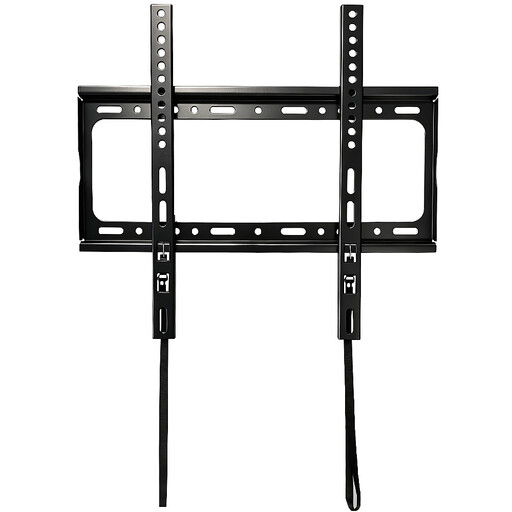
Why this product suits this profile: This fixed TV mount is designed for users looking for a simple, close-to-the-wall installation without swivelling or tilting functionality. It is suitable for 32–65-inch televisions weighing up to 45 kg.
The screen-size, maximum VESA measurement of 400 × 400 mm and load-capacity specifications are clearly separated. This makes it easy to check suitability before ordering.
Fixed design, compact dimensions and suitability for concrete, brick and solid timber studs according to the product description.
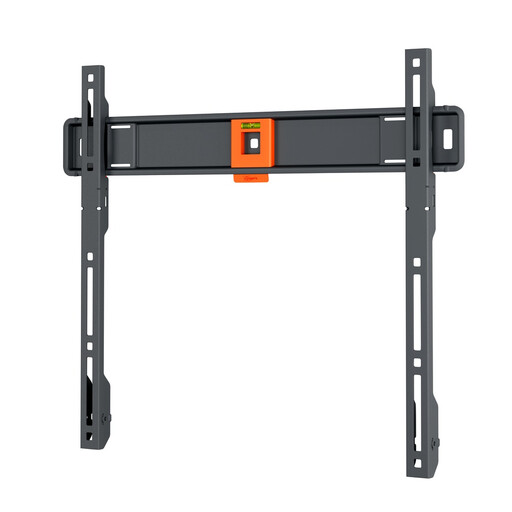
Why this product suits this profile: According to the product data, this fixed mount is designed for 32–77 inches, up to 50 kg and VESA measurements from 100 × 100 to 400 × 400 mm. It is suitable for installations where a stable, discreet position is preferred.
The integrated ClickLoc safety system and built-in spirit level support controlled installation. The 50 kg load capacity remains clearly stated as the limit.
Reinforced steel construction, ClickLoc security and support for televisions up to 77 inches according to the manufacturer’s specifications.
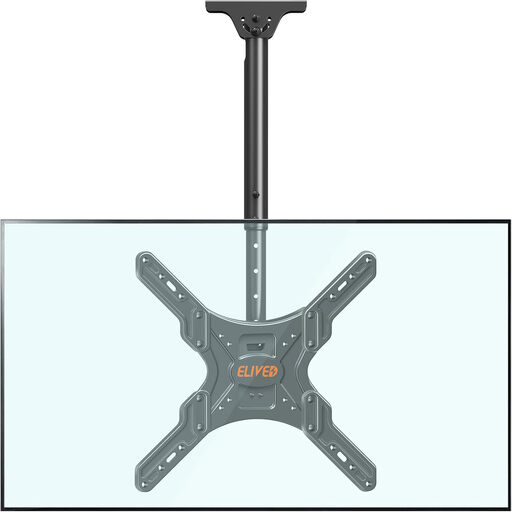
Why this product suits this profile: This solution is suitable for rooms where wall mounting is impractical, such as shops, gyms, offices or areas with changing viewing directions.
The mount is explicitly designed for solid ceiling structures, not plasterboard alone. This places the load-bearing capacity of the supporting structure at the heart of the installation.
360° swivel range, six height positions, +5°/−10° tilt and VESA support from 100 × 100 to 400 × 400 mm.
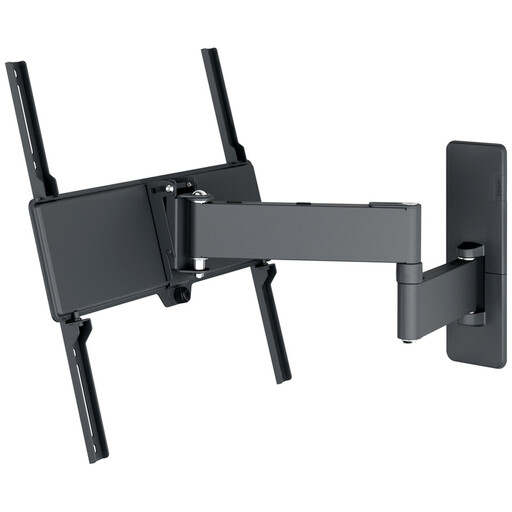
Why this product suits this profile: This swivelling TV wall mount is suitable for different seating positions. According to the product data, it supports 32–77 inches, up to 35 kg and VESA measurements from 100 × 100 to 400 × 400 mm.
The wide wall-distance range of 5.5 to 49 cm makes it clear that flexibility requires additional space. The maximum load capacity of 35 kg should be checked before purchase.
Up to 180° swivelling, up to 15° tilting and integrated cable management according to the product description.
We have put together a complete, regularly updated list of products that fully meet these strict selection criteria and the safety regulations applicable in the EU.
Before installation, tick off the following points:
You need at least the screen size, television weight and VESA measurement. A mount for 32–65 inches is not automatically suitable for every television in this size range. The type of wall must also match the installation instructions for the specific model.
Many models are designed for concrete and solid brick walls. Suitable fixings for the specific substrate must be used. With a swivelling or extendable mount, particular attention must be paid to load-bearing fixing points because of the leverage involved.
It depends on the room. A low-profile TV wall mount takes up little space and is suitable for a fixed seating position. A tilting TV wall mount can be helpful when the television is mounted higher up. A swivelling version offers more viewing angles, but needs more wall clearance and room to move.