
Lieferung heute & morgen

Qualitätsgarantie

Willkommens-Angebote freischalten: KOSTENLOSE Lieferung | Bis zu 80 % RABATT | Kostenlose 30-Tage-JoyPlus-Testphase
App herunterladen
A TV wall mount can free up space and position your television perfectly for your seating arrangement. However, choosing the right mount depends on more than just screen size. The VESA measurement, weight, wall material and desired distance from the wall all need to be compatible. Focusing only on descriptions such as “universal” or “for large TVs” could result in an unsuitable installation or unnecessary extra costs.
The description “32 to 75 inches” only indicates a broad size range. The mounting points on the back of the television are also crucial. For example, a 65-inch TV may have a VESA measurement of 400 × 400 mm or 600 × 400 mm. A mount for 32–75 inches is therefore not automatically suitable for every model within this size range.
The television’s weight must be below the stated maximum load capacity. With a tilting or swivelling TV wall mount, extending the arm creates additional leverage. The load capacity should therefore not be calculated too closely. For very large TVs, models with a stated load capacity of 75 kg or 100 kg are only suitable if the wall, fixings and TV weight are also taken into account.
Concrete, brick and solid timber studs offer different mounting options from plasterboard, hollow brick or lightweight partition walls. Some mounts are specifically designed only for concrete, brick or solid timber studs. The included mounting hardware is not automatically suitable for every wall. If the wall structure is uncertain, a professional assessment or reinforcement may be required.
VESA refers to the horizontal and vertical distance between the threaded mounting holes on the back of a television. Common measurements include 100 × 100, 200 × 200, 400 × 400 and 600 × 400 mm. Before buying, check your television manufacturer’s specifications or measure the distance between the mounting holes.
A 600 × 400 mm VESA TV mount is suitable for many medium-sized and large televisions. However, it is not necessarily compatible with a TV whose mounting holes are, for example, 600 × 600 mm apart.
Pay attention to three specifications: maximum TV weight, supported screen size and VESA range. The screen size in inches is only a guide. With a 32–100-inch TV wall mount, you should check carefully whether the specific model also supports the required load capacity and VESA measurement.
For televisions over 75 inches, a sturdy wall plate, suitable wall plugs and level alignment are particularly important. Installing the mount with two people makes it easier to hang the TV and reduces the risk of damaging the screen during installation.
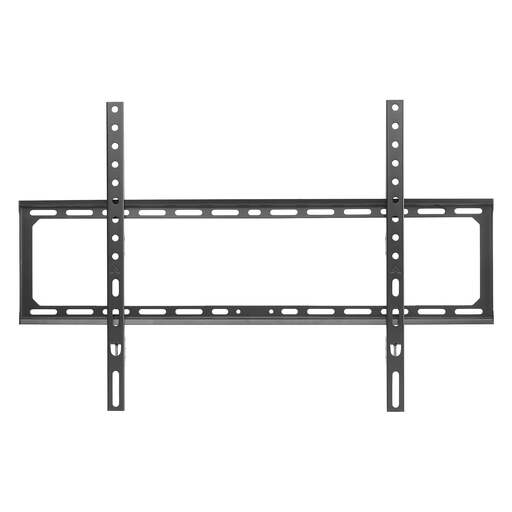
Why this product suits this profile: This fixed universal TV wall mount is ideal for anyone looking for a simple, close-to-the-wall solution for medium-sized to large televisions.
The stated limits of 32–90 inches, 45 kg and VESA up to 600 × 400 mm make it easier to check compatibility before buying.
Fixed design, approximately 22 mm wall clearance, steel construction and mounting hardware included.
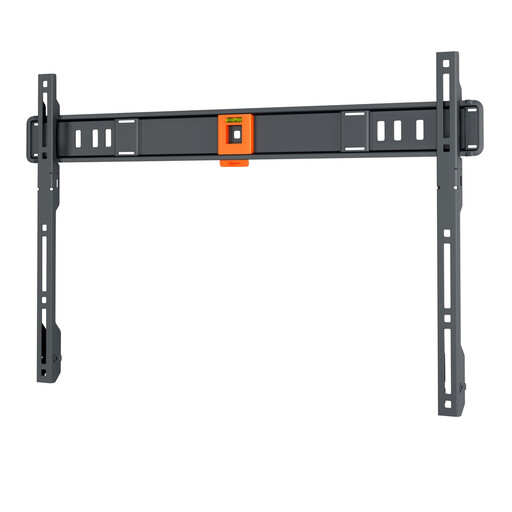
Why this product suits this profile: For large televisions from 40–100 inches, this fixed model provides clearly stated VESA and load-capacity specifications.
The maximum load capacity of 75 kg and VESA range from 100 × 100 to 600 × 400 mm provide specific checks rather than relying on size-based marketing alone.
Fixed construction made from reinforced steel and ClickLoc safety locking system, according to the product specifications.
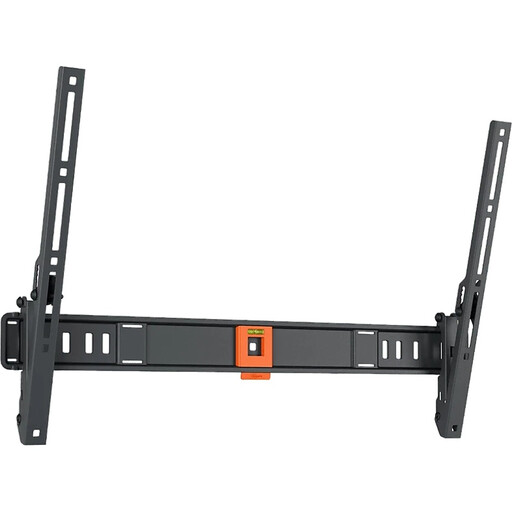
Why this product suits this profile: This tilting TV wall mount is suitable for televisions mounted high up where the viewing angle needs to be adjusted.
The tilt range of up to 15°, 75 kg load capacity and VESA support up to 600 × 400 mm are stated for planning the specific installation.
Suitable for 40–100 inches; the supplier lists a ClickLoc system and reinforced steel construction.
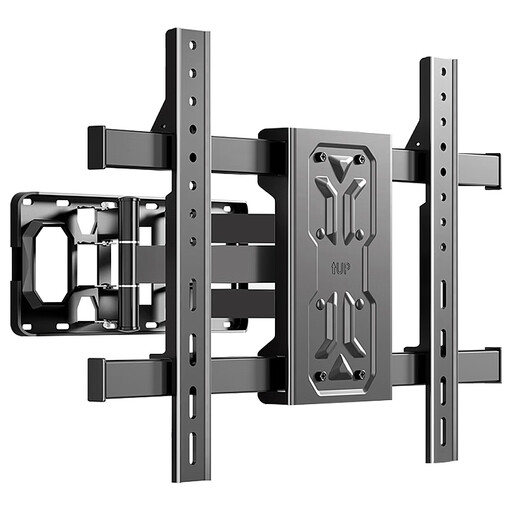
Why this product suits this profile: The extendable design provides flexibility when the television is viewed from different areas of the room.
The specifications for concrete, brick and timber studs, along with the 42–340 mm wall clearance, make the installation requirements clear.
For 32–65 inches, up to 45 kg and VESA up to 400 × 400 mm; extendable design with a maximum clearance of 340 mm.
We have put together a complete, regularly updated list of products that fully meet these strict selection criteria and the safety regulations applicable in the EU.
First, check the television’s VESA measurement, weight and screen size. If these three values match the mount’s specifications, the model may generally be suitable. The wall type must also be appropriate for the intended fixing method.
This depends on the viewing distance, room layout and viewing direction. In many cases, the centre of the screen should be roughly at eye level when seated. If the television is mounted above a piece of furniture or in a home cinema, a tilting mount can help adjust the viewing angle. The mount should not be selected solely based on the maximum possible mounting height.
There is no general answer for how long a mount will last. Its service life depends on the materials, installation quality, condition of the wall, TV weight and regular load. Check the mounting points at suitable intervals. With swivelling models, you should also check the joints and extended arms for play or loose connections.