
Lieferung heute & morgen

Qualitätsgarantie

Willkommens-Angebote freischalten: KOSTENLOSE Lieferung | Bis zu 80 % RABATT | Kostenlose 30-Tage-JoyPlus-Testphase
App herunterladen
Choosing a TV wall mount not only optimises your living space but also enhances your viewing experience. However, the sheer number of options can be overwhelming. Many buyers rely on marketing promises instead of focusing on crucial technical details. This often leads to incorrect purchases that, in the worst-case scenario, can compromise the safety of your TV. This guide highlights the most common pitfalls and explains what truly matters when making your choice.
Before you make a decision, it's important to understand the typical issues that lead to unsuitable purchases. A well-informed choice not only saves you money but also the hassle of complex readjustments.
To avoid a bad buy, you should focus on three key technical parameters. These define the compatibility, safety, and functionality of your future TV wall mount.
The foundation for any secure installation is the compatibility between your TV and the mount.
The choice of motion type depends on your room and viewing habits.
The sturdiest mount is useless if the wall cannot support it.
Here are some recommendations tailored to different user profiles and requirements.
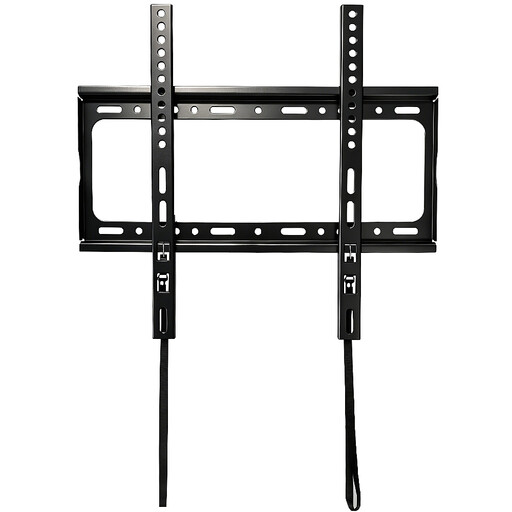
Why This Fits Their Persona: Ideal for users seeking a simple, reliable, and space-saving solution for a mid-sized TV who don't need adjustable angles. Perfect for a clean look in the living room or bedroom.
The clear specifications for TV size (32-65 inches), VESA (up to 400x400 mm), and load capacity (45 kg) prevent basic compatibility errors.
Very slim profile for minimal wall clearance; compatible with solid walls and wooden stud frameworks.
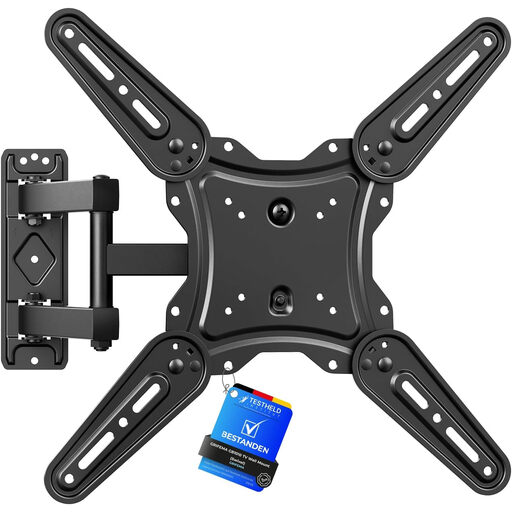
Why This Fits Their Persona: Perfect for users who need maximum flexibility. Ideal for open-plan living concepts, corner installations, or for optimally positioning the screen based on light conditions and seating arrangements.
Solves the problem of insufficient articulation with a full-motion design. The extendable arm (up to 425 mm) allows for flexible positioning.
Wide swivel range (±90°), tilt function (+6°/-12°), and rotation adjustment (±4°) for precise alignment.
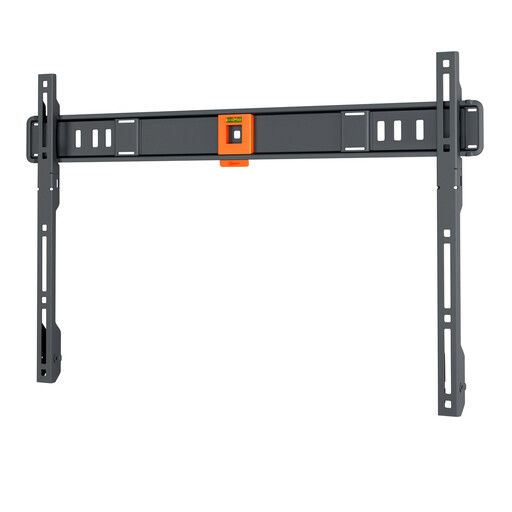
Why This Fits Their Persona: For owners of large and heavy TVs (up to 100 inches) where maximum stability and safety are the top priorities. Ideal for a dedicated home cinema setup.
Addresses the risk associated with heavy devices through a high load capacity of 75 kg and broad VESA compatibility (up to 600x400). The ClickLoc system provides an audible click for secure locking.
Extremely high load-bearing capacity and a security locking system. Despite its robust construction, it maintains a slim profile on the wall.
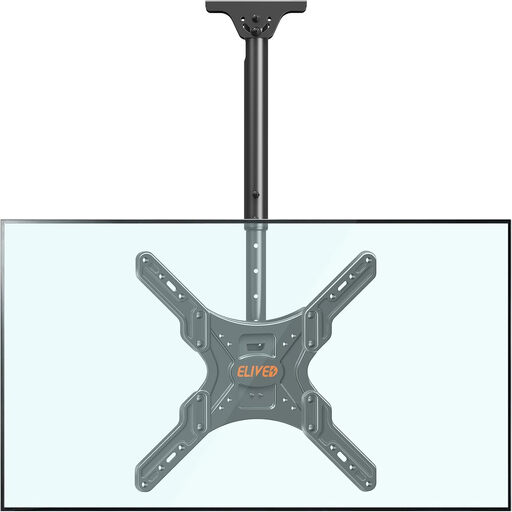
Why This Fits Their Persona: The solution for rooms without load-bearing walls, for mounting on sloped ceilings, or for use in commercial settings like gyms or reception areas.
Completely bypasses the problem of unsuitable walls by mounting to the ceiling. This requires a stable ceiling structure (e.g., concrete or wooden joists).
Height-adjustable, 360° swivel, and tiltable. The hollow post allows for clean cable management.
We have compiled a complete, up-to-date list of products that fully meet these strict selection and safety criteria.
Yes, installation on a plasterboard wall (drywall) is possible, but it requires special precautions. The mount should never be secured only to the plasterboard itself. It must be anchored into the load-bearing structure behind it (e.g., wood or metal studs). For lighter TVs, special metal hollow-wall anchors can be used. Always read the mount manufacturer's instructions carefully and consult a professional if you are unsure.
You can find your TV's VESA standard in several places: in the user manual, on the manufacturer's product webpage, or by measuring the distance between the four threaded holes on the back of your TV yourself. Measure the horizontal and vertical distance from the centre of one hole to the centre of the next in millimetres. For example, a distance of 400 mm horizontally and 400 mm vertically corresponds to the VESA 400x400 standard.
The ideal wall distance depends on the mount type and your personal preference. Fixed mounts offer the smallest distance (often under 3 cm) for a very flat, picture-like appearance. Tilting mounts require a bit more space for the tilting mechanism. Full-motion mounts have the largest wall clearance when retracted (typically 5-7 cm) but offer the greatest positioning flexibility thanks to their extendable arm.