
Lieferung heute & morgen

Qualitätsgarantie

Willkommens-Angebote freischalten: KOSTENLOSE Lieferung | Bis zu 80 % RABATT | Kostenlose 30-Tage-JoyPlus-Testphase
App herunterladen
Buying an electric car is a major step, but choosing the right accessories is just as crucial for a seamless charging experience. A core component is the Type 2 charging cable, which serves as the link between your vehicle and the charging station. The market offers a bewildering array of options, making it difficult to make an informed decision. Incorrect assumptions and overlooked details can quickly lead to a poor purchase that not only costs you money but also compromises charging efficiency and safety.
As your Joybuy Product Recommendation Officer, I'm here to help you understand the essential criteria and avoid common pitfalls. This guide focuses on the facts that truly matter.
Before we dive into the technical details, let's look at the most common errors that lead to buying unsuitable or low-quality products.
To find the right charging cable for your EV, you should check three main technical features. These determine compatibility, charging speed, and practical day-to-day handling.
Charging power is measured in kilowatts (kW) and depends on the current (Amperes, A) and the number of phases.
Recommendation: Check the maximum AC charging power in your vehicle's spec sheet. Choose the cable that matches this value.
The length of the cable directly impacts convenience in your daily charging routine.
Look for objective and certified quality standards.
Here are some product recommendations tailored to specific user profiles that meet the quality criteria mentioned above.
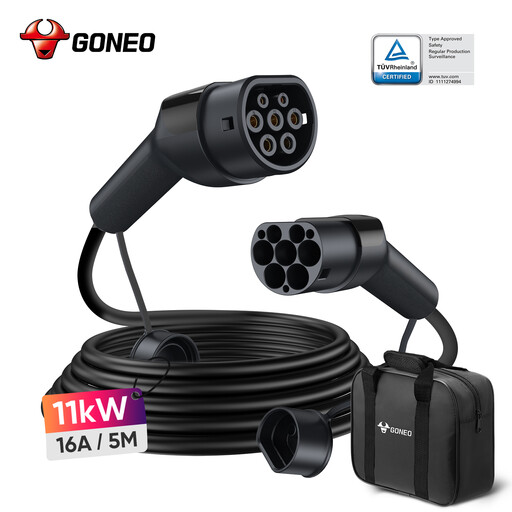
Why This Fits Their Persona: Ideal for owners of a private wallbox whose vehicle charges at 11 kW. The 5-metre length is perfect for the home garage and avoids unnecessary cable clutter.
Avoids unnecessary spending on an oversized 22 kW cable. The T?V Rheinland certification ensures compliance with key safety standards.
Compact length for easy handling; robust TPU cable for durability; IP54 protection.

Why This Fits Their Persona: Perfect for drivers who regularly use public charging stations. The 7-metre length offers the necessary flexibility for various parking situations without being cumbersome. Suitable for the majority of EVs with an 11 kW charger.
Solves the problem of a cable being too short at public charging points. The TPU material withstands the stress of frequent coiling and uncoiling in all weather conditions.
7-metre length for high flexibility; T?V certified; weather-resistant from -40°C to +50°C.
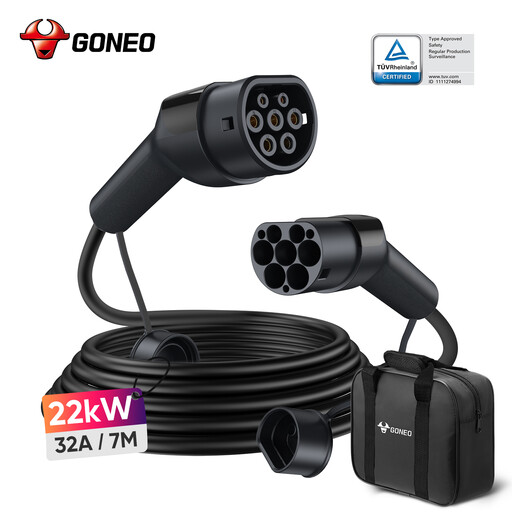
Why This Fits Their Persona: For owners of EVs with a 22 kW on-board charger who want to achieve maximum charging speed at compatible public AC stations. The Tesla charging cable for AC charging is also Type 2, and some older Model S/X vehicles had an optional 22kW charging capability.
Ensures the full potential of the vehicle's 22 kW charger is utilised, rather than being bottlenecked by an 11 kW cable.
Reduces charging times at 22 kW stations; silver-plated contacts and ultrasonic welding for high performance and safety.
We have compiled a complete, real-time list of products that fully satisfy these strict selection criteria and UK safety regulations.
A Type 2 charging cable is the EU-mandated standard for AC charging. Almost all modern electric cars and plug-in hybrids produced for the European market are equipped with a Type 2 port. This also includes Tesla vehicles for AC charging. Exceptions may include older models (e.g., Nissan Leaf before 2018) or direct imports from other markets (e.g., the USA with Type 1). A quick look at your vehicle's charging port will provide certainty.
Yes, that is perfectly possible. The charging system (vehicle, cable, and station) communicates before the session begins and agrees on the maximum possible charging power of the weakest link. In this case, the charging session would proceed at 11 kW. So, you gain no speed advantage, but there is no technical disadvantage either, other than the 22 kW cable typically being thicker, heavier, and more expensive than a Type 2 charging cable 11kW.
Certification by an independent testing body like T?V is a crucial quality indicator. A T?V-certified charging cable has undergone comprehensive tests for electrical safety, durability, temperature resistance, and fire protection. Given the high electrical power and long operating times, this is not an option but a necessity for safe and reliable operation. It protects not only your vehicle but also your property.