Joybuy Insights

Type 2 Charging Cable Buyer’s Guide: Avoid Costly Mistakes

Purchasing an electric vehicle is a major step, but choosing the right charging accessories is just as crucial for a seamless ownership experience. An incompatible or low-quality Type 2 charging cable can not only lead to unnecessarily long charging times but also introduce safety risks. Many buyers invest in over-spec'd charging solutions or overlook critical flaws that only become apparent in everyday use. This guide will help you understand the essential criteria and make an informed decision.

The 3 Most Common Mistakes When Buying a Charging Cable

Before we dive into the technical details, it's important to be aware of the most common pitfalls that often lead to frustration and unnecessary expense.

  1. Overinvesting in Charging Power: A frequent mistake is buying a 22kW charging cable when your own vehicle can only charge at a maximum of 11 kW. The charging speed is always determined by the weakest link in the chain—in this case, the car's On-Board Charger (OBC). A 22 kW cable offers no speed advantage for an 11 kW vehicle but is more expensive to purchase.
  2. Underestimating Cable Length and Material: A cable that is too short severely limits your flexibility when parking, whether in your own garage or at public charging stations. A 10m Type 2 charging cable can make all the difference here. The quality of the cable jacket is equally critical. Inferior materials can harden in low temperatures, making the cable difficult to handle and causing it to become brittle.
  3. Ignoring Safety Certifications: The market is flooded with charging cables that lack recognised safety testing. Products without CE marking or T?V certification can pose significant risks, such as overheating or short circuits. A safe charging process should always be the top priority.

Key Parameters for Making the Right Choice

To avoid these mistakes, you should check three core parameters. These determine the compatibility, safety, and real-world usability of your charging solution.

Charging Power and Phases: 11 kW or 22 kW?

The charging power (in kilowatts, kW) indicates how quickly your vehicle's battery can be charged. Most home solutions and many public AC charging stations operate at 11 kW or 22 kW.

  • 11kW charging cable: Uses three-phase power with 16 amps (A). This is the common standard for most battery electric vehicles (BEVs) and is sufficient for a full overnight charge.
  • 22kW charging cable: Also uses three-phase power, but with 32 amps. This can potentially double the charging speed, but only if both the vehicle and the charging station support this power level.
  • Single-phase charging: Solutions like a Schuko EV charging cable for a standard household outlet charge on a single phase at a maximum of 3.7 kW. This is significantly slower and is primarily intended as an emergency or occasional charging solution.

Before buying, always check your vehicle's maximum AC charging power in the owner's manual.

Connection Type and Mobility: Fixed Cable or Mobile Wallbox?

Different charging solutions are suitable depending on your living situation and usage profile.

  • Standard Type 2 Cable: This cable has a Type 2 connector on both ends. It is used to connect your vehicle to a permanently installed wallbox at home or to a public AC charging station. It is not a standalone charging unit.
  • Mobile Wallbox (Portable EV Charger): This is a smart charging cable with an integrated control box. It allows you to charge from various types of sockets without being dependent on a fixed wallbox. Common variants include:
    • Schuko Charging Cable: For standard household sockets (230 V). Slow, but universally compatible.
    • CEE Charging Cable: For red industrial or "high-power" sockets (400 V). This enables much higher charging power (e.g., 11 kW or 22 kW) and is the preferred solution for a high-performance mobile wallbox.

Cable Length and Safety Features

Two factors that are often overlooked but are crucial in daily use are the cable's length and its protection rating.

  • Cable Length: 5 metres is often sufficient for charging in a garage. 7 metres offers more convenience at public charging points. A 10m Type 2 charging cable provides maximum flexibility for awkward parking situations.
  • Protection Class (IP Rating): The IP rating indicates how well the device is protected against the ingress of foreign objects (first digit) and water (second digit). IP54 (protection against dust and splashing water from all directions) is a solid standard for outdoor use. IP66 offers even greater protection.
  • Certifications: Look for a CE marking and, ideally, independent testing by organisations like T?V. This confirms compliance with European safety standards.

Our Top Picks for Different User Profiles 2026

Based on these criteria, we have identified a few products that are well-suited for specific user groups.
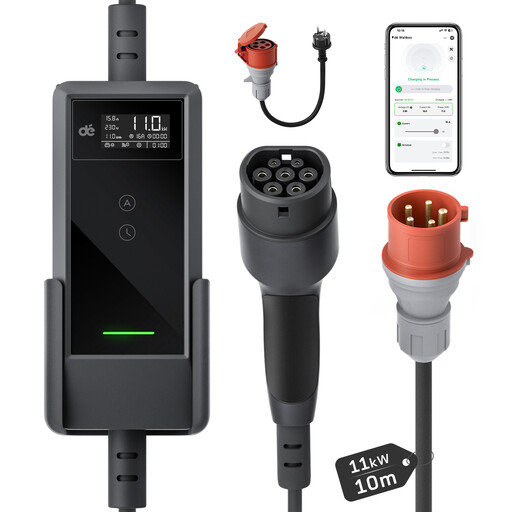
IDEAL FOR: Flexible Everyday Users
dé Mobile Wallbox 11kW with APP 10m 3-Phase 6–16A Adjustable Power CEE-16A 400V to Type 2 Charging Cable EV Charger for All BEV/PHEV

dé Mobile Wallbox 11kW with APP 10m

Why it's a great fit: Perfect for renters or EV drivers who can't or don't want to install a fixed wallbox. The combination of 11 kW charging power via a CEE connection and the generous 10-metre cable length offers maximum flexibility at home, at a friend's house, or at a campsite.

How it avoids the common mistakes

The 11 kW power is perfectly matched to most common vehicles, preventing overinvestment. The 10-metre length solves the problem of impractically short cables.

Key Advantage

A mobile charging solution for multiple locations. Adjustable charging power (6–16 A) and app control for scheduled charging.
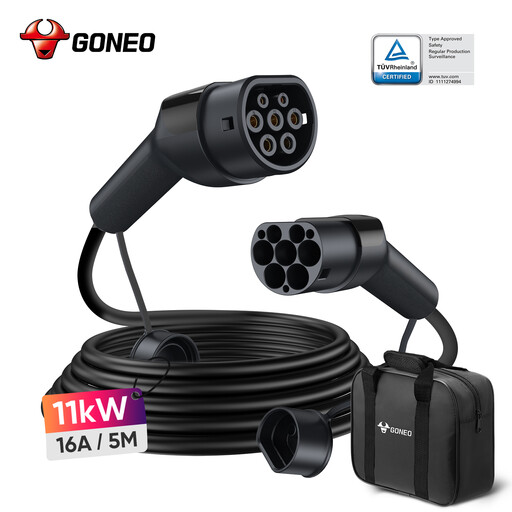
IDEAL FOR: Safety-Conscious Homeowners
GONEO Type 2 EV Charging Cable 11KW 16A 5m 3-phase T?V Certified

GONEO Type 2 Charging Cable 11KW 16A 5m T?V-Certified

Why it's a great fit: For users seeking a reliable and safe connection cable for their home wallbox or for public charging stations. The focus here is on durability and certified safety, not on extra smart features.

How it avoids the common mistakes

The T?V certification directly addresses concerns about unsafe products. The 5-metre length is a pragmatic choice for standard home use without unnecessary cost.

Key Advantage

Independently certified safety (T?V Rheinland). Robust TPU cable jacket and IP54 protection for use in all weather conditions.
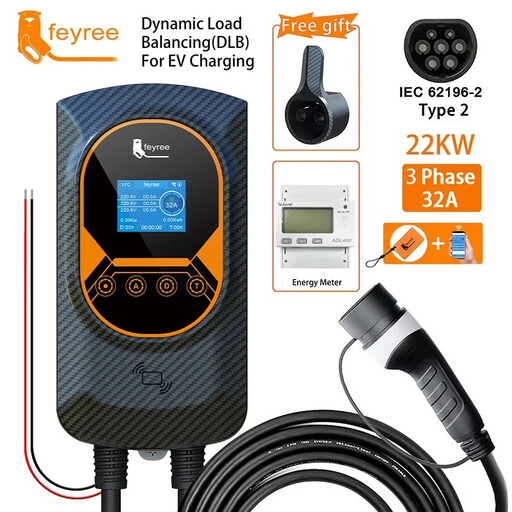
IDEAL FOR: Tech-Savvy Performance Optimisers
feyree EV Charger Type2 Cable 32A 22KW Dynamic Load Blancing EVSE Wallbox APP Function

feyree 22kW Wallbox with Dynamic Load Balancing & App

Why it's a great fit: For homeowners with a 22 kW-capable vehicle who want to maximise charging performance and control it intelligently. The app-controlled wallbox with Dynamic Load Balancing (DLB) automatically adjusts the charging power based on household consumption to prevent overloading the grid.

How it avoids the common mistakes

This isn't an overinvestment, but a targeted purchase for users whose vehicles can actually use the 22 kW power. The smart features actively optimise the charging process.

Key Advantage

Dynamic Load Balancing (DLB) for efficient charging without grid overload. Comprehensive remote control and monitoring via app.

Looking for more options?

We've compiled a complete, up-to-date list of products that fully meet these strict selection criteria and safety regulations.

Frequently Asked Questions (FAQ)

1. Is a 22 kW charging cable always faster than an 11 kW cable? No. The maximum charging speed is limited by the vehicle's On-Board Charger (OBC). If your car only supports a charging power of 11 kW, it will not charge any faster with a 22 kW cable. In this case, the 22 kW cable is compatible, but it offers no speed advantage.

2. Do I need a permit for a mobile wallbox? In Germany, mobile charging solutions up to 11 kW generally do not require a permit, but they must be registered with the local grid operator. Charging equipment with more than 11 kW (e.g., 22 kW) requires both registration and a permit. The installation of the required CEE socket should always be carried out by a qualified electrician.

3. What is the ideal cable length for everyday use? The ideal length depends on your parking situation.

  • 5 metres: Often sufficient for a home garage if the vehicle is parked right next to the wallbox or socket.
  • 7 metres: Offers more flexibility and is a good choice for public charging stations where the parking spot may not be optimally located.
  • 10 metres: Recommended for maximum reach in awkward parking situations, for example, if the charging station is installed on the opposite side of the parking space.