
Lieferung heute & morgen

Qualitätsgarantie

Willkommens-Angebote freischalten: KOSTENLOSE Lieferung | Bis zu 80 % RABATT | Kostenlose 30-Tage-JoyPlus-Testphase
App herunterladen
Purchasing an electric vehicle is a significant step, but choosing the right charging accessories presents a challenge for many owners. The market for Type 2 charging cables and charging solutions is overwhelming, and marketing promises don't make the decision any easier. As a Joybuy Product Recommendation Officer, my job is to provide objective information so you can make an informed decision and avoid costly errors. In this guide, we'll focus on the facts that truly matter.
Before we dive into the technical details, let's look at the three most common pitfalls that lead to frustration and unnecessary expenses.
To avoid these pitfalls, it's crucial to understand the core parameters that define a charging solution.
The charging power determines how quickly your vehicle's battery is charged. It depends on the number of phases and the amperage.
Before buying, always check the maximum charging capacity of the on-board charger (OBC) in your vehicle. You can find this information in the vehicle's manual.
The right cable connects the power source to your vehicle.
Cable length is an often-underestimated factor.
Look for a cable with a sheathing made of TPU (Thermoplastic Polyurethane). This material is more resistant to abrasion, chemicals, and extreme temperatures than cheaper PVC. An IP rating of IP54 or higher ensures the cable is protected against splashing water and dust.
Based on the criteria mentioned, we have identified some products that are particularly well-suited for specific user profiles in Germany.
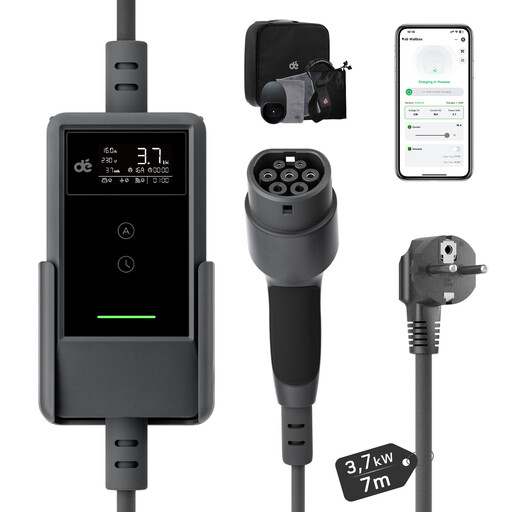
Why This Fits Their Persona: Ideal for users in rental properties or drivers of PHEVs who cannot or do not want to install a permanent wallbox. It allows charging from any standard domestic socket and offers additional control options via the app.
Bypasses the need for expensive electrical installations (Pitfall 3) and provides a safe, certified charging solution, unlike untested budget products (Pitfall 2).
Plug-and-play solution for any Schuko socket; amperage and charging times are adjustable via the wallbox with app function.

Why This Fits Their Persona: The pragmatic choice for homeowners who already have an 11 kW wallbox installed and need a reliable, durable connection cable for daily use.
The T?V certification guarantees tested safety (avoids Pitfall 2). Being rated for 11 kW perfectly matches the most common home wallboxes and prevents unnecessary spending on an oversized 22 kW cable (avoids Pitfall 1).
Independently certified safety (T?V Rheinland); robust TPU cable and silver-plated contacts for durability and optimal conductivity.
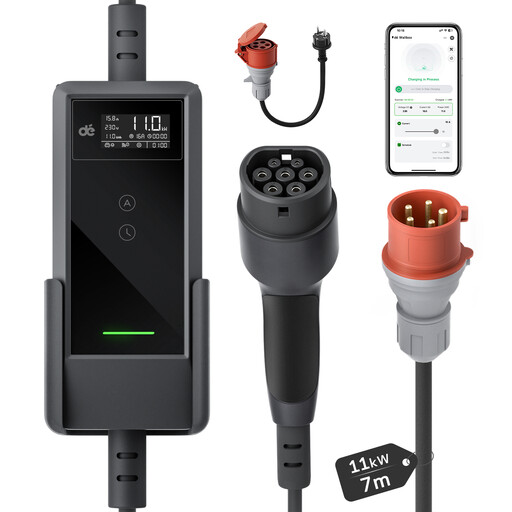
Why This Fits Their Persona: A high-performance, mobile charging solution for anyone who doesn't want to compromise on fast charging speeds while on the go. Perfect for use with CEE high-power sockets, like those found at campsites or commercial sites.
As a mobile wallbox, it offers a powerful and flexible alternative to a fixed installation, thus avoiding the location dependency of a stationary solution (Pitfall 3). The adjustable charging power ensures compatibility with various power grids.
Up to 11 kW charging power via a mobile CEE connection; full control over charging processes and amperage via smartphone app.
We have compiled a complete, real-time list of products that fully satisfy these strict selection criteria and UK safety regulations.
Yes, that is perfectly fine. The charging system communicates the maximum possible power, which in this case is limited by the 11 kW wallbox (or the vehicle, if its charging capacity is lower). You will therefore charge at a maximum of 11 kW. A 22 kW cable is future-proof in case you later upgrade to a more powerful wallbox or a vehicle with a higher charging capacity.
Charging from a domestic socket is generally safe if a few conditions are met. The electrical installation should be modern and in good condition. Do not use extension cords or power strips, as they pose an overheating and fire risk. For continuous use, having the wiring checked by an electrician is recommended. Mobile chargers with adjustable amperage offer additional safety, as you can adapt the power to older wiring.
Measure the distance from your charging station to your car's charging port in its typical parking position.