
Lieferung heute & morgen

Qualitätsgarantie

Willkommens-Angebote freischalten: KOSTENLOSE Lieferung | Bis zu 80 % RABATT | Kostenlose 30-Tage-JoyPlus-Testphase
App herunterladen
Choosing a charging cable for an electric car can be overwhelming with so many technical specifications to consider. However, selecting the right cable is crucial for your vehicle's charging efficiency and safety. This guide will help you understand the essential criteria and make an informed choice that suits your vehicle and charging habits. We provide objective information to help you find the perfect Type 2 charging cable for your needs.
Before you decide on a model, there are three key aspects to consider: charging power, connector type, and practical features like cable length and safety certifications.
The charging power, measured in kilowatts (kW), determines how quickly your vehicle's battery charges. However, the speed is always limited by the weakest link in the chain: the charging station, the charging cable, and the car's on-board charger (OBC).
It is advisable to check the maximum charging power of your vehicle's on-board charger in the owner's manual to align your choice accordingly.
The connector type determines where you can charge your vehicle. In Europe, the Type 2 connector has become the established standard.
The cable's length and safety features are crucial factors for daily use.
Based on the criteria mentioned, we have compiled a selection of charging cables that cover a range of different needs.
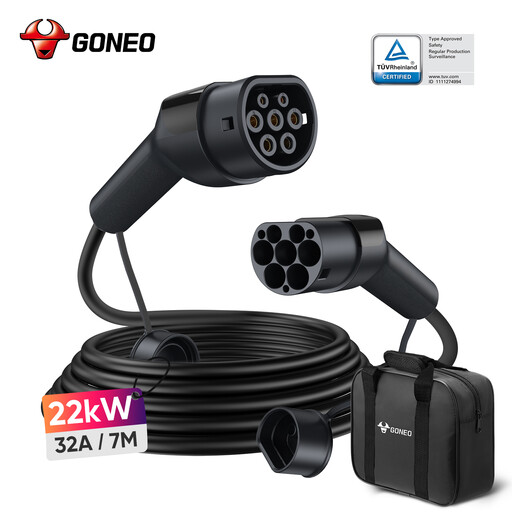
What makes it stand out: This cable is designed for maximum charging performance and durability. It is T?V Rheinland certified and meets numerous other standards (CE, UKCA, RoHS). According to the manufacturer, ultrasonically welded connections and silver-plated contacts ensure optimal conductivity and reduced heat generation. Its robust construction is built for demanding daily use; the plug can even withstand being run over by a 2-tonne vehicle.
Advantages:
Who it's for: Drivers of pure battery electric vehicles (BEVs) with a 22kW on-board charger who want to use the fastest possible AC charging at compatible stations and who value certified safety and robustness.

What makes it stand out: This model shares the high-quality construction features of its 22kW counterpart, including T?V certification, ultrasonically welded contacts, and durable materials. However, it is specifically designed for the most common charging power of 11kW found in Germany and across Europe.
Advantages:
Who it's for: Ideal for the vast majority of EV and PHEV drivers whose vehicles are designed for 11kW charging. It is a reliable, all-round solution for daily charging at a home wallbox and at public stations.
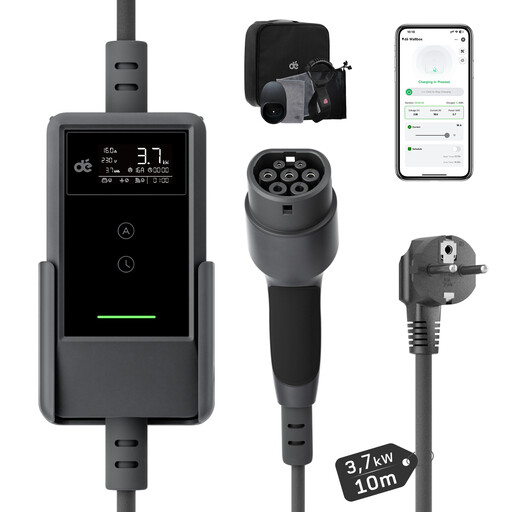
What makes it stand out: This mobile charging cable offers maximum flexibility by allowing you to connect to any standard household socket (Schuko). With a length of 10 metres, it can also bridge longer distances to your parking spot. A special feature is the app control, which allows you to schedule charging sessions and adjust the charging current (6-16A). The integrated LCD screen displays charging data in real time.
Advantages:
Who it's for: For vehicle owners who cannot or do not want to install a permanent wallbox, and as a secondary cable for travel and emergencies. It is especially practical for plug-in hybrids or for situations where a slow overnight charge is sufficient.
If the models presented here do not exactly meet your requirements, or if you are looking for other variants such as different lengths or specific accessories, you can find a wider selection in our category.
Discover more options in our Electrical Grounding Cable category.
1. Can I use a 22kW charging cable for a car that can only charge at 11kW? Yes, that is perfectly possible and safe. The charging system communicates the maximum possible charging power, and the charging process is automatically limited to the vehicle's lower capacity (11kW). A 22kW cable will not damage the vehicle and is a good future-proof investment.
2. What does "3-phase" mean for a charging cable? A 3-phase charging cable uses three conductors from the power grid simultaneously to transfer higher power. This is the technical prerequisite for charging powers of 11kW (3 phases × 16A × 230V) and 22kW (3 phases × 32A × 230V). Single-phase charging, such as via a Schuko socket, is limited to much lower power levels (typically 2.3 kW to 3.7 kW).
3. How important is T?V certification for an EV charging cable? A T?V certification is an important seal for tested safety awarded by an independent body. It confirms that the EV charging cable has passed rigorous tests for electrical safety, material resistance, heat resistance, and manufacturing quality. This minimises risks such as overheating, short circuits, or electric shocks and gives you peace of mind during daily use.