
Lieferung heute & morgen

Qualitätsgarantie

Willkommens-Angebote freischalten: KOSTENLOSE Lieferung | Bis zu 80 % RABATT | Kostenlose 30-Tage-JoyPlus-Testphase
App herunterladen
Choosing the right charging cable for an electric vehicle can be a challenge given the many technical specifications. Charging power, cable length, and safety certifications are critical factors that directly impact charging efficiency and operational safety. This article serves as an objective guide to help you select a suitable Type 2 charging cable. We will outline objective criteria and present a selection of products tailored to specific use cases.
To make an informed decision, three main criteria should be considered: charging power, cable length, and safety features.
The charging power of a cable, measured in kilowatts (kW), determines the maximum speed at which your vehicle can be charged. The most common variants are 11 kW charging cables and 22 kW charging cables.
Decision aid: Check your vehicle's manual for its maximum AC charging power. The choice of cable should be based on this value to make the best use of the charging infrastructure.
The right cable length depends on your typical parking and charging situations.
An EV charging cable is a high-performance product where safety should be the top priority.
Based on the criteria above, we have compiled a selection of GONEO Type 2 charging cables that are well-suited for different user needs due to their specific features.
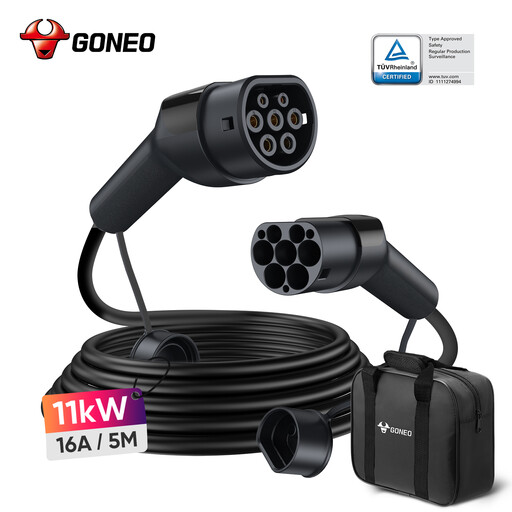
What sets it apart: This cable is designed for efficiency and manageability in home use. The 11kW power is perfectly matched to the most common wallboxes and vehicles with a corresponding on-board charger. The certification by T?V Rheinland and the use of ultrasonic welding technology on the silver-plated contacts highlight its focus on safety and durability.
Advantages:
Who it's for: Drivers of EVs or plug-in hybrids with an 11 kW on-board charger who primarily charge at home and are looking for a reliable, safe, and easy-to-handle cable.

What sets it apart: This model offers maximum flexibility by combining high charging power (22kW) with extended reach. The 10m length can bridge even greater distances to public charging stations or in complex parking situations. It is a solution for anyone who wants to be prepared for any scenario.
Advantages:
Who it's for: Owners of pure battery electric vehicles (BEVs) with a 22 kW OBC who frequently charge in public and require maximum flexibility. It is also a great choice for drivers who often encounter blocked charging stations or difficult parking conditions.
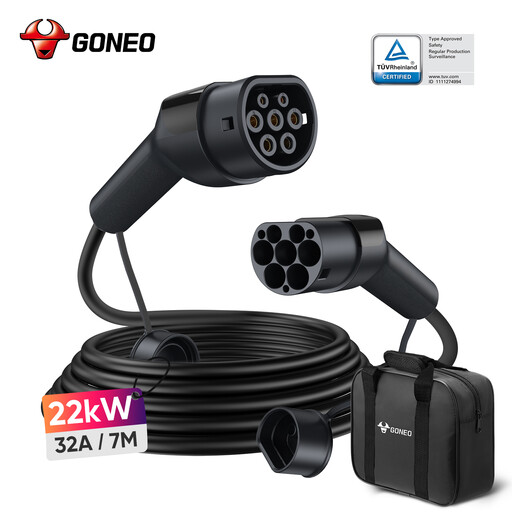
What sets it apart: This cable represents a well-balanced compromise. The 7m length offers more flexibility than the 5-meter version without being as cumbersome as a 10-meter cable. Combined with 22kW charging power, it is a versatile everyday companion that performs well both at home and on the go.
Advantages:
Who it's for: EV drivers looking for a single, reliable cable for all use cases. It is suitable for charging at home, at work, and at public stations, offering a great balance of power, reach, and manageability.
If you are interested in other technical equipment besides charging accessories, you can find more products in our Welding Equipment category.
The main difference is the maximum charging power. A 22kW charging cable can theoretically charge twice as fast as an 11kW charging cable, provided the vehicle and the charging station support this power. A 22 kW cable can be used without issue at an 11 kW station or with an 11 kW vehicle; the charging power will then be automatically reduced to 11 kW.
The Type 2 connector is the standard for AC charging in Europe and is compatible with most electric cars and plug-in hybrids (e.g., Tesla, VW, BMW, Mercedes, Audi). Exceptions include older models or vehicles designed for other markets that use a Type 1 (J1772) or CHAdeMO connector, for example. Always check your vehicle's connector type.