
Lieferung heute & morgen

Qualitätsgarantie

Willkommens-Angebote freischalten: KOSTENLOSE Lieferung | Bis zu 80 % RABATT | Kostenlose 30-Tage-JoyPlus-Testphase
App herunterladen
Purchasing an electric car is the first step, but choosing the right charging accessories is crucial for a seamless daily experience. The market for Type 2 charging cables is crowded and filled with offers that seem attractive at first glance. However, not every cable is suitable for every vehicle or charging situation. As your Joybuy Product Recommendation Officer, I'll help you understand the essential criteria and avoid common purchasing pitfalls, ensuring you find a safe and compatible charging solution.
Many buyers focus solely on price or marketing promises. This often leads to frustration, safety risks, or unnecessary expenses. Pay special attention to these three pitfalls:
You don't need to be a technician to make the right choice. Focus on three decisive features that determine compatibility, safety, and convenience.
The charging power determines how quickly your EV's battery is charged. The decisive factor here is not just the cable, but also the power source and the maximum charging capacity of the on-board charger (OBC) in your vehicle.
Safety is non-negotiable. A high-quality charging cable for your EV should have comprehensive safety features.
The practicality of a charging cable depends heavily on its length and construction.
Based on the criteria mentioned, we have put together a selection of charging solutions tailored to specific user profiles.
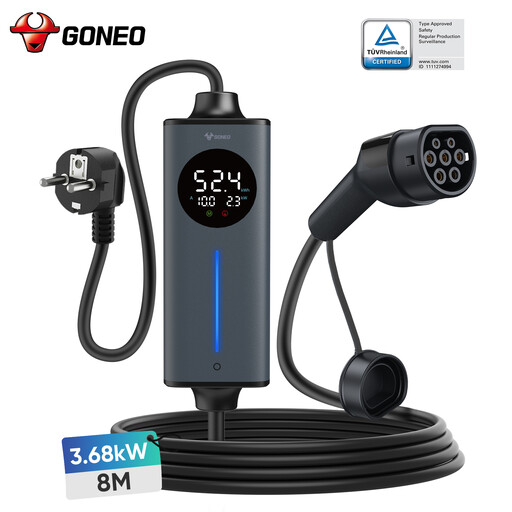
Why This Fits Their Persona: Ideal for EV drivers who need a straightforward and flexible charging solution for home (garage, parking space) or for travel, without having to install a wallbox. Perfect for renters or PHEV owners.
This charger features integrated RCD protection (30mA AC + 6mA DC) and temperature monitoring, avoiding the pitfall of unsafe, low-cost products. The timer function helps to save on electricity costs.
Plug-and-play operation on any standard Schuko socket. Adjustable charging current and timer for scheduled, cost-saving charging. The LED display shows all relevant charging data in real-time.
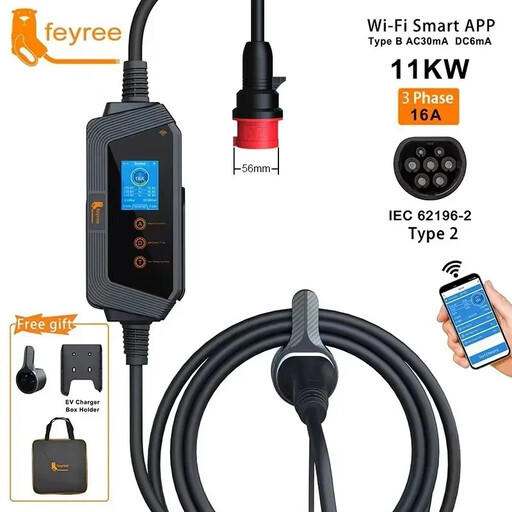
Why This Fits Their Persona: For homeowners with a three-phase power supply (CEE) who want to charge their BEV significantly faster than with a Schuko socket and intelligently manage the charging process. A powerful alternative to a fixed wallbox.
With 11 kW of power, it perfectly matches the maximum charging capacity of many common EVs, avoiding unnecessary spending on a 22 kW solution. The app control provides full transparency and control over the charging process.
Up to 11 kW charging power for fast charging. Comprehensive remote control via Wi-Fi app (charging current, scheduling). Integrated leakage protection (Type B: AC 30mA + DC 6mA) for high safety.
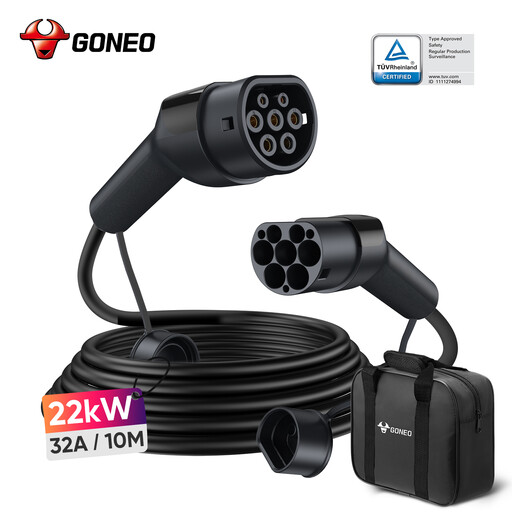
Why This Fits Their Persona: For drivers who frequently charge at public AC stations and require maximum flexibility and safety. The generous length can also bridge awkward distances between the parking spot and the charging station.
The T?V-Rheinland certification is an objective proof of tested safety and quality, protecting against the purchase of unsafe products. The robust TPU cable is designed for tough outdoor use.
Independently T?V-certified. The 10-meter cable length offers maximum flexibility. The 22 kW capacity makes it future-proof for vehicles with higher charging capabilities.
We've compiled a complete, up-to-date list of products that fully meet these strict selection criteria and German safety regulations.
A pure Type 2 charging cable (with a Type 2 plug on both ends) is intended exclusively for connection to a wallbox or a public AC charging station. To charge from a household socket (Schuko) or an industrial socket (CEE), you need a portable charging cable (also called a portable wallbox or emergency charging cable). This has a Type 2 plug on the vehicle side and a Schuko or CEE plug on the other, along with a control box (ICCB).
No. The actual charging speed is determined by the weakest link in the chain. In most cases, this is your vehicle's on-board charger (OBC). If your car has a maximum AC charging capacity of 11 kW, it will only charge at 11 kW, even with a 22 kW cable at a 22 kW station. Buying a 22 kW cable is not necessary in this case, but it can be a sensible investment with an eye toward a future vehicle with a higher charging capacity.
Look for clear markings and certifications. A CE mark is mandatory in the EU but is not always a guarantee of high quality. Specifically look for a test seal from an independent, recognised body like T?V. For portable chargers, the specification of integrated residual current protection (e.g., RCD Type B or AC 30mA + DC 6mA) is an important safety feature. Reputable manufacturers list these technical specifications transparently.