
Lieferung heute & morgen

Qualitätsgarantie

Willkommens-Angebote freischalten: KOSTENLOSE Lieferung | Bis zu 80 % RABATT | Kostenlose 30-Tage-JoyPlus-Testphase
App herunterladen
If you own an electric car or a plug-in hybrid with a Type 2 connector, you’ll find a wide range of mobile chargers and permanently installed wall boxes to choose from. However, the differences go beyond just charging power. The connector type, electrical installation, safety features, cable length and operation all determine whether a solution really works for you in everyday life.
A 22 kW wall box does not automatically charge every vehicle at 22 kW. What matters is the car’s built-in AC charger. Many electric vehicles, for example, only accept up to 11 kW at home, while some plug-in hybrids use significantly lower power levels.
Your home installation must also match the power output:
A Type 2 charging cable that meets IEC 62196-2 will generally fit many European electric vehicles and PHEVs. However, you still need to check the power supply. An older or inadequately protected Schuko socket may not be suitable for regular charging at high continuous loads.
For mobile solutions, look for features such as residual current protection, temperature monitoring, earth detection and overcurrent protection. For a permanently installed wall box, it’s advisable – and in some cases required – to have the installation inspected and carried out by a qualified electrician.
An EV charger with an app, a Wi-Fi EV charger or an RFID charging station can display charging times, current and energy consumption. However, for this to work, the Wi-Fi range, app compatibility and setup all need to be reliable. If you only want to charge overnight, you don’t necessarily need an app. A timer on the electric car charger may be sufficient for that purpose.
First, check that your vehicle and charger use the same standard. For the products we’re looking at here, the Type 2 connector according to IEC 62196-2 is the focus. This applies to many BEVs and PHEVs available in Germany, but it doesn’t replace checking your vehicle handbook.
For on-the-go charging, a Type 2 charging cable without an integrated control box may be enough if a suitable charging point is available. For charging your electric car at home, a mobile charging box, a Schuko charger for electric cars or a wall box are the typical options.
A Schuko charger uses a standard 230-volt household socket. The socket should be in good condition and suitable for the planned continuous load. A CEE charger requires a matching red CEE socket and, depending on the model, offers a more robust power supply.
A 7 kW or 11 kW wall box is usually installed on a dedicated circuit. For 22 kW, you need to check carefully that your home connection, circuit protection, cable cross-section and vehicle charger all work together. You should clarify the specific requirements with an electrical installation company before making a purchase.
Objectively relevant features include:
A longer cable makes charging in the garage or driveway easier. However, it also adds weight and takes up more space. So measure the distance between the socket, charging box and vehicle before choosing a 10, 15 or 20 metre option.
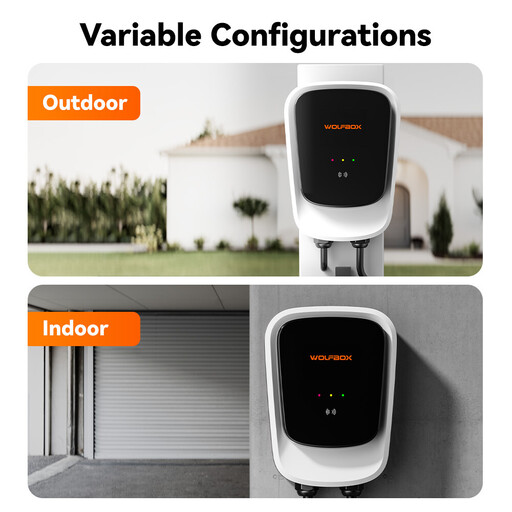
Why this product fits the profile: This mobile charging box uses 230 V via Schuko and is ideal for users who want to charge at home or on the go without a fixed wall box. The 20-metre cable can be handy when sockets are further away.
The charging power is clearly stated as a maximum of 3.68 kW. RCD protection with 30 mA AC and 6 mA DC, earth detection and temperature monitoring are all built in.
Adjustable charging current up to 16 A, timer from 0 to 8 hours and LED display for voltage, current, temperature and charging time.
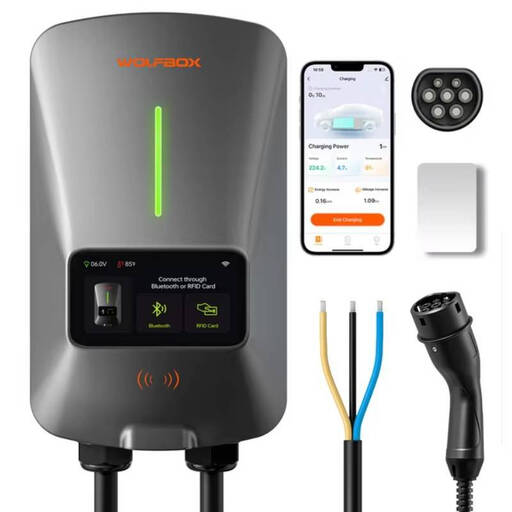
Why this product fits the profile: For the garage or a dedicated parking space, this 7 kW wall box offers multiple control options with an LCD display, app control and RFID access.
According to the product specifications, installation requires a dedicated 32 A circuit and a qualified electrician. This means the electrical requirements are addressed before use.
7 kW at 32 A with single-phase operation, LCD display plus app and RFID control. Compatibility is stated for vehicles with a Type 2 charging connector.
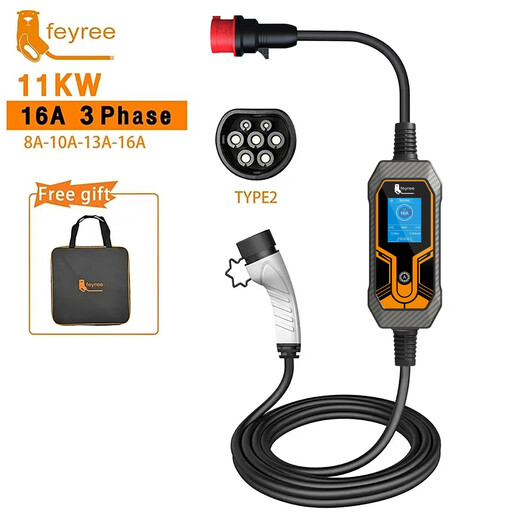
Why this product fits the profile: This mobile charging solution is aimed at users with existing CEE infrastructure, for example in a garage, on an agricultural property or when moving between different locations.
The required CEE connection is explicitly stated. The LCD display, adjustable charging current and safety features make it easier to control mobile use.
Rated at 11 kW at 16 A, Type 2 compatibility, IP65 housing plus protection against leakage current, overcurrent, overvoltage and overheating.
We’ve put together a complete, regularly updated list of products that fully meet these strict selection criteria and the safety regulations in force across the EU.
Yes, provided the vehicle has a Type 2 connector and you use a suitable Schuko charger for electric cars. The socket and circuit must be rated for continuous load. If you’re unsure, have the installation checked by a qualified electrician. For regular charging, a permanently installed wall box may be the more suitable solution.
The lifespan depends on how often it’s used, mechanical stress, storage and environmental conditions. Cables should not be permanently kinked or driven over. Mobile charging boxes should be stored dry and protected after use. For outdoor installation, the stated ingress protection rating and correct installation are crucial.
The ongoing cost depends on the amount of electricity charged in kilowatt-hours and your electricity tariff. Timer or app functions can help you schedule charging for cheaper tariff periods, if your electricity contract offers such differences. The charging power itself doesn’t automatically change the price per kilowatt-hour, but it can affect how long charging takes.