
Lieferung heute & morgen

Qualitätsgarantie

Willkommens-Angebote freischalten: KOSTENLOSE Lieferung | Bis zu 80 % RABATT | Kostenlose 30-Tage-JoyPlus-Testphase
App herunterladen
A tyre pressure gauge is a useful essential for many car drivers, motorcyclists and cyclists. However, unclear product specifications, unsuitable valve adapters or a measurement range that is too low can quickly lead to the wrong purchase. If you also want to top up your tyres while you’re out and about, you’ll need either a separate digital tyre pressure gauge or a portable compressor with a pressure gauge.
Figures such as 150 or 200 PSI may look impressive at first glance. However, the tyre pressure specified by a car manufacturer is usually much lower. What matters is whether the gauge is easy to read within the range you actually need and supports the right unit. A measurement range that’s too broad can make lower pressure readings harder to see at a glance.
A manual tyre pressure gauge is placed on the valve when needed. A tyre pressure monitoring system (TPMS), on the other hand, stays on the vehicle and monitors tyre pressure regularly or continuously. TPMS sensors can also measure tyre temperature, but they need batteries and must be fitted and assigned correctly.
Car valves, Presta valves on bicycles, and valves on trailers or motorhomes aren’t always the same. A tyre pressure gauge for cars, motorbikes and bicycles should therefore come with suitable adapters. If you’re buying a compressor, cable length, battery capacity, charging method and heat build-up during continuous use are also important.
Before you buy, check:
A digital tyre pressure gauge should fit securely onto the valve without letting unnecessary air escape during measurement. A Presta valve adapter is useful for bicycles. For a portable tyre inflator, the hose or valve head should be sturdy enough and easy to remove.
For battery-powered tyre pressure gauges, check the battery type and whether the batteries can be replaced. Electric tyre compressors run either from a 12-volt socket or on a built-in battery. For longer journeys, consider:
A tyre pressure gauge displays the current reading. A compressor also inflates the tyre. These functions shouldn’t be confused.
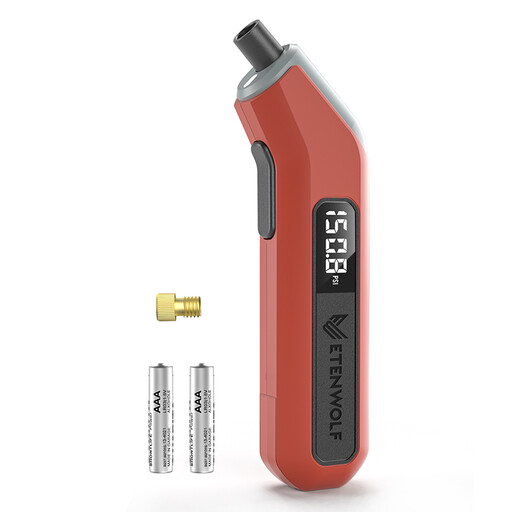
Why it’s a good fit: This digital tyre pressure gauge is ideal if you want to check your tyres yourself and don’t need an inflator. According to the product details, it runs on two AAA batteries, which are included, and measures up to 200 PSI.
The bright LED display addresses a common issue with hard-to-read gauges. The Presta valve adapter makes it suitable for many bicycles too.
200 PSI reading, LED display and Presta valve adapter; compact weight of around 3.53 ounces according to the product details.
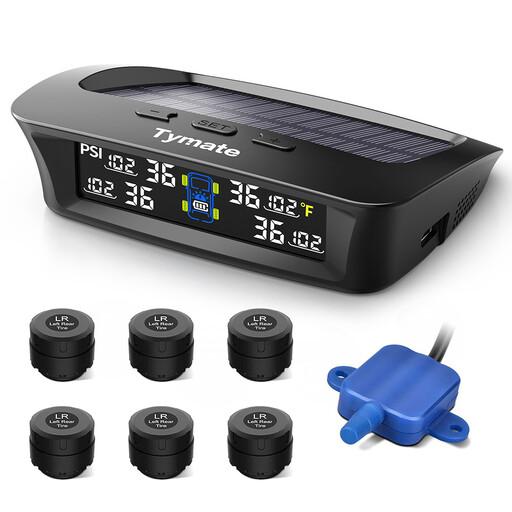
Why it’s a good fit: This TPMS is designed for motorhome, trailer and lorry owners who want to monitor pressure and temperature while driving. According to the product details, its pressure range is 0 to 116 PSI and its temperature range is -20 to 85 °C.
Alerts for rapid air loss, high or low pressure, and high temperature mean you don’t have to rely solely on occasional manual checks. Before buying, check exactly how many sensors are included, as the contents listed can vary.
Colour LCD, automatic backlight, 433.92 MHz communication and a stated pressure deviation of less than 2 PSI.
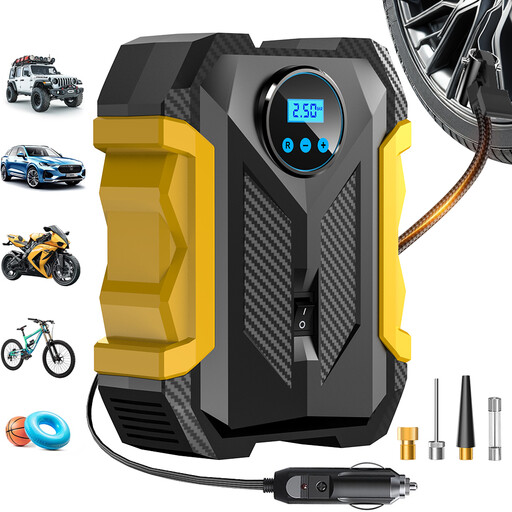
Why it’s a good fit: This 12-volt compressor is a good choice for drivers who want to check and top up their tyres in one go. According to the product description, it has a 3-metre cable and is designed for cars, motorbikes, bicycles and balls.
The long cable is handy for vehicles where a shorter lead might not reach every wheel. Before use, check that the 12-volt socket is suitably fused.
150 PSI display, LED light, digital pressure reading and a 3-metre cable, according to the product details.
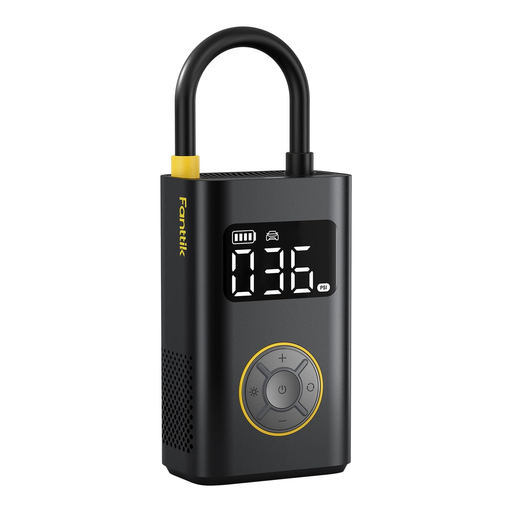
Why it’s a good fit: This battery-powered portable tyre inflator is ideal for cyclists, motorcyclists and compact car owners who want to use it without relying on a 12-volt socket. According to the product details, it offers four preset modes plus a manual mode.
Automatic shut-off at the preset pressure helps prevent over-inflation. The built-in hose storage keeps accessories tidy while you’re on the go.
Maximum pressure of 150 PSI, built-in 7.4-volt, 2.5 Ah battery and stated run time of up to 23 minutes.
Where possible, check the pressure when the tyres are cold and compare the reading with the vehicle manufacturer’s recommendation. You’ll often find it on the B-pillar, inside the fuel filler flap or in the owner’s manual. After inflating the tyre, check the pressure again and replace the valve cap.
For TPMS systems, take sensor positions, battery condition and range into account. External tyre pressure sensors should be fitted securely, but mustn’t damage the valve. Store battery-powered compressors in a dry place and recharge them after use, following the manufacturer’s instructions.
We’ve put together a complete, regularly updated list of products that meet these strict selection criteria and fully comply with the safety regulations in force in the EU.
It’s a good idea to check before longer journeys and at regular intervals. You should also check the pressure after significant temperature changes, a change in load or hitting an obstacle. Always follow the vehicle manufacturer’s recommendation.
Their lifespan depends on the batteries, valve connection, moisture and mechanical wear. Replaceable batteries make them easier to use over time. For TPMS sensors, also check the stated battery life; the Tymate system is said to last around two years.
A 12-volt model draws power from the vehicle battery while in use. Battery-powered models mainly involve charging cycles and eventual battery wear. Running costs therefore depend more on the power supply, how often you charge it and how long you use it than on the PSI rating alone.