
Lieferung heute & morgen

Qualitätsgarantie

Willkommens-Angebote freischalten: KOSTENLOSE Lieferung | Bis zu 80 % RABATT | Kostenlose 30-Tage-JoyPlus-Testphase
App herunterladen
A tyre pressure monitoring system for a motorhome can display pressure and temperature readings while you’re on the move. This is particularly useful on long journeys, when your load varies, or when towing a caravan or trailer. However, TPMS solutions can differ considerably in the number of sensors, wireless range, alarm functions and installation.
If you focus only on a high PSI reading or a colour display, you could miss important details. The following points will help you find the right TPMS for a motorhome, SUV, lorry or trailer and avoid common buying mistakes.
A tyre pressure monitoring system with a particularly wide PSI range isn’t necessarily right for every vehicle. What matters is whether the range matches the values specified by your vehicle or tyre manufacturer. For many cars, SUVs and smaller motorhomes, a measurement range of 0 to 8 bar or 0 to 116 PSI is sufficient.
However, lorries, heavy motorhomes and certain trailer tyres may have different requirements. Before buying, compare the recommended tyre pressure in your vehicle documents and tyre specifications with the system’s measurement range.
A system can only monitor as many tyres as it has sensors. A tyre pressure monitoring system with 4 sensors is suitable for monitoring four tyres. A motorhome with twin wheels, an additional spare wheel or a towed caravan may need a different number of sensors.
So check:
A tyre pressure warning system alerts you to changes, but it doesn’t replace regular checks when the vehicle is stationary. The system should also clearly distinguish between low pressure, high pressure, a rapid air leak, high temperature and low battery voltage. Unclear warnings or a hard-to-read display can make the system more difficult to use.
Check the stated measurement range and how the alarm thresholds are set. According to the product information, the Tymate system automatically calibrates its baseline. The listed triggers include pressure 15 per cent below and 25 per cent above the baseline.
These thresholds are product specifications and shouldn’t be confused with the individual recommendations of your vehicle manufacturer. The vehicle’s specified pressure remains the key reference before setting off.
Tyre temperature monitoring complements the pressure display. This matters because temperature changes while you’re driving, which can also affect the pressure reading. The selected Tymate system has a stated temperature range of -20 to 85 °C; according to the product description, the temperature alarm is set to trigger at 158 °F.
The display provides readings for guidance. It doesn’t provide a technical diagnosis of the tyre. If you receive a warning, stop somewhere safe and have the tyre checked.
An external tyre pressure sensor screws onto the tyre valve. This provides a retrofit solution without needing to access the tyre, but the sensors must be fitted correctly and secured against loss. After installation, check that the valves remain airtight and that the positions shown on the display are correct.
Other useful features include:
The stated sensor battery life of around two years is a manufacturer’s estimate and depends on usage, temperature and signal conditions.
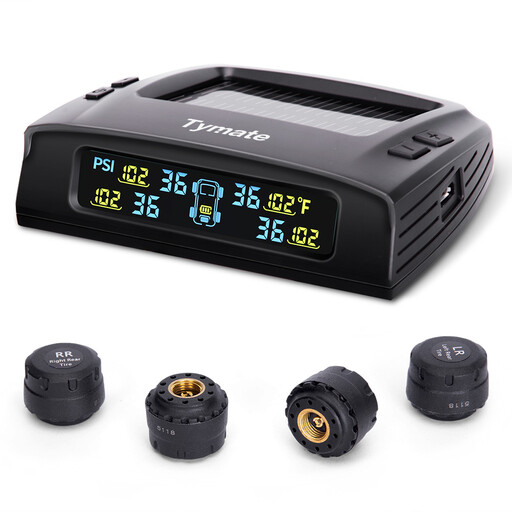
Why this product suits this user: The set is designed to monitor four tyres and displays pressure and temperature on an LCD colour screen. This configuration is easy to follow in cars, SUVs and smaller motorhomes.
The number of sensors and the 0–8 bar measurement range are clearly specified, making it easy to check whether the system is right for your vehicle before buying.
Four external CR1632 sensors, an LCD colour display, automatic sleep mode and, according to the supplier, a two-year warranty.
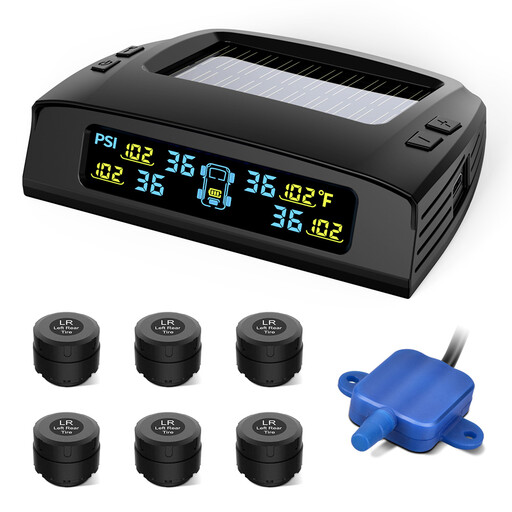
Why this product suits this user: The included repeater is useful if you want to monitor a longer motorhome or a vehicle combination.
The wireless range isn’t just described in general terms: a repeater is included, and the supplier says the system is suitable for vehicles up to 50 feet long.
Repeater, five specified alarm types, temperature monitoring from -20 to 85 °C and a stated measurement deviation of less than 2 PSI.
Why this product suits this user: For regular long-distance journeys, the combination of pressure and temperature readings, alarm alerts and a repeater provides features designed for extended use.
As well as pressure, the system monitors temperature. According to the supplier, the alarm highlights the affected wheel and switches to a red display when there’s a warning.
Display unit with a 360 mAh battery, Type-C charging cable, four external sensors, repeater and automatic activation while driving.
External tyre pressure sensors for trailers and motorhomes are usually screwed onto the valves. Before your first journey, assign the sensors to the correct tyre positions and compare the display readings with a separate gauge when the tyres are cold.
Ongoing costs mainly include:
An LCD tyre pressure gauge or display should be easy to read and clearly match each reading to the relevant tyre. Automatic backlighting can be useful in changing light conditions, but it’s no substitute for correct installation and regular visual checks.
We’ve put together a complete, regularly updated list of products that fully meet these strict selection criteria and the safety regulations in force in the EU.
You’ll need a set with four sensors to monitor four tyres. Twin wheels, a caravan or additional trailer tyres may require more sensors. Before buying, check whether the display supports additional sensors.
The CR1632 batteries in the Tymate models mentioned are stated to last around two years. This can vary depending on temperature, wireless activity and usage. Replaceable batteries make day-to-day use easier.
That depends on the size of your vehicle, how much you drive and how you use the trailer. On long journeys or when the load varies considerably, additional pressure and temperature readings can be useful for guidance. Make sure the system has sufficient wireless range and suitable sensors, and add a repeater if needed for the length of your vehicle.