
Lieferung heute & morgen

Qualitätsgarantie

Willkommens-Angebote freischalten: KOSTENLOSE Lieferung | Bis zu 80 % RABATT | Kostenlose 30-Tage-JoyPlus-Testphase
App herunterladen
A suitable tyre pressure monitoring system can monitor tyre pressure while you’re driving and alert you to any changes. But choosing the right one isn’t always straightforward for car drivers, motorhome owners, caravan drivers and trailer users. As well as permanently fitted or external tyre pressure sensors, there are digital gauges, portable compressors and combined solutions.
It’s not just about a high PSI rating or a colour display. More important are your vehicle type, the number of sensors you need, the measuring range, the power supply and whether you want to check tyre pressure occasionally or monitor it continuously.
A 150 PSI tyre inflator may be suitable for various uses. However, the maximum pressure rating only describes the device’s technical upper limit. It doesn’t automatically mean the compressor is suitable for large motorhome tyres, extended use or every type of vehicle.
Before buying, compare the tyre pressure recommended by your vehicle manufacturer with the device’s measuring and pressure range. You’ll usually find this value on the B-pillar, inside the fuel filler flap or in the owner’s manual.
A digital tyre pressure gauge shows the pressure when you check it manually. A tyre pressure monitoring system, on the other hand, monitors several tyres continuously or at short intervals. Depending on the model, it may also provide additional alerts.
A gauge is handy for checking your tyres at a petrol station or at home. For long journeys with a motorhome, trailer or caravan, continuous tyre pressure monitoring for your car and trailer may be more practical.
Four sensors are often enough for a car. A car and trailer combination may need more. Check that the number of sensors you need is included, and that the wireless connection can cover the length of your vehicle.
The way the sensors attach also matters. Screw-on external sensors can usually be fitted without a visit to a garage, but you’ll need compatible valves, a secure fit and regular battery checks.
Look for a clearly stated measuring range in bar and PSI. Bar is commonly used in everyday life in Germany, while many product descriptions also give PSI. This conversion can help you compare values:
The stated margin of error is also important. For example, the Tymate system is listed as having an error of less than 2 PSI. This is a manufacturer’s claim and shouldn’t be confused with official calibration.
Useful alerts include warnings for low or high tyre pressure, rapid air loss and increased tyre temperature. Some systems use the current pressure as a reference value. According to the product description, the Tymate model includes alerts for pressure that is 15 per cent below or 25 per cent above the reference value.
Make sure these settings are correct: the reference pressure should match the value recommended by your vehicle manufacturer, not a pressure you happened to measure after a long drive. Warm tyres can show a higher pressure.
For portable use, battery life, charging method and readability are key. A tyre pressure gauge with a display should be easy to read in daylight and in the dark. With a portable tyre compressor, you’ll also need to consider battery capacity, cable length, heat build-up and automatic shut-off.
A 12-volt pump with a long cable can be handy for cars and motorbikes. A battery-powered device gives you more flexibility, but needs to be charged before longer journeys. For motorhomes and trailers, signal boosting is often more important than it is for a short car.
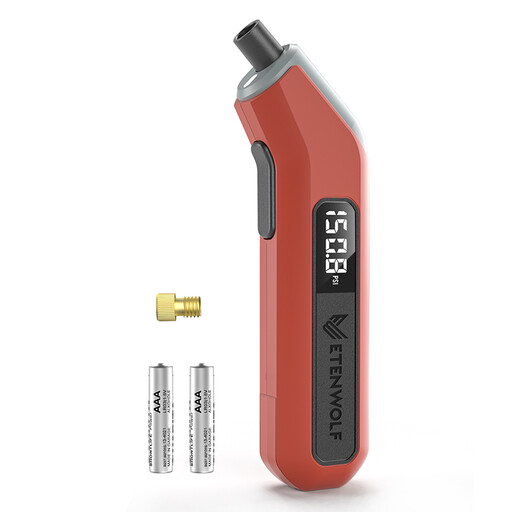
Why this product suits this user: This digital handheld gauge is ideal for drivers who want to check tyre pressure themselves without fitting a permanent monitoring system. Two AAA batteries are listed as included, along with a Presta valve adapter.
It’s not mistaken for a permanent vehicle monitoring system. Instead, you get a compact device for manual checks.
Bright LED display, stated maximum pressure of 200 PSI and an adapter for Presta valves.
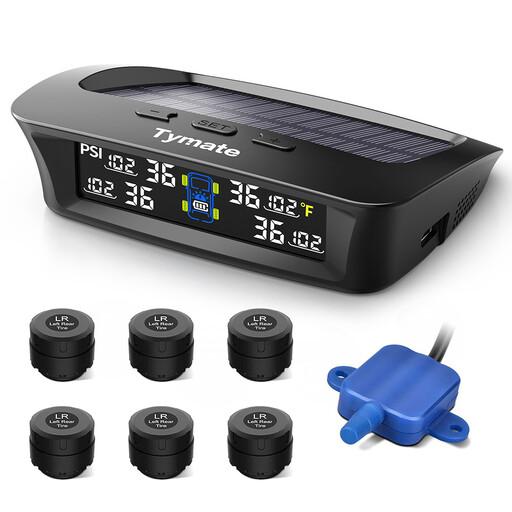
Why this product suits this user: This system is designed for people who want to monitor the pressure and temperature of several tyres on an LCD colour screen. It’s suitable for motorhomes, trailers and longer journeys.
Pressure and temperature alerts help you spot changes without waiting until your next manual check. Before buying, make sure the number of sensors and signal range suit your vehicle combination.
Stated range of 0–8 bar or 0–116 PSI, temperature monitoring from -20 to 85 °C and several types of alert.
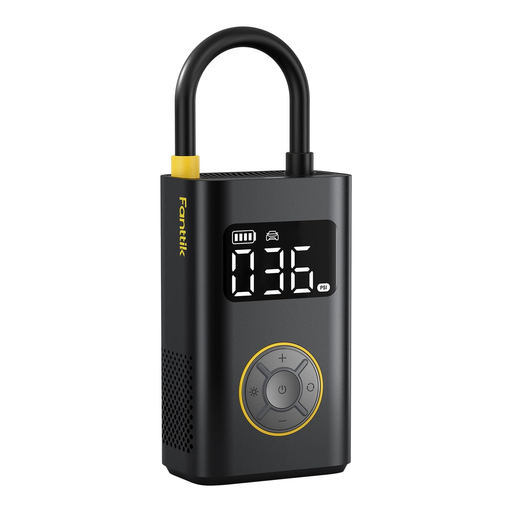
Why this product suits this user: This battery-powered compressor is for people who want to top up their tyres while on the go, as well as check the pressure. It’s listed as suitable for compact cars, SUVs, motorbikes, bicycles and balls.
Automatic shut-off reduces the risk of accidentally exceeding the pressure you’ve set. Even so, check the capacity beforehand if you plan to use it with large tyres or for extended periods.
Stated maximum pressure of 150 PSI, four preset modes plus a manual mode, and a built-in 7.4 V, 2.5 Ah battery.
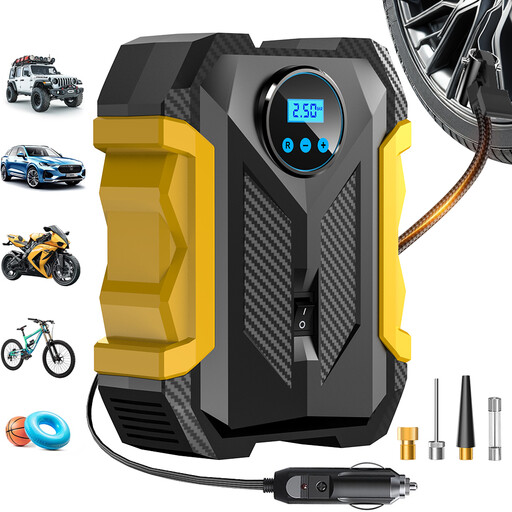
Why this product suits this user: This 12-volt pump can be kept in your vehicle and is listed as suitable for cars, motorbikes, bicycles and balls.
The 3-metre cable gives you more room to move around the vehicle. Still, check the power requirements and make sure you have a 12-volt socket available.
Digital pressure display, LED lighting, 12-volt operation and a stated maximum pressure of 150 PSI.
We’ve put together a complete, regularly updated list of products that meet these strict selection criteria and fully comply with the safety regulations in force in the EU.
Screw-on sensors replace the valve caps and are secured to prevent them coming loose. You then pair the sensor positions with the display and set the reference values. After fitting, check that each wheel is recognised correctly and that the valves still seal properly.
Battery life depends on the battery type, usage, temperature and transmission intervals. The Tymate system’s external sensors are listed as using a CR1632 battery, with an estimated life of around two years. This is a guide from the product description. Before longer journeys, check the battery level, sensor fit and readings.
With a battery-powered tyre pressure gauge, the main ongoing cost is replacement batteries. A battery-powered compressor needs regular charging. A 12-volt pump usually has no separate energy costs while you’re driving, although extended use can put a strain on your vehicle battery. Whatever device you use, always follow the tyre pressure recommended by your vehicle manufacturer.