UI designers who rely on shortcuts
If you regularly switch between design tools, check that the shortcuts work with your chosen keyboard layout. The Figma Help Centre explains the keyboard shortcuts and how to select a layout.


Start by choosing a keyboard layout that works with your design shortcuts and operating system, then consider how much desk space you have and how the keys feel to type on. Using two UI views or two monitors with one computer doesn’t mean you need to switch devices; a multi-device keyboard is mainly useful if you actually switch between separate devices. If you spend a long time typing, key shape may matter more than having an especially compact layout.
If you regularly switch between design tools, check that the shortcuts work with your chosen keyboard layout. The Figma Help Centre explains the keyboard shortcuts and how to select a layout.
If you write text, labels or documentation as well as creating designs, you may want to give more weight to key shape and your preferred hand position. Options include both flat keyboards and keyboards with a shaped key layout.
A compact layout may be a good option if you have limited space on your desk. Check that the different key arrangement suits the way you normally work.
| Buying criterion | What to look for | Who is this most important to? |
|---|---|---|
| Shortcuts and layout | Check the layout options and shortcuts shown in Figma; the Figma Help Centre lists German QWERTZ as a selectable layout. | If I use design commands frequently, I want to be able to access them reliably with my chosen layout. Around 36% of consumers say shortcuts and a suitable layout are their top priority. |
| Typing comfort for long sessions | Compare low-profile scissor keys with a shaped key layout; details such as key shape and hand size vary by model, for example at CHERRY and Kensington. | When I spend a long time typing, I want to choose keys that feel comfortable for the way I hold my hands. Around 29% of consumers put typing comfort first. |
| Space required | Weigh a compact layout against familiar key positions; the Keychron K3 Max is listed as a 75% model. | If space in front of my screens is limited, I want to balance the keyboard’s footprint against a familiar key layout. Around 21% of consumers prioritise saving space. |
| Switching between devices | Count the computers and tablets you actually use; multi-device features depend on the model and its connections, for example at Logitech or Kensington. | If I use the same keyboard with several separate devices, I want to be able to switch between them easily. Around 14% of consumers say switching devices is their top priority. |
A multi-device switching function is for connected computers or tablets. You don’t need one just to switch between views or monitors on the same computer.
Before you buy, count the separate devices you want to use with the same keyboard.
Keyboards in the same model range may be available with different layouts. Figma offers a separate option for German QWERTZ; make sure the layout matches the shortcuts shown.
Check the exact version and physical key layout against the design shortcuts you use.
A manufacturer’s description of hand positioning doesn’t prove that a keyboard will prevent discomfort. You may also need time to get used to a different key shape.
Choose the shape and size to suit how you work and the way you position your hands; don’t treat comfort claims as a guarantee of health benefits.
The MX Keys S is aimed at buyers looking for low-profile keys, backlighting and programmable features. The ERGO K860 is an alternative with a different shape.
The KC 6000 SLIM is a full-size, low-profile wired keyboard. The German version is listed under model code JK-1600DE-2.
The K3 Max is a compact 75% model with customisable keys; a DE-ISO version is available to select.
The Pro Fit Ergo KB675 EQ TKL combines a shaped key layout with multi-device connectivity and a TKL layout.
This selection includes keyboards with a German QWERTZ or ISO-DE layout, some with a compact layout or key customisation features; certain models are described as supporting switching between multiple devices.
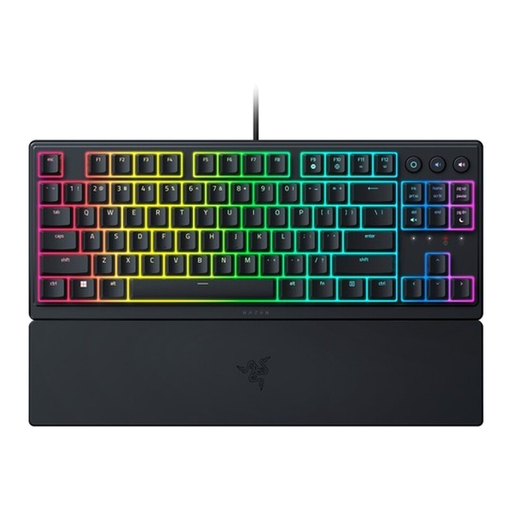 No image available
A good fit if you’re looking for a compact keyboard with a German layout for your design workspace.
Tenkeyless format; the product name specifies a German layout.
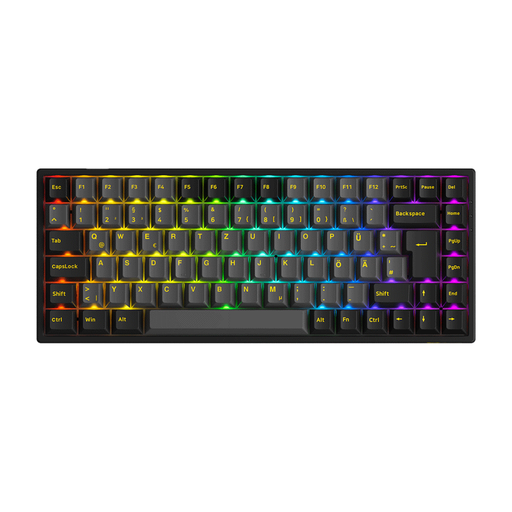 No image available
A compact option if you’re looking for a German layout and want to explore key customisation for your workflow.
75% layout, ISO-DE, V3 Pro Cream Blue Switch, hot-swappable version, with Bluetooth, 2.4 GHz and USB-C connections.
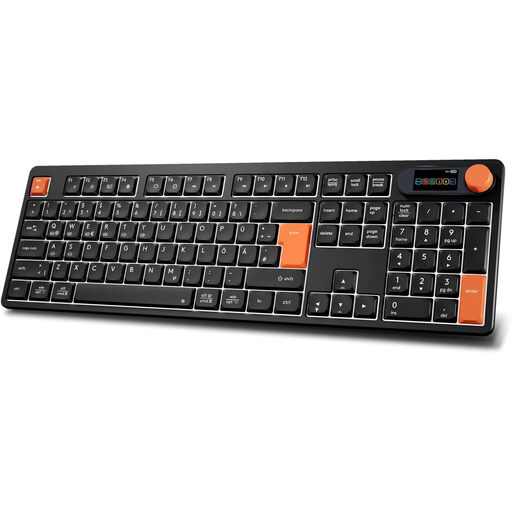 No image available
Could be worth considering for a workspace with several separate devices if you need the connections offered by this particular model.
The product name lists four Bluetooth connections, a 2.4 GHz receiver, USB-C, a 2000-mAh battery and backlighting.
 No image available
This compact version could be a good fit if you’re looking for a keyboard with a German layout and several connection options.
65% layout, low-profile MX Speed switches, with 2.4 GHz, Bluetooth and USB-C connections. Check that the compact key arrangement suits the way you normally work.
 No image available
Could be a good choice for a space-conscious workspace if you’re looking for a 75% layout and customisable keys.
ISO-DE layout, hot-swappable version, VIA compatibility, macros, and Bluetooth, 2.4 GHz and USB-C connections. Check that the compact key arrangement suits your workflow.
Only if you actually switch between separate computers or tablets. Two UI views or two monitors connected to one computer don’t, by themselves, mean you need a multi-device keyboard; check your setup first.
Figma offers German QWERTZ as a selectable keyboard layout. Check the layout mapping and shortcuts shown in Figma’s settings; default shortcuts for a US QWERTY layout may not work unchanged.
CHERRY lists USB-A as a requirement for the KC 6000 SLIM. For other keyboards, check the connection type for the specific version and follow the care instructions for that model.
According to Verbraucherzentrale, online consumer purchases generally come with a 14-day right to cancel, starting from the day you receive the goods. Your statutory rights against the seller are separate from any voluntary manufacturer’s warranty; if an item is faulty, the first step is usually to ask for a repair or replacement.
No. ASR A6 does not set a general model requirement for private purchases. The Federal Institute for Occupational Safety and Health describes its scope as covering screen-based work in workplaces and teleworking settings; workplace setups should be assessed according to their specific design.