
Lieferung heute & morgen

Qualitätsgarantie

Willkommens-Angebote freischalten: KOSTENLOSE Lieferung | Bis zu 80 % RABATT | Kostenlose 30-Tage-JoyPlus-Testphase
App herunterladen
Choosing the right mobile charging solution requires an analysis of technical specifications to ensure compatibility and efficiency with your devices. The key parameters are capacity, power output, supported charging protocols, and port types. Systematically comparing these criteria against your personal needs will lead to a well-informed decision.
The functionality of a power bank or power adapter is defined by its physical and technical specifications. Understanding these parameters is essential for selecting the right device.
Capacity, measured in milliampere-hours (mAh), describes the amount of electrical charge stored. It's an indicator of how many times you can charge a device. When calculating, it's important to note that energy losses of 15–30% occur due to voltage conversion and heat. A 10000mAh power bank will realistically deliver about 7,000–8,500 mAh.
The power output, measured in watts (W), determines the charging speed. Modern devices use fast-charging technologies that require higher power.
The USB-C port has established itself as the standard for modern devices. It allows for higher data and power transfer rates and supports Power Delivery. Many chargers offer a combination of USB-C and traditional USB-A ports to ensure broad compatibility.
A GaN charger uses gallium nitride instead of silicon as its semiconductor material. This allows for higher efficiency with less heat generation. The result is significantly more compact and lightweight chargers that offer the same or higher power output compared to conventional models.
Based on the technical criteria above, we present a selection of products for different user profiles.

Why we recommend it This model combines a massive 25,600 mAh capacity with a maximum power output of 87W. This makes it suitable not only for smartphones and tablets but also as a full-fledged laptop power bank for devices like the MacBook Air. Its four ports (two USB-C, two USB-A) offer excellent flexibility for charging multiple devices simultaneously.
Pros
Who it's for Users who need to power multiple demanding devices like a laptop, tablet, and smartphone on the go. Ideal for business travellers, digital nomads, and commuters with high energy needs.
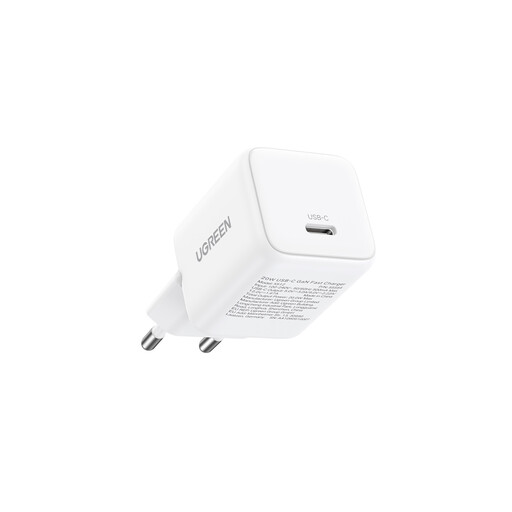
Why we recommend it This fast charger leverages GaN technology to deliver 20W of power in an extremely compact form factor. It is a wall charger, not a portable charger, and serves as an efficient charging solution for home or travel. Its broad protocol support (PD 3.0, QC 3.0/4.0) ensures compatibility with a wide range of devices, including the latest iPhone and Samsung Galaxy models.
Pros
Who it's for Users looking for a minimalist yet powerful USB-C charger for home, the office, or travel to quickly charge their smartphone or other small devices.
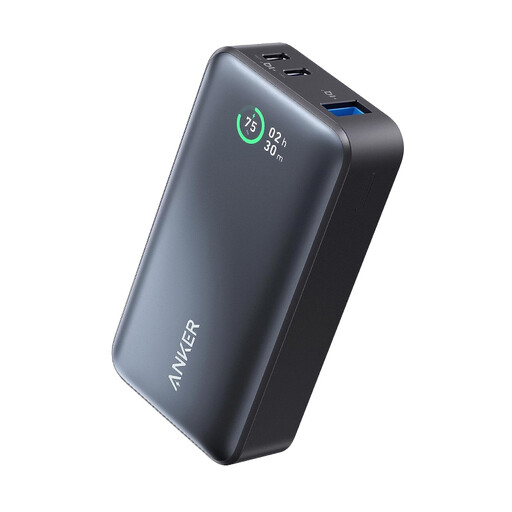
Why we recommend it The Anker 533 power bank offers an excellent balance of capacity, power, and portability. With 10,000 mAh and a maximum output of 30W, it can charge modern smartphones at high speed. The integrated LED display, which shows the battery level and remaining charging time, is a practical feature for everyday use.
Pros
Who it's for Everyday users, commuters, and students looking for a reliable and compact 10000mAh power bank for their smartphone and possibly a tablet, who also value fast-charging capabilities.
Beyond traditional power banks and power adapters, integrated charging solutions are also evolving. The miniaturisation of electronics and battery technology is enabling new approaches where power supplies are built directly into everyday objects. For users interested in the intersection of technology and apparel, smart jackets offer a glimpse into the future of mobile power.
1. How many mAh does a good power bank need? The required capacity depends on the devices you need to charge. For daily use and charging a smartphone once or twice, 10,000 mAh is a good rule of thumb. For charging tablets or laptops, or for multi-day trips without access to a power outlet, models with 20,000 mAh or more are recommended.
2. What does Power Delivery (PD) mean on a power bank? Power Delivery (PD) is a universal fast-charging standard that operates via a USB-C port. It enables intelligent communication between the charger and the device to dynamically adjust the charging voltage and current. This allows for significantly higher power output (up to 100W or more), resulting in much faster charging for compatible devices like smartphones, tablets, and laptops.
3. Can I take a power bank on an airplane? Yes, power banks are generally allowed on airplanes, but only in your carry-on luggage. The International Civil Aviation Organization (ICAO) limits the capacity to 100 watt-hours (Wh) per battery. This is equivalent to approximately 27,000 mAh at a voltage of 3.7V. For batteries between 100Wh and 160Wh, approval from the airline is often required. It is recommended to check the specific regulations with your airline before travelling.