
Lieferung heute & morgen

Qualitätsgarantie

Willkommens-Angebote freischalten: KOSTENLOSE Lieferung | Bis zu 80 % RABATT | Kostenlose 30-Tage-JoyPlus-Testphase
App herunterladen
A functional cooker hood, also known as an extractor hood, is crucial for a pleasant kitchen environment. It filters grease particles from the air, neutralises odours, and reduces the moisture generated during cooking. However, the market is crowded, and many models don't live up to their promises. Before you make a decision, it's important to know the most common pitfalls to avoid a poor investment.
The choice of a cooker hood should be based on technical requirements, not just design. Three common misconceptions often lead to dissatisfaction after the purchase.
To make the right choice, you should focus on objective, technical features. These three factors are decisive for the function and suitability of your new cooker hood.
Choosing the operating mode is the most fundamental decision.
The design determines how the hood integrates into your kitchen. Common widths are 60cm cooker hoods and 90cm cooker hoods, matching standard hob dimensions.
The required airflow rate depends on the size of your kitchen. A simple formula for guidance is: Room Volume (Length x Width x Height in m) x 10 = Recommended Airflow Rate in m?/h. For a 15 m? kitchen with a 2.5 m ceiling height, for example, this results in a required rate of approx. 375 m?/h.
Also, pay attention to the energy efficiency class. An A+++ rated cooker hood consumes significantly less electricity than models with a lower rating, which makes a noticeable difference in operating costs over the long term.
Here are some models tailored to different needs and kitchen situations.
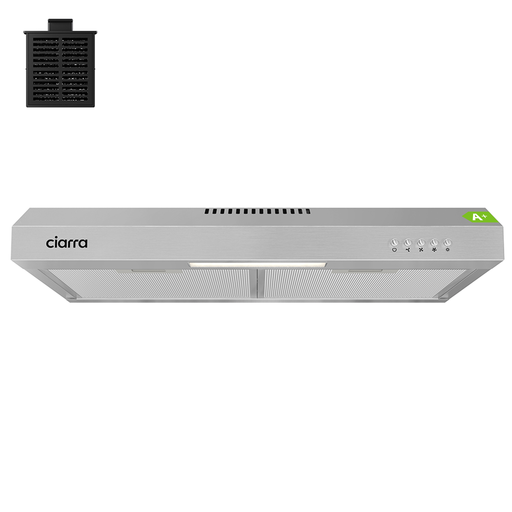
Why This Fits Their Persona: Ideal for renters or kitchens with limited space. The compact under-cabinet design integrates discreetly into existing kitchen units without requiring major modifications.
This model supports both ducted and recirculating operation, bypassing the problem of structural limitations. It's a flexible solution that doesn't require wall openings.
Compact design for under-cabinet mounting; simple push-button controls; washable aluminium grease filter.
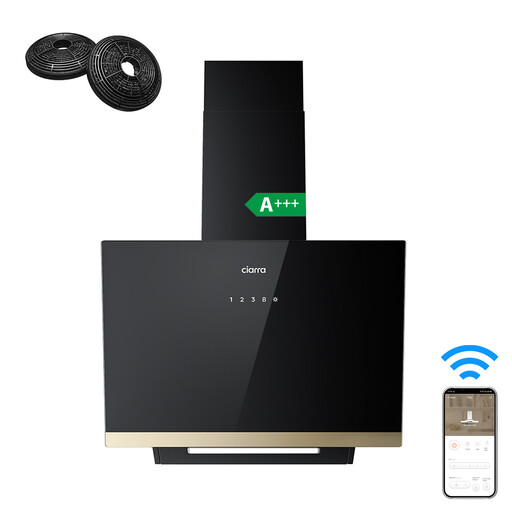
Why This Fits Their Persona: For homeowners who want to combine a modern aesthetic with high functionality. The angled, head-free hood made of black glass is an eye-catcher and also provides ample freedom of movement while cooking.
With an airflow rate of 650 m?/h, it is designed for larger kitchens and intensive cooking. The A+++ energy efficiency class also ensures low operating costs without compromising on performance.
High airflow rate; very energy-efficient (A+++); smart control via Wi-Fi and app; dimmable LED lighting.
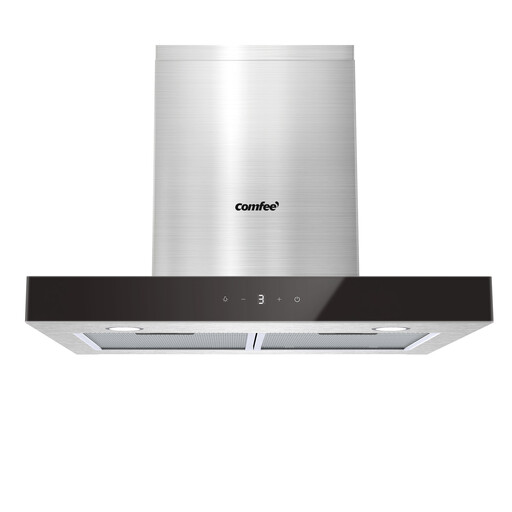
Why This Fits Their Persona: Perfect for users who appreciate innovative technology and high user convenience. The gesture control allows for touch-free operation – practical when your hands are dirty from cooking.
This model combines a high airflow rate of 650 m?/h with a relatively quiet operation (59 dB). It resolves the conflict between powerful performance and disruptive noise that occurs with many cheaper devices.
Innovative gesture control; energy-efficient BLDC motor (A+++); 5-layer, dishwasher-safe aluminium filter.
We have compiled a complete, up-to-date list of products that fully meet these strict selection criteria and UK safety regulations.
1. How often should the activated charcoal filter be changed in a recirculating cooker hood? The lifespan of an activated charcoal filter depends heavily on the frequency of use and the type of cooking. As a general guideline, it is recommended to replace the filter every 3 to 6 months to ensure effective odour neutralisation. Some models have a saturation indicator that signals the optimal time for a change.
2. What is the required distance between the hob and the cooker hood? The safety distance is crucial for function and fire protection. For electric hobs, a minimum distance of 50-65 cm is generally recommended. For gas hobs, the distance should be greater due to the open flame, typically 65-75 cm. Always follow the specific instructions in the manufacturer's installation manual.
3. What does the energy efficiency class mean for a cooker hood? The energy efficiency class, ranging from A+++ (very efficient) to D (less efficient), indicates how much electricity the appliance consumes in relation to its performance. It assesses the annual energy consumption, the efficiency of the fan, the lighting, and the grease filter. A hood with an A+++ cooker hood rating may be more expensive to purchase, but it saves significantly on electricity costs over the years.