
Lieferung heute & morgen

Qualitätsgarantie

Willkommens-Angebote freischalten: KOSTENLOSE Lieferung | Bis zu 80 % RABATT | Kostenlose 30-Tage-JoyPlus-Testphase
App herunterladen
Long days at the desk, whether in the office or at home, often lead to neck and back strain. An improper chair can worsen these issues and hinder your concentration. An ergonomic office chair is designed to provide targeted support to the body and promote a healthy sitting posture.
This article serves as a guide. It explains which features to look for when making your selection and presents a range of models with different functions to help you make an informed choice.
Selecting the right chair depends on individual needs. Three key criteria will help you make a well-founded decision.
An ergonomic office chair must adapt to your body, not the other way around. Look for the following adjustment options:
The chair's material affects both comfort and durability. A breathable office chair prevents excessive sweating during long periods of sitting. Mesh fabric is a popular choice here, as it allows for good air circulation while conforming to the body. High-quality foam padding also offers comfort but should be covered with a breathable fabric.
The human spine has a natural S-curve. An office chair with lumbar support fills the curve of your lower back and stabilises the spine. Ideally, this support is adjustable in height and depth to fit your lumbar spine perfectly. This feature is especially important for an ergonomic chair for the home office, where long hours are often spent sitting.
Based on these criteria, we've curated a selection of models that cater to different needs and use cases.
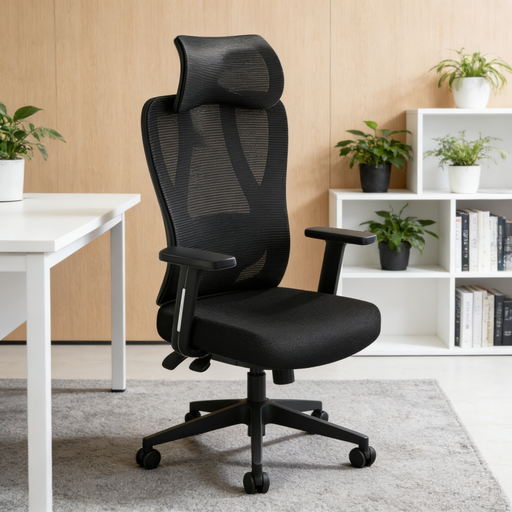
What sets it apart: The ochama×J.ZAO Z5 Soft Chair combines everyday office features with those of an ergonomic gaming chair. Its standout feature is the 4D pivoting lumbar support, which allows for precise adjustment to the lower back. The dual-layer mesh fabric ensures excellent breathability, while the backrest reclines up to 140°.
Pros:
Who it's for: This model is designed for users seeking a versatile chair for focused work and relaxed breaks or gaming sessions, who also prioritise advanced lumbar support.
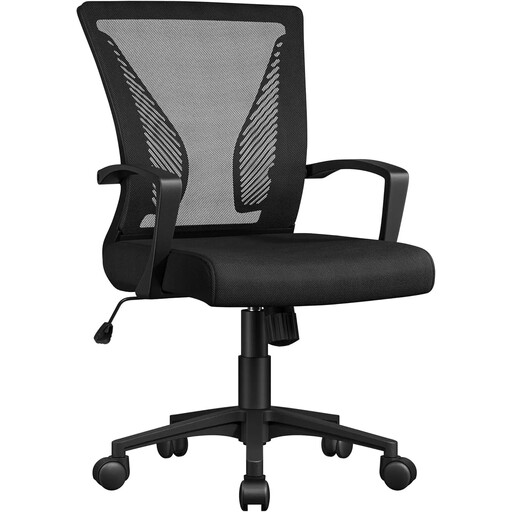
What sets it apart: The Yaheetech Office Chair is a functional and ergonomically designed desk chair that focuses on essential adjustments. It offers a wide seat, a height-adjustable seat position from 35 cm to 45 cm, and a breathable mesh backrest. With a weight capacity of up to 136 kg, it is sturdily built.
Pros:
Who it's for: This chair is a great choice for users who need a solid, budget-friendly foundation for their home office, study, or learning space and who value good air circulation.
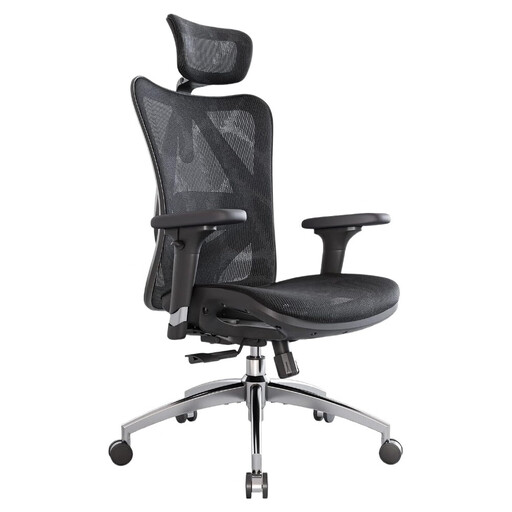
What sets it apart: The Sihoo M57S stands out for its comprehensive customisation options. It features an S-shaped backrest with adjustable lumbar support, an adjustable headrest, and 3D armrests that can be adjusted in height, depth, and rotation. According to the manufacturer, the gas lift is BIFMA and SGS certified and designed for a load of up to 150 kg.
Pros:
Who it's for: This model is aimed at users who require comprehensive and precise adjustability of the armrests, headrest, and lumbar support to perfectly match the chair to their body dimensions and sitting habits.
The models presented already cover a wide range of needs. However, if you have different requirements or wish to compare other designs, you can find a wider selection in our category.
? Discover more adjustable office chair models here
The most important features are adjustability (seat height, backrest, armrests), customisable lumbar support for the lower back, and a breathable material like mesh fabric, which ensures comfort during long periods of sitting.
Adjust the seat height so that your feet are flat on the floor and your knees form a 90-degree angle. The lumbar support should sit in the natural curve of your lower back. The armrests should be positioned so that your shoulders are relaxed and your forearms can rest horizontally on them.
Many modern gaming chairs incorporate ergonomic features like adjustable lumbar supports and armrests, as demonstrated by the ochama×J.ZAO Z5. However, the focus is sometimes more on aesthetics. For primary use as a work chair, it's advisable to look for the same ergonomic criteria as with a classic office chair: adjustability, support, and material.