
Lieferung heute & morgen

Qualitätsgarantie

Willkommens-Angebote freischalten: KOSTENLOSE Lieferung | Bis zu 80 % RABATT | Kostenlose 30-Tage-JoyPlus-Testphase
App herunterladen
For seasoned trekking enthusiasts, choosing a tent is one of the most critical decisions in tour planning. An unsuitable tent not only adds unnecessary weight to your pack but can also compromise comfort and safety on multi-day hikes. However, the market for ultralight 2-person trekking tents is filled with marketing promises that often fail to deliver. Before you make a purchase, it's essential to understand the most common pitfalls.
To make an informed decision, you should carefully examine three core areas. These technical specifications are more crucial than any marketing claim.
With an ultralight tent for 2 people, weight is the decisive factor. Always look for the total weight (trail weight), which includes all components necessary for setup. A tent in this category should ideally not exceed a total weight of 1.5 kg. The pack size is equally relevant; it determines how compactly the tent can be stowed in your backpack. Modern ultralight tents achieve pack sizes barely larger than a water bottle.
The choice of material directly impacts weight, tear resistance, and water resistance.
A good lightweight hiking tent must do more than just be light. Its construction is crucial for stability and comfort.
Based on the objective criteria above, we have identified products that offer a suitable solution for different user profiles.
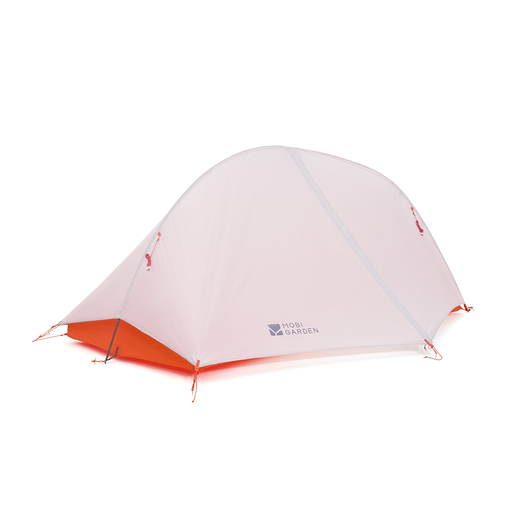
Why It's a Match: Ideal for alpinists and long-distance hikers where every gram counts. The extremely low weight and minimal pack size ease the load on your back during demanding treks without compromising on functionality.
The tent uses high-quality 20D ripstop nylon with a PU2000mm hydrostatic head and lists a net weight of approx. 1.18 kg, which is a transparent and realistic specification for a true ultralight tent. The dual-entry design avoids the pitfall of poor practicality.
Excellent space-to-weight ratio thanks to lightweight materials and a thoughtful design featuring ultralight aluminium alloy poles.
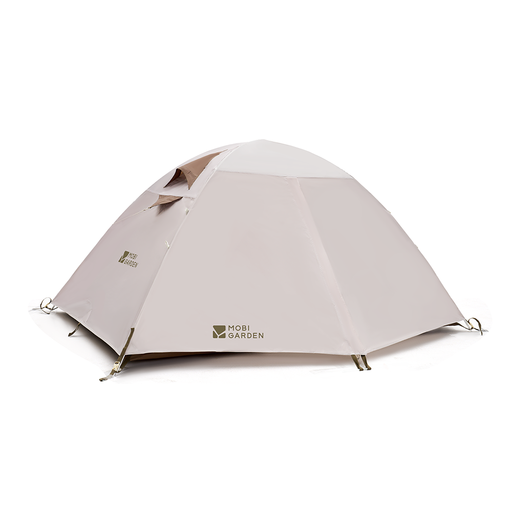
Why It's a Match: A great choice for hikers seeking a balance between low weight and enhanced durability. Suitable for tours in varied terrain where the tent floor is subjected to more stress.
This tent sidesteps the pitfall of inadequate weather resistance with a tent floor that has a very high hydrostatic head of PU4000mm. The more robust 68D polyester fabric is more resistant to abrasion and punctures than ultralight materials.
Increased robustness and an above-average waterproof rating for the tent floor, providing extra security in wet ground conditions.
We have compiled a complete, up-to-date list of products that fully meet these strict selection criteria and safety standards.
The hydrostatic head is a critical indicator of a tent's water resistance. For 3-season tours in regions like the Alps or European low mountain ranges, where sustained rain is expected, the flysheet should have a hydrostatic head of at least 1500 mm. Even more important is the tent floor, which is stressed by the weight of the occupants. Here, a rating of 3000 mm or more is a safe choice to prevent seepage of ground moisture.
The minimum weight (often called "base weight") typically includes only the three main components: the inner tent, the flysheet, and the poles. The total weight (or "packed weight"), on the other hand, includes all parts that come with the tent and are necessary for setup, such as pegs, guylines, repair sleeves, and stuff sacks. For a realistic assessment of the weight you will be carrying in your backpack, the total weight is always the relevant figure.
This is strongly discouraged. A 3-season tent is designed for conditions in spring, summer, and autumn. Its construction is not engineered to withstand heavy snow loads. Furthermore, the large mesh panels on the inner tent, which provide ventilation in the summer, do not offer sufficient insulation against cold wind and sub-zero temperatures in winter. Special 4-season or expedition tents are required for winter tours.