
Lieferung heute & morgen

Qualitätsgarantie

Willkommens-Angebote freischalten: KOSTENLOSE Lieferung | Bis zu 80 % RABATT | Kostenlose 30-Tage-JoyPlus-Testphase
App herunterladen
For competitive PC gamers, a mouse is more than just an input device—it's a direct link to the digital arena. An ultralight wireless gaming mouse promises maximum agility and reaction speed. However, the market is flooded with marketing promises that often create more confusion than clarity. Before you make a decision, it's crucial to understand the common pitfalls that can lead to a poor purchase.
The 3 Most Common Traps When Buying a Lightweight Gaming Mouse:
To make an informed decision, you should focus on the technical features that directly impact your in-game performance.
Weight is a central factor for a lightweight gaming mouse. Models under 60 grams allow for faster, less fatiguing movements, which is a significant advantage during long gaming sessions and in fast-paced games like FPS shooters. But raw weight is only half the story. The ergonomics and balance of the mouse are just as crucial. The shape must suit your grip style:
A well-balanced mouse feels stable when lifted and moved, without tilting forward or backward.
The sensor is the heart of any esports mouse. Modern optical sensors like the Pixart 3395 are the de facto standard in the high-end segment. More important than the maximum DPI number are the following characteristics:
For a wireless gaming mouse, a stable 2.4 GHz wireless connection with a 1000 Hz polling rate (1 ms response time) is the standard for latency-free performance, indistinguishable from a wired connection.
Many gaming mice require extensive software for configuration. For tournament players or users who play on different PCs, this can be impractical. A software-free gaming mouse, where all key settings like DPI, polling rate, and LOD can be adjusted directly on the device, offers maximum flexibility and is ready to use out of the box.
Based on these objective criteria, we have identified a few models that are particularly well-suited for specific user profiles.
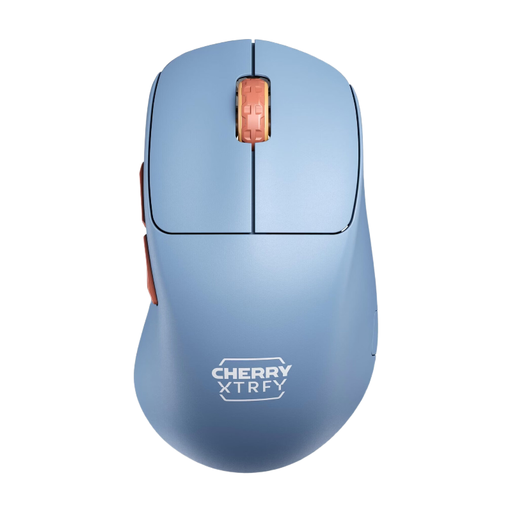
Why it's a match: This model is designed for right-handed players who demand maximum control while aiming. Its unique ergonomic shape with an extremely low front brings the fingers closer to the mousepad, enabling exceptional precision during fast "flick shots" and while tracking targets.
Instead of focusing solely on low weight, it combines 53 grams with a thoughtful, asymmetrical shape that stabilises the hand and maximises control.
The combination of its ultra-low front and the high-end Pixart 3395 sensor provides direct, precise control tailored specifically to the demands of FPS games.
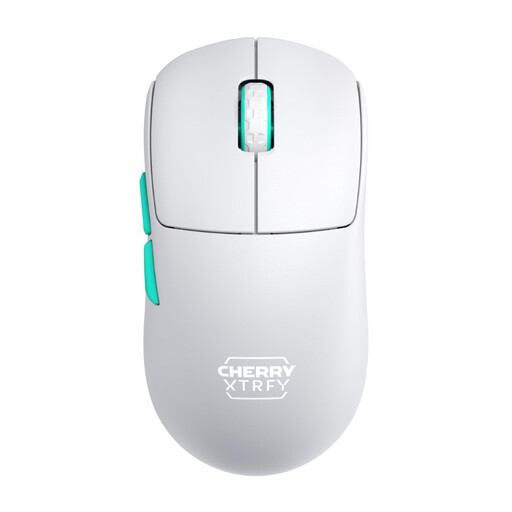
Why it's a match: For gamers who play various genres or prefer different grip styles (especially claw and fingertip), the M68's symmetrical shape offers maximum flexibility. It is equally suitable for both left- and right-handed users and adapts easily.
It proves that a symmetrical shape doesn't have to be uncomfortable. The low-front design also provides enhanced control, typically found in more ergonomic models.
The combination of 53 grams, a symmetrical shape, and latency-free 2.4 GHz technology makes it an extremely agile and versatile tool for a wide range of esports titles.
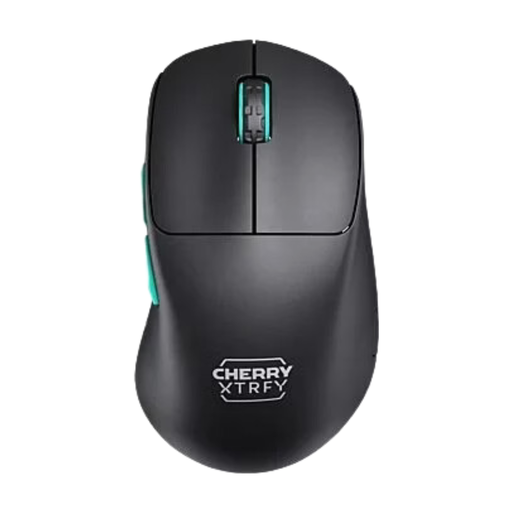
Why it's a match: In tournaments or at LAN parties, reliability and straightforward operation are paramount. This model requires no drivers or software. All settings (DPI, polling rate) are adjusted directly on the mouse, guaranteeing quick, hassle-free use on any third-party PC.
It deliberately forgoes software gimmicks and focuses on hardware performance. This avoids compatibility issues and ensures the mouse functions consistently under all conditions.
Its complete plug-and-play functionality makes it a reliable companion for any competition. The long battery life of up to 75 hours (per manufacturer specs) ensures the mouse will last through long tournament days.
We have compiled a complete, up-to-date list of products that fully meet these strict selection criteria and German safety regulations.
Yes, modern wireless gaming mice that use high-quality 2.4 GHz wireless technology with a 1000 Hz polling rate offer performance that is practically indistinguishable from their wired counterparts. The latency is typically just one millisecond, which is imperceptible to humans.
Battery life varies depending on the model, usage, and settings (e.g., lighting). Many high-end models offer runtimes of 70 to 90 hours per charge, according to manufacturer specifications. A practical feature is the ability to charge the mouse via a flexible USB-C cable while continuing to play, eliminating any forced downtime.
No, not necessarily. There is a growing number of models, especially in the esports sector, designed as a software-free gaming mouse. With these mice, all essential settings like DPI levels, polling rate, or Lift-Off Distance can be adjusted directly on the device itself via switches or button combinations. This is ideal for players who value a straightforward, portable solution.