What should you look for when buying?
First, check that the resolution and aspect ratio suit your frame and window layout. Then assess glare protection, desk space, colour workflow and connectivity for your specific workspace.
| Consideration |
What to check before buying |
Who is this most important for? |
| Readability by a window |
Check the finish listed for the specific model, as well as the window position, screen orientation and any available shading. |
If I work by a bright window, I want to keep reflections out of my field of view as much as possible. Around 26% of consumers rank readability as their top buying consideration. |
| Space for frames and tools |
Compare the native resolution with your preferred window layout at the scaling you plan to use. |
If I want to use the timeline, preview and tools side by side, I need enough workspace that remains easy to read. Around 26% of consumers prioritise space for frames and other work windows. |
| Colours for your output |
Check the target colour space you need against the specifications for the exact model variant. |
If I assess colours for a specific output format, I want to match the colour space and colour management to it. Around 21% of consumers put their colour workflow first. |
| Fitting your desk |
Check the width and depth, including the stand, and how the monitor will be positioned in relation to the window. |
If desk space is limited, I want to position the monitor to suit my setup without losing sight of the window position. Around 16% of consumers prioritise desk space and ease of positioning. |
| Laptop connectivity |
Check your laptop’s video output and power requirements against the monitor’s explicitly listed connections and power specifications. |
If I want to connect my laptop with a single cable, the video signal and charging power need to suit my device. Around 11% of consumers prioritise having the right laptop connection. |
Joybuy product selection
This selection covers ultrawide monitors for a range of workspaces, from 34-inch models with 3440 × 1440 pixels to wider or taller 40- and 49-inch formats.
 No image available
INNOCN 40C1U 40-inch ultrawide monitor
An option if you’re looking for a 40-inch workspace with extra screen height for your timeline, preview and tools.
5120 × 2160 pixels, 21:9, IPS and 100 Hz. The product specifications also list a matte screen, 400 Nits and 99% sRGB. A calibration report, PIP/PBP and a height-adjustable stand are also listed.
Joybuy
 No image available
Xiaomi G34WQi 34-inch ultrawide monitor
A 34-inch option if you want to arrange your timeline, preview and tools across a wide screen.
3440 × 1440 pixels, 21:9 and 180 Hz. The product specifications list a matte anti-glare screen, 350 Nits and 100% sRGB. The screen finish does not guarantee a clear view in direct sunlight.
Joybuy
 No image available
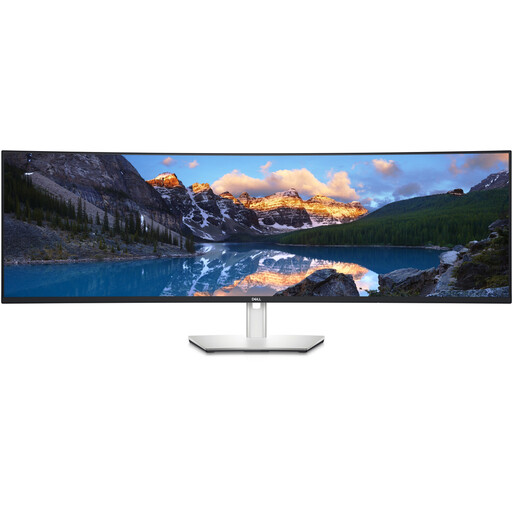
Dell UltraSharp U4924DW 49-inch ultrawide monitor
This 32:9 format could suit you if you can arrange lots of work windows horizontally and have enough desk space.
5120 × 1440 pixels, 60 Hz and IPS. The product specifications also list 98% DCI-P3 and 90 W USB-C Power Delivery. The stated width is 1214,9 mm; the vertical resolution remains 1440 pixels.
Joybuy
 No image available
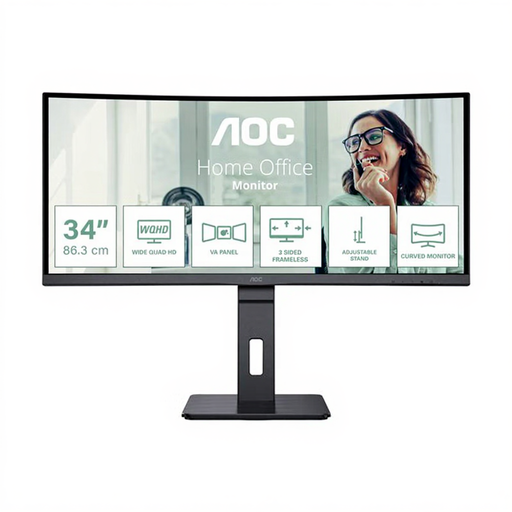
AOC Pro-Line CU34P3CV 34-inch ultrawide monitor
A 34-inch option if you want to use work windows side by side and connect several devices at your workstation.
3440 × 1440 pixels, 21:9, 100 Hz and VA. Specifications include USB-C with up to 65 W, KVM, a USB hub and a height-adjustable stand with 150 mm of adjustment.
Joybuy
 No image available
Philips 345B1C 34-inch ultrawide monitor
This 34-inch format is a good fit if you want to arrange your timeline and preview across a wide screen and adjust the monitor height.
3440 × 1440 pixels, 21:9, 100 Hz and VA. Specifications include a height-adjustable stand with 180 mm of adjustment and MultiView PIP/PBP for two sources.
Joybuy
Frequently asked questions
Is an anti-glare screen enough right next to a bright window?
Not necessarily. Manufacturers list these screen finishes for specific models, but the German Federal Institute for Occupational Safety and Health notes that glare protection remains important in daylight. Position your screen to minimise distracting window reflections, and consider adding shading if needed.
How can I tell whether my animation software will make use of the extra width?
Before buying, plan your preferred layout for the timeline, preview and tools, then check that everything remains easy to read at your chosen scaling. Adobe describes the timeline in Animate as an arrangement of layers and frames; how much you can see at once also depends on how you arrange your windows.
What should I check with USB-C and cleaning?
For USB-C, compare your laptop’s video output and power requirements with the specifications for the particular monitor. When cleaning, follow the manufacturer’s instructions, as care requirements can vary depending on the screen finish.
Who is responsible if there’s a fault, and is a manufacturer’s warranty the same thing?
For consumer purchases in Germany, you have statutory rights against the seller. The consumer advice centre generally describes these rights as lasting for two years from the purchase or delivery of the goods. A manufacturer’s warranty is an additional voluntary service with its own terms.
Which energy labelling rules apply to monitors in Germany?
EU energy labelling and ecodesign requirements cover electronic displays. Check the energy class and product information sheet for the specific offer rather than estimating energy use from screen size or panel technology alone.


