Who is an ultrawide monitor for?

Photo sorters who work with lots of windows

When you’re putting together a digital gallery, you’ll want to see your image selections, folders and previews at the same time. Look for a clear window layout and plenty of usable workspace. CHIP describes having several windows open at once as one use for ultrawide monitors; Dell lists a resolution of 3440 × 1440 pixels for the P3425WE.

Photo editors who care about colour

If you’re judging the colours in your gallery photos, the colour space and calibration process should match your intended output. If you’re planning to print, it’s especially important to check the target colour space. ASUS lists 100% sRGB and 98% DCI-P3 for the PA348CGV; EIZO discusses Adobe RGB in the context of professional image editing and printing.

Laptop users working from home

If you switch between working on the move and editing your photo gallery at your desk, the ports on your laptop and monitor need to be compatible. Check the video output, charging requirements and peripherals you need for your specific setup. Dell lists USB-C power delivery of up to 90 W for the P3425WE.

What should you look for when buying?

Browsing and digital galleries

A good fit if: You want to use previews, file management and other windows at the same time.

The trade-off: Extra width doesn’t give you more vertical pixels, nor does it make a monitor suitable for colour-critical print preparation.

Colour-managed ultrawide

A good fit if: You want to combine image editing with a wide workspace, and the stated colour space matches your intended output.

The trade-off: Manufacturer claims about colour space and factory calibration don’t replace checking your specific colour management workflow.

Print preparation with colour as a priority

A good fit if: Reliable print colours matter more to you than having one extra-wide screen.

The trade-off: A graphics monitor may leave less room to view your gallery, tools and references at the same time. Calibration can’t extend a colour space that’s too small.

Buying priority What to check before buying Who is this important to?
Colours for editing and output Compare the target colour space with the specifications for the specific model, and consider the profiling or calibration process. If I’m judging colours or preparing prints, I want to choose a colour space and workflow that suit the intended output. Around 36% of consumers prioritise accurate colour reproduction.
Gallery and work windows Check the native resolution, aspect ratio and window readability at your preferred scaling level. If I want to see previews, files and tools at the same time, a clear layout matters more than screen size alone. Around 29% of consumers put usable window space first.
Laptop and peripherals Check the video output, USB-C features on the relevant input, charging requirements and any other ports you need. If I connect my laptop at my home office desk, I want it to work with my monitor and peripherals. Around 21% of consumers prioritise how their laptop connects.
Desk space and positioning Compare the monitor’s width, stand depth and desk space, and check the adjustment options you need. If my desk is short on space, the monitor needs to fit and be easy to position. Around 14% of consumers look first at the space required and how the monitor can be set up.

Ultrawide monitor buying pitfalls

  • Assuming DCI-P3 coverage proves Adobe RGB coverage for printing

    DCI-P3 and Adobe RGB are different colour spaces. EIZO specifically discusses Adobe RGB in the context of professional image editing and printing.

    Decide which print colour space you need before comparing models, and check that the specifications refer to that exact colour space.

  • Assuming an ultrawide screen gives you extra height as well as width

    Resolutions also vary in their vertical pixel count: EIZO lists 3440 × 1440 pixels for the EV3450XC and 3840 × 1600 pixels for the EV3895; LG lists 5120 × 2160 pixels for the 40WP95X-W.

    Compare both dimensions of the resolution, and consider which scaling setting will keep your window layout easy to read.

  • Assuming USB-C will automatically work as a one-cable solution

    A USB-C port alone doesn’t tell you whether it can provide enough video output and charging power for your laptop.

    Compare your laptop’s requirements with the features of the specific monitor input.

    Depending on the devices you’re using, you may also need a separate laptop power adapter or a suitable cable.

  • Ordering an extra-wide model without measuring first

    LG lists the 49WQ95X-W as 1215,1 mm wide with its stand.

    Before you buy, compare the monitor’s width and stand depth with the space available on your desk.

Key brands at a glance

ASUS

The ProArt PA348CGV is a documented 34-inch ultrawide model for image editing and a wide workspace.

  • For this model, ASUS lists IPS, 3440 × 1440 pixels, 100% sRGB, 98% DCI-P3 and factory calibration.
  • These are manufacturer specifications, not an independent measurement of the specific unit. The stated DCI-P3 figures don’t indicate Adobe RGB coverage.

LG

The UltraWide models considered here offer a range of resolutions and screen formats.

  • LG lists 5120 × 2160 pixels and typically 98% DCI-P3 for the 40WP95X-W; the 49WQ95X-W is listed at 5120 × 1440 pixels.
  • The models differ in vertical resolution and the space they take up. LG lists the 49WQ95X-W as 1215,1 mm wide with its stand.

Dell

The Pro P3425WE is a 34,1-inch office ultrawide for a workspace where gallery work and a laptop connection come together.

  • Dell lists IPS, 3440 × 1440 pixels, USB-C power delivery of up to 90 W and RJ45.
  • These specifications alone don’t prove that the monitor is suitable for colour-critical print preparation.

EIZO

The FlexScan EV3450XC and EV3895 are office ultrawides; ColorEdge information covers the requirements of colour-managed work.

  • EIZO lists 3440 × 1440 pixels for the EV3450XC. The EV3895 is listed at 3840 × 1600 pixels, typically with 94% DCI-P3 and 100% sRGB.
  • These FlexScan specifications aren’t ColorEdge or Adobe RGB features.

BenQ

The DesignVue PD3420Q is a creative ultrawide for a workspace where connectivity and switching between computers are important.

  • BenQ lists USB-C, HDMI, a USB hub and KVM, along with features for syncing colour profiles with a Mac.
  • The colour synchronisation claims come from the manufacturer and aren’t proof of independent colour testing.

Joybuy product overview

These models cover ultrawides for digital galleries, wide window layouts and image editing. If you’re doing colour-critical work, check the target colour space and colour management workflow for the specific model.

INNOCN 40C1U, 40-inch ultrawide monitor

INNOCN 40C1U, 40-inch ultrawide monitor

For a wide workspace when browsing and editing gallery photos. Its stated 87% Adobe RGB coverage isn’t the same as full Adobe RGB coverage if print colours are important.

5120 × 2160 pixels, IPS, 21:9 and USB-C with 65 W Power Delivery.

View at Joybuy

Xiaomi G34WQi, 34-inch ultrawide monitor

Xiaomi G34WQi, 34-inch ultrawide monitor

For a layout with room to place your gallery, files and other applications side by side.

3440 × 1440 pixels, VA, 1500R and 100% sRGB are listed in the product title.

View at Joybuy
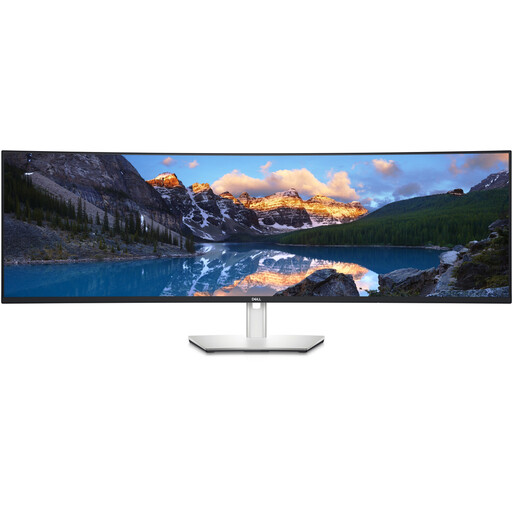
Dell UltraSharp U4924DW, 49-inch monitor

Dell UltraSharp U4924DW, 49-inch monitor

For an especially wide window layout. Check first that the model will fit on the desk you have in mind.

5120 × 1440 pixels, 60 Hz and USB-C are listed in the product title.

View at Joybuy

Philips 345B1C, 34-inch curved ultrawide monitor

Philips 345B1C, 34-inch curved ultrawide monitor

For your gallery and other applications that you want to arrange together on a wide display.

3440 × 1440 pixels, 21:9, VA, 1500R and 100 Hz are listed in the product title.

View at Joybuy
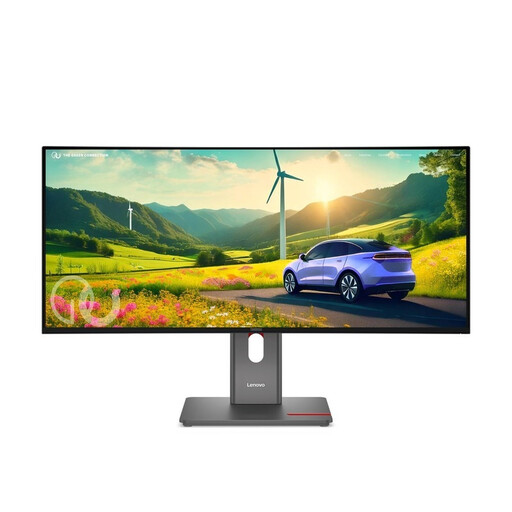
Lenovo ThinkVision P34WD-40, 34-inch WQHD monitor

Lenovo ThinkVision P34WD-40, 34-inch WQHD monitor

For a workspace that brings a wide window layout and image editing together. Check which target colour space your workflow needs.

IPS, 21:9 and 120 Hz are listed in the product title.

View at Joybuy

Frequently asked questions

Is a high colour space coverage figure enough for reliable gallery photos?

No. The stated colour space needs to match your intended output. For colour-critical editing, you should also plan for profiling or calibration. EIZO points out that calibration can’t correct a colour space that’s too small or unevenness across the panel.

What should I check when connecting a laptop?

Check that your laptop can output a video signal through the connection you plan to use, and that the power delivery from the specific monitor input meets its charging requirements. Dell lists USB-C power delivery of up to 90 W for the P3425WE; this doesn’t prove compatibility with every laptop.

How can I keep colours consistent when editing images?

Use a colour management workflow that suits your intended output and check the calibration regularly. A factory setting is no substitute for ongoing checks on your specific display.

What should I look for when comparing a monitor’s energy consumption?

Compare the EU energy label and product information sheet for the specific model, rather than relying on screen size or HDR claims alone. The European Commission includes computer monitors among the electronic displays it covers; the label uses a scale from A to G.

What are my rights if a monitor bought online in Germany is faulty?

For a consumer purchase, your statutory rights are claims against the seller; a guarantee is voluntary. If there’s a fault, the first step may be repair or replacement. According to the German consumer advice centre, goods bought online generally also come with a 14-day right to cancel, starting from the day you receive them; you must notify the seller that you’re cancelling.