Testing with two windows
You compare filter controls and search results on one computer, so the key thing is being able to read both windows at once.


An ultrawide monitor is enough if you can read the filters and results at the same time in two windows on the same computer. Microsoft Support distinguishes between snapping windows and using multiple displays that are recognised separately. If your test requires two displays or images from two computers, check for the right connections or Picture-by-Picture feature. KVM is also worth considering if you want to share a keyboard and mouse between computers.
You compare filter controls and search results on one computer, so the key thing is being able to read both windows at once.
Your testing process requires two independent displays, not simply two windows on one screen.
You want to view signals from different computers side by side and may want to use the same keyboard and mouse.
First, clarify whether “two views” means two windows, two separately recognised displays or two computer sources. This will determine whether you mainly need a wide workspace, an additional monitor or Picture-by-Picture.
| What you need | What to check before buying | Who is this important to? |
|---|---|---|
| Two readable windows | Open your test pages side by side at your usual text size; check the model’s resolution and scaling. | If I need to read filters and results on one computer at the same time, both windows need to be clear. Around 36% of consumers prioritise having two views side by side. |
| Two independent displays | Check whether the test requirements call for separate displays; confirm the available video outputs or dock compatibility. | If my testing process requires two separately recognised displays, two windows on one screen won’t be enough. Around 29% of consumers prioritise having two separate displays. |
| Two computer sources | Check for Picture-by-Picture, the right video inputs and, if needed, KVM for shared input devices. | If my test views come from two computers, I want to see both signals at once and share input devices if needed. Around 21% of consumers prioritise two computer sources. |
| Space and screen position | Measure your desk’s width and depth; consider the stand and how you want to arrange your windows at your workstation. | If desk space is limited, the monitor and stand need to fit, and the views must still be easy for me to read. Around 14% of consumers prioritise desk space and screen position. |
A single ultrawide can give you room for several windows, but that doesn’t make it two separately recognised display devices.
Check whether your test requires two windows or genuinely needs two displays. An additional display also requires a suitable video output or compatible dock, as well as enough space for it.
Picture-by-Picture displays signals side by side; KVM lets you control computers using a shared keyboard and mouse. They’re different features.
Check the exact model’s specifications for Picture-by-Picture and KVM separately.
If the model you want doesn’t offer the control feature you need, you may need extra switching equipment or another input device for your setup.
More horizontal pixels don’t automatically mean more screen height. The LG 49WQ95X-W is listed with a resolution of 5,120 × 1,440 pixels and a width of 1,215.1 mm with the stand.
Measure the space available and check that the windows you need are readable at your usual text size, rather than relying on screen diagonal alone.
A monitor whose stand doesn’t fit your desk, or whose window layout isn’t readable enough for your test, can make your intended workspace more difficult to use.
The P3425WE is a 34-inch office ultrawide designed for working with multiple windows and a USB-C laptop setup.
The ViewFinity S65UC, model LS34C652UAUXEN, is worth considering if you need a wide workspace and want to use two computer sources.
The 34U650A-B and 49WQ95X-W offer different ultrawide formats: 21:9 and 32:9 respectively.
According to its product specifications, the 346E2CUAE/01 combines a 34-inch screen, 3,440 × 1,440-pixel resolution, USB-C and an adjustable stand.
According to the manufacturer, the FlexScan EV3450XC combines an ultrawide view with a webcam and connections for two computers.
These ultrawide monitors offer a wide workspace. Depending on the model, they may also include Picture-in-Picture, Picture-by-Picture or KVM. Check the feature you need and the connections available on the specific model.
 No image available
For a wide workspace where you can arrange filters and results side by side; PIP/PBP is specified for content from two sources.
3,440 × 1,440 pixels, 200 Hz, height-adjustable stand.
 No image available
This model is worth considering for two computer sources if you want to use its specified PIP/PBP feature.
21:9, IPS, 100 Hz, USB-C with 65 W Power Delivery, height-adjustable stand.
 No image available
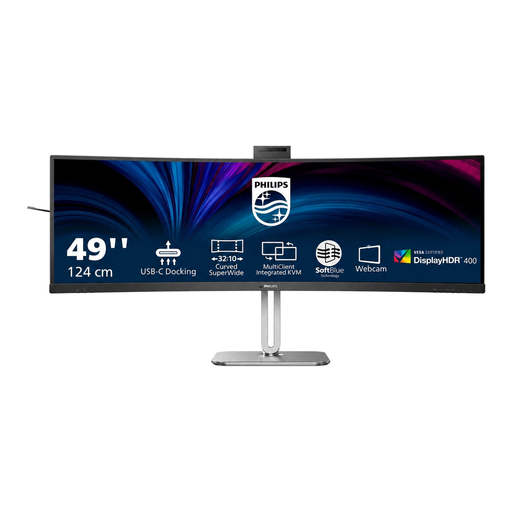
For viewing two computer sources at the same time, the product specifications list Picture-by-Picture and SmartKVM.
5,120 × 1,440 pixels, 75 Hz; SmartKVM is specified for controlling two computers with one keyboard and mouse.
 No image available
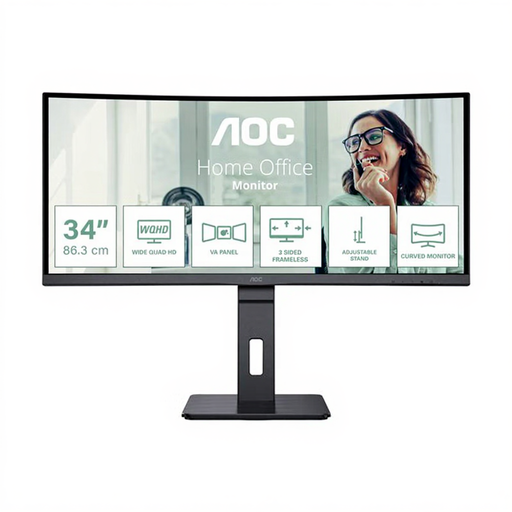
For a wide workspace with shared computer peripherals; KVM is listed in the product title.
3,440 × 1,440 pixels, 100 Hz, USB-C with 65 W Power Delivery, RJ45.
 No image available
For a wide workspace with views from two devices; the product specifications list MultiView with PIP/PBP.
21:9, 100 Hz, height-adjustable stand with 180 mm of height adjustment.
No. Windows Snap arranges two windows on a single display. To have two separately identifiable displays, you need to connect two display devices and have the operating system recognise them, as Microsoft Support explains.
You can drag windows to the sides of the screen, or press the Windows key together with the left or right arrow key. Then check your test pages to make sure the input fields and results are still readable at your usual scaling.
Picture-by-Picture is useful when you want to display two source signals at the same time. KVM is for controlling two connected computers with one keyboard and mouse. Samsung lists both features for the ViewFinity S65UC, model LS34C652UAUXEN.