Reviewing long club recordings
If you’re reviewing long source clips and want to arrange your timeline and panels side by side, the available screen space is an important factor. LG Deutschland’s 34U650A-B is one 21:9 option.


For long source recordings and a clear timeline, a 21:9 ultrawide monitor is a sensible option. For 4K image detail and SDR viewing geared towards Rec.709, a 4K 16:9 model may be a better fit. The right choice depends on your delivery format, colour workflow, desk space and computer connections. A wide display or extensive colour-gamut coverage alone won’t fix playback problems with large files.
If you’re reviewing long source clips and want to arrange your timeline and panels side by side, the available screen space is an important factor. LG Deutschland’s 34U650A-B is one 21:9 option.
If you’re comparing footage from different cameras, consider the delivery format and colour workflow alongside image detail. Adobe notes that colour management relies on correctly identifying the colour spaces of the clips you’re using.
If several people use the same editing workstation, or you spend long periods at the screen, an adjustable setup, suitable viewing conditions and the right connections all matter. The German Federal Institute for Occupational Safety and Health recommends adjusting the screen position to suit individual viewing conditions.
For a club anniversary film with long source recordings, first decide whether your priority is the timeline, reviewing the final output, an easily adjustable workstation or connecting to your existing computer.
| Priority | What to check before buying | Who is likely to value this most? |
|---|---|---|
| Timeline and reviewing footage | Aspect ratio, native resolution, and whether you can arrange the timeline and panels effectively in your editing software. | If I’m reviewing long clips and need several panels alongside the timeline, having plenty of uninterrupted width is especially important to me. Around 36% of consumers are likely to have this as their main priority. |
| Colour and detail checking | Planned SDR or HDR delivery format, suitable colour mode, native resolution and the software’s colour management. | If I want to assess image detail and the colours in my planned film output, the screen and colour workflow need to work together. Around 29% of consumers are likely to prioritise colour and detail checking. |
| Ergonomics | Height adjustment, potential glare, desk space and screen position suited to your viewing conditions. | If I’m editing for long periods or sharing my workstation, I want to be able to adjust the screen to suit my seating position. Around 21% of consumers are likely to prioritise an ergonomic setup. |
| Connecting to your computer | Your computer’s video output, the cables you need, USB-C video transmission and, where relevant, your laptop’s power requirements. | If I’m connecting my existing editing computer, the connection needs to match its outputs and power requirements. Around 14% of consumers are likely to consider computer connectivity their top priority. |
According to LG Deutschland, the LG 34U650A-B has a resolution of 3,440 × 1,440 pixels. That gives you a wide workspace, but it isn’t the same as 4K UHD resolution of 3,840 × 2,160 pixels.
Think about your workflow to decide whether more room for the timeline and panels or higher resolution for previewing detail matters more.
A suitable monitor alone can’t ensure accurate colour judgement if the source footage or sequence settings are interpreted incorrectly. Adobe says colour management relies on correctly identifying the colour spaces of the clips you’re using.
Check the delivery format, colour mode and source colour spaces in your editing software.
A monitor controls what you see on screen, but it doesn’t handle the processing of large or resource-intensive video files on its own. Adobe describes proxies as lower-resolution copies that can help when editing these types of files.
If you have playback problems, check your computer and media workflow too. A proxy workflow may require extra storage and setup time.
The 34U650A-B is an example of a 21:9 option for anyone who needs a wide workspace for reviewing footage and working with a timeline.
The ProArt PA279CRV is a 27-inch 4K option for buyers looking to consider image detail and a Rec.709 mode.
The PD2705U is a 27-inch 4K option for Rec.709-oriented work, while the PV3200U is a larger 32-inch 4K model positioned for video editing.
The ColorEdge CS2740 is a 27-inch 4K option for anyone who values calibration options for colour checking.
This selection includes widescreen ultrawide monitors for timelines and reviewing footage, as well as 4K models for detailed previews. Compare each model’s format and connections with your editing setup.
 No image available
The 21:9 format and high resolution make this a good option for anyone weighing up a wide workspace alongside a detailed preview.
5,120 × 2,160 pixels; IPS; 100 Hz; 65 W USB-C Power Delivery; height-adjustable.
 No image available
The 32:9 format gives you plenty of horizontal space for a wide timeline, but its stated vertical resolution doesn’t provide a 4K UHD preview.
5,120 × 1,440 pixels; 165 Hz; 32:9; height-adjustable stand.
 No image available
The 21:9 format is an option if you want to arrange your timeline and long source recordings across a wide workspace. It doesn’t provide a 4K UHD preview.
3,440 × 1,440 pixels; VA; 200 Hz; height-adjustable; PIP and PBP.
 No image available
The 4K resolution suits anyone prioritising image detail, while the 16:9 format offers less uninterrupted horizontal workspace than an ultrawide model.
3,840 × 2,160 pixels; IPS; 120 Hz; 90 W USB-C Power Delivery; height-adjustable.
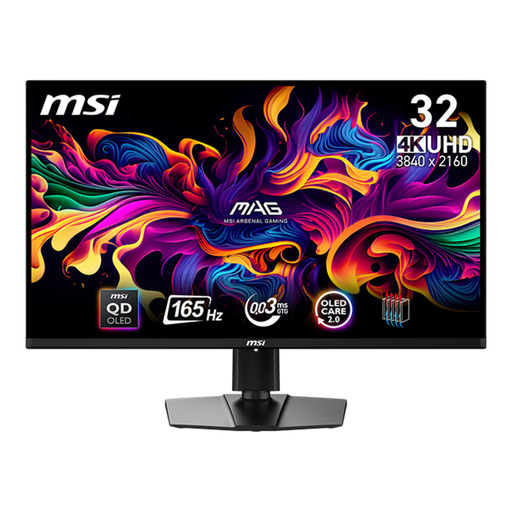 No image available
The 4K resolution is worth considering if you prioritise image detail in your preview, while the 16:9 format offers less uninterrupted width than an ultrawide model.
3,840 × 2,160 pixels; QD-OLED; 31.5 inches.
No. A monitor determines what you see on screen, not how the files are processed. Adobe describes low-resolution proxies in Premiere as an aid for editing large or resource-intensive video files. If you have playback problems, check your computer and storage workflow too.
If Rec.709 is your delivery format, choose a suitable display mode and check the source colour spaces and sequence settings in your editing software. Adobe notes that its colour management relies on correctly identifying the colour spaces of the clips.
Position the screen to suit your viewing conditions and, where relevant, your glasses. The German Federal Institute for Occupational Safety and Health treats this adjustment as an ergonomic measure. ASR A6 applies only within its stated scope for screen-based work at workplaces and in teleworking settings; it doesn’t apply generally to private club work.
If you buy as a consumer from a business seller, Your Europe describes a two-year legal guarantee from the date you receive the goods, which you can claim from the seller; an additional manufacturer’s guarantee doesn’t replace it. Whether a particular purchase by a club counts as a consumer purchase depends on the buyer and the contract.