
Lieferung heute & morgen

Qualitätsgarantie

Willkommens-Angebote freischalten: KOSTENLOSE Lieferung | Bis zu 80 % RABATT | Kostenlose 30-Tage-JoyPlus-Testphase
App herunterladen
An under-cabinet kitchen light should illuminate your worktop evenly, take up minimal space and be straightforward to install. In small or medium-sized kitchens, options include permanently fitted LED lights, USB-rechargeable light bars, or a combination of cupboard lighting and an extractor hood.
However, unnecessary costs often arise when buying because product descriptions omit key details. Three common pitfalls are particularly worth noting:
The length should match the area you want to light. A 20 cm LED light bar is better suited to narrow compartments, short shelves or individual cupboard sections. A 30 cm LED light bar covers a larger area. For mirrors, longer shelves or a wider worktop, a 42 cm LED light bar may be more appropriate.
Luminous flux is measured in lumens. It describes the total amount of light emitted. According to the product specifications, the 42 cm light bar in our selection delivers around 150 lumens at roughly 2.5 W. This is classed as supplementary lighting for cupboards, mirrors, shelves or kitchen worktops. A single compact under-cabinet light is not typically intended for full room illumination.
Colour temperature is measured in Kelvin:
Models with multiple colour temperatures allow you to adapt the light to different rooms. An under-cabinet light with a motion sensor switches on automatically when movement is detected. You should note the specified detection range: for the 20 cm and 30 cm models, the product description states this is around 3 to 5 metres.
A USB LED light bar can be charged via a USB port, power bank, laptop or a suitable USB charger. However, battery capacity alone doesn't tell you the actual run time, as this depends on brightness, sensor operation and usage intervals.
For rented properties, magnetic or adhesive solutions are often simpler than hardwired lights. Before installation, check whether the adhesive can be removed without leaving residue and whether the light is protected against moisture. The models mentioned are intended for indoor use according to the product specifications and should not come into direct contact with water or high humidity.
An under-cabinet light improves visibility on your worktop, but it doesn't replace kitchen ventilation. For cooking areas with regular steam and odour production, an under-cabinet extractor hood with integrated lighting may be more practical.
With a 60 cm extractor hood, the width, installation height and operating mode all need to match. Airflow performance is given in m³/h. It's also important to understand the difference between:
A stainless steel housing can usually be cleaned with a soft cloth. The grease filter also needs regular maintenance. For appliances with LED lighting, assess the light source not just by brightness but also by its position above the hob.

Why this product suits the profile: Two compact lights for narrow cupboards, shelves, hallways or small work areas, installable without drilling.
The 20 cm length and two-pack help you light separate short areas individually, rather than placing a single light that's too short in the centre.
PIR sensor with approximately 3–5 m range, three colour temperatures, USB charging and an 800 mAh battery according to the product specifications.
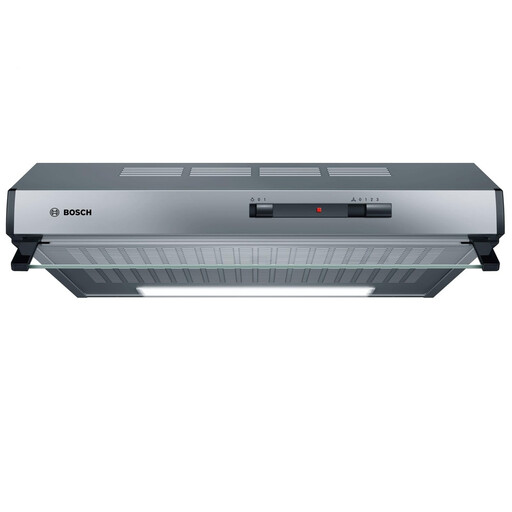
Why this product suits the profile: For households that want to combine lighting and cooking vapour extraction in one mains-powered appliance.
Extraction and recirculation modes are clearly stated; for recirculation, the appropriate kit is needed separately. This makes it easier to adapt the installation to your existing kitchen.
60 cm width, three power levels, up to 250 m³/h airflow and integrated LED lighting according to the product data.
Why this product suits the profile: For users who want to light kitchen wall units, wardrobes or multiple rooms flexibly and without wires.
The three selectable light colours reduce the risk of being stuck with a fixed colour temperature for all locations.
41 LEDs, PIR detection with approximately 3–5 m range, 30 cm housing, adhesive installation and a 1100 mAh battery according to the product description.
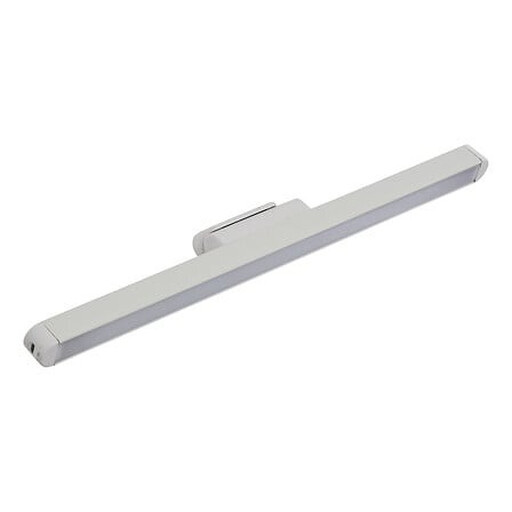
Why this product suits the profile: Suitable for users who need a longer, cordless supplementary light for mirrors, shelves, cupboards or kitchen worktops.
The light is removable and can be taken down for charging. This avoids permanently routed cables at changing installation locations.
42 cm length, neutral 4000 K light, approximately 150 lumens, integrated 2000 mAh battery and adjustable light direction according to the product data.
We've put together a full, regularly updated list of products that fully meet these strict selection criteria and the safety regulations in force in the EU.
Before ordering, measure the available space. For a permanently installed light, you'll also need to check the cable route, power socket and installation height. Cordless models, on the other hand, require regular charging. An automatic shut-off via motion sensor can reduce the need for manual operation, but isn't always suitable for continuous task lighting.
For an extractor hood, you must follow the manufacturer's instructions for installation height. For the COMFEE model mentioned, the product description states a height of 650 to 750 mm above the hob. The exact specification may vary depending on the hob, hood and installation instructions. The electrical connection and installation of an extractor hood should be carried out by a qualified professional.
That depends on the area you want to light. 20 cm is suitable for narrow compartments or short shelves, while 30 cm works for medium-sized areas. A 42 cm light can provide more even supplementary lighting for longer worktops. For very wide surfaces, multiple lights may be a good idea.
You can't derive a general run time from the battery capacity alone. Brightness, sensor frequency and usage all determine energy consumption. For longer use, use compatible USB chargers and protect the light from moisture, overheating and damage.
LED lights operate at relatively low power consumption. The 42 cm light bar is rated at approximately 2.5 W according to the product data. For rechargeable models, the ongoing energy requirement also depends on how often the battery is charged. Actual costs depend on usage time and your electricity tariff.