
Lieferung heute & morgen

Qualitätsgarantie
App herunterladen
Kategorien
A bathroom vanity unit serves two primary functions: it conceals the siphon and water connections while creating valuable storage space in the bathroom. Selecting the right model depends on objective criteria such as material, dimensions, and internal layout. This guide analyses the technical aspects relevant for making an informed purchasing decision.
Before making a selection, it is essential to analyse the technical specifications and the structural conditions of your bathroom.
The bathroom is a high-humidity environment, making the cabinet's material crucial for its longevity.
Correct measurements are essential for functionality.
The internal layout determines the cabinet's practical utility.
The following models have been selected based on their technical specifications and functional design.
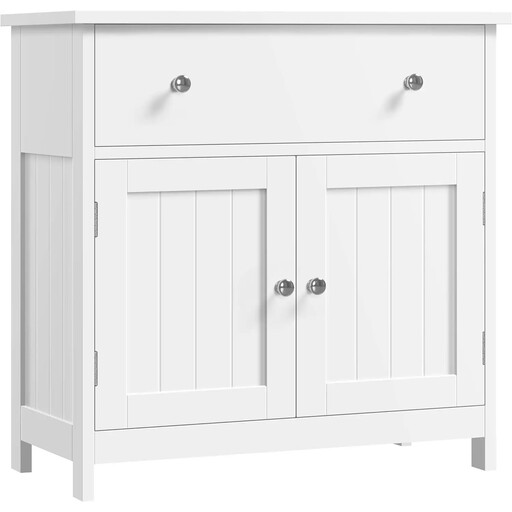
Why we recommend this product: This model combines a drawer with a two-door cabinet, offering a versatile storage solution. The construction from FSC-certified MDF boards with a water-repellent coating is designed for bathroom use. Its farmhouse style design integrates well into classically furnished bathrooms.
Advantages:
Who it's for: Users who prefer a clear separation between small and large bathroom items and are looking for a timeless, bright design. The combination of drawer and cabinet storage is particularly practical.
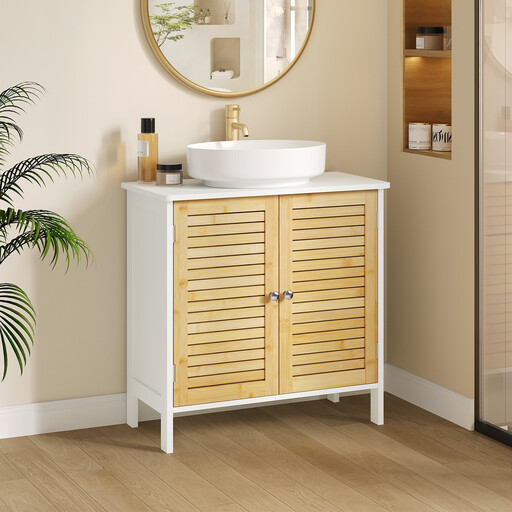
Why we recommend this product: The under-sink cabinet by EUGAD uses a combination of natural bamboo and E1 Class MDF boards. The adjustable internal shelf allows for flexible adaptation to items of varying heights. Magnetic door catches ensure a flush closure.
Advantages:
Who it's for: Individuals who appreciate a modern design with natural elements and require maximum interior flexibility. Ideal for storing bottles and containers of various sizes.
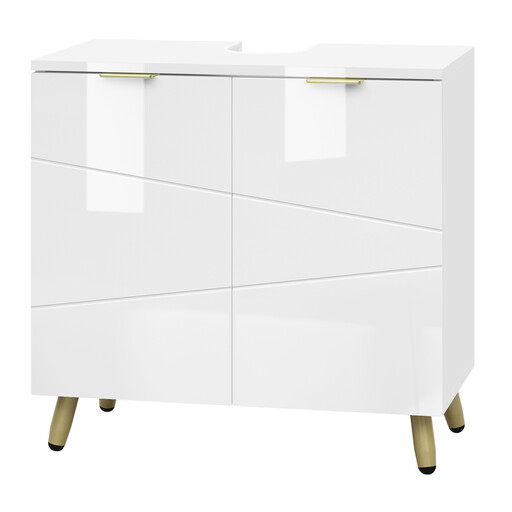
Why we recommend this product: This model is distinguished by its high-gloss UV lacquer finish, which is particularly resistant to moisture and mould. The sturdy, gold-finish metal legs give the bathroom cabinet a modern aesthetic and elevate the body off the floor, simplifying cleaning. The hinges are equipped with a soft-close function.
Advantages:
Who it's for: Users aiming for an elegant, modern bathroom ambience who value high-quality details like soft-close hinges and a low-maintenance, high-gloss surface.
The models presented here offer a selection of functional solutions. If you are looking for other designs, materials, or specific dimensions, you will find a broader range of options in our main category, including complete sets.
Discover more models in the category: Vanities with Sinks
1. How do I correctly measure for a vanity unit? Measure three values: 1. The maximum width of the available space under the sink. 2. The height from the floor to the bottom edge of the sink. 3. The depth from the wall to the front edge, ensuring you leave enough clearance to walk past. Additionally, measure the position and diameter of the siphon pipe to ensure compatibility with the cabinet's siphon cut-out.
2. What does E1 Class MDF mean? The E1 Class is a European standard that defines the limit for formaldehyde emissions from wood-based materials like MDF boards. E1 Class products are considered low-emission and are intended for indoor use, as they do not negatively affect indoor air quality.
3. Can I place a freestanding vanity unit on tiles with underfloor heating? Yes, this is generally not a problem. The surface temperature generated by most underfloor heating systems is too low to damage the cabinet's material. Models with feet that slightly elevate the cabinet body from the floor are particularly advantageous here, as they allow for air circulation.