
Lieferung heute & morgen

Qualitätsgarantie

Willkommens-Angebote freischalten: KOSTENLOSE Lieferung | Bis zu 80 % RABATT | Kostenlose 30-Tage-JoyPlus-Testphase
App herunterladen
A cluttered bathroom with exposed pipes under the sink and nowhere to store towels or cleaning supplies is a common annoyance. An under-sink cabinet is a simple and effective solution to this problem. It not only conceals unsightly plumbing but also creates valuable bathroom storage, contributing to a tidy, harmonious look.
This guide is designed to help you find the right model for your needs. As your Joybuy Product Recommendation Officer, I have compiled objective criteria and product information to provide you with clear guidance during your selection process.
Before making a decision, there are a few fundamental aspects to consider. These will ensure that your new bathroom cabinet fits perfectly into your space, both visually and functionally.
The most important step is to precisely measure the available space. Measure the width, height (from the floor to the underside of the sink), and depth of the area under your sink. A common standard size is a 60 cm wide bathroom cabinet, but numerous other variations are available.
Pay special attention to the dimensions of the siphon cutout. This U-shaped opening in the top panel must be large enough for your drainage pipes. Compare the dimensions of your siphon with the manufacturer's specifications for the cabinet to avoid time-consuming modifications.
The bathroom is a high-moisture environment, so the material properties are crucial. Most modern bathroom cabinets with a siphon cutout are made from MDF (medium-density fibreboard) panels sealed with a water-repellent coating like melamine or lacquer. These materials are low-maintenance and resistant to moisture. A lacquered white bathroom cabinet is a timeless classic that integrates seamlessly into almost any bathroom design.
Consider what you plan to store in the cabinet. Models with adjustable shelves offer flexibility for items of varying heights, such as cleaning bottles and stacks of towels. Cabinets with a combination of doors and drawers allow for even more detailed organisation, enabling you to keep small utensils separate from larger items.
Here is a selection of models that stand out for their practical features and thoughtful design.
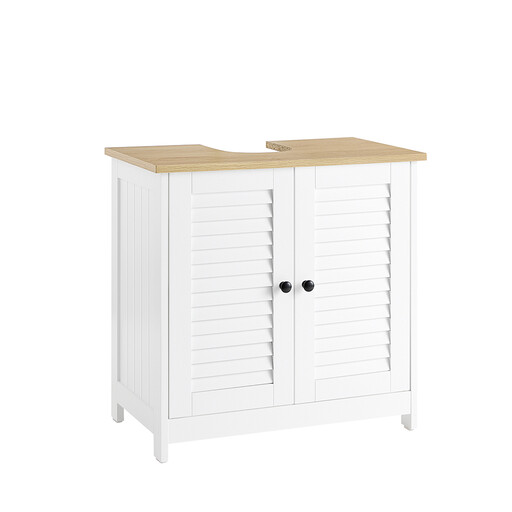
Why it stands out: This model from SoBuy combines a classic look with a clever moisture-regulating feature. The louvered doors ensure continuous air circulation, which helps prevent the build-up of odours and mould inside the cabinet.
Advantages:
Who is it for? For users who prioritise good ventilation in their bathroom to minimise moisture issues. Its timeless design in white and natural wood tones complements many interior styles.
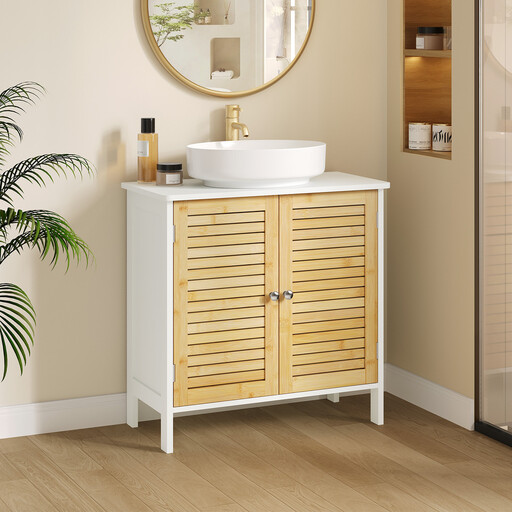
Why it stands out: The EUGAD vanity unit combines the clean lines of a white body with the warm, natural look of bamboo. This material combination creates a modern yet inviting atmosphere in the bathroom.
Advantages:
Who is it for? For anyone who prefers a modern design with natural elements. The combination of functionality and aesthetics makes it an attractive addition to contemporary bathrooms.
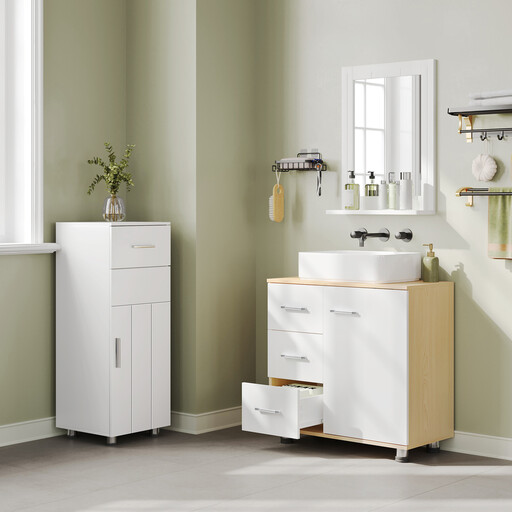
Why it stands out: This model from EUGAD offers a thoughtful layout with both drawers and a door compartment. It is ideal for anyone who wants a clear separation between small bathroom essentials and larger items like towels or cleaning products.
Advantages:
Who is it for? Ideal for those who want maximum order and structured storage in their bathroom. The minimalist design fits well in small or modern bathrooms.
If you prefer a different design or a specific material combination, you can find more models that might suit your bathroom in our White MDF Cabinet category.
Measure three key dimensions:
MDF panels with a protective coating are most commonly used. Lacquered or melamine-coated surfaces are water-repellent, durable, and easy to clean. Elements made of bamboo or solid wood offer a natural look but may require more maintenance, depending on the treatment, to maintain their moisture resistance.
Most under-sink cabinets are designed for self-assembly. Manufacturers typically include numbered components, the necessary assembly hardware, and illustrated step-by-step instructions. With basic tools, assembly is usually straightforward for anyone with some DIY experience.