
Lieferung heute & morgen

Qualitätsgarantie

Willkommens-Angebote freischalten: KOSTENLOSE Lieferung | Bis zu 80 % RABATT | Kostenlose 30-Tage-JoyPlus-Testphase
App herunterladen
A cluttered bathroom with exposed pipes and scattered toiletries can disrupt your morning routine. An under-sink cabinet is a functional solution to make smart use of the often-wasted space beneath your basin, conceal the siphon, and create a sense of order. This bathroom cabinet provides valuable storage in the bathroom and contributes to a tidy, polished look.
As your Joybuy Product Recommendation Officer, I have curated a selection of models based on objective criteria such as material, dimensions, and functionality. The goal of this article is to provide you with a fact-based guide for purchasing your new vanity cabinet.
Before you decide on a model, a few practical considerations will help. These points ensure that your new bathroom cabinet will fit perfectly into your bathroom and meet all your requirements.
The most critical step is to measure accurately. Measure the available width, height, and depth under your sink. A standard size is often the 60 cm wide under-sink cabinet, but numerous other sizes are available. Pay special attention to the siphon cutout. Measure the position and diameter of the drain pipe to ensure the cabinet's recess will fit. A freestanding cabinet requires a level surface, while wall-mounted models need a sturdy wall for installation.
Consider what you need to store. Models with drawers are well-suited for smaller items like cosmetics or shaving accessories, as they provide a quick overview. Cabinets with doors and adjustable shelves, on the other hand, offer flexible space for larger objects like stacks of towels or cleaning product bottles. The choice depends entirely on your personal organisational preferences.
The bathroom is a damp environment, so the choice of material is crucial. Most bathroom furniture is made from MDF (medium-density fibreboard) sealed with a water-repellent coating. These surfaces are easy to clean and resistant to moisture. Look for features like sealed edges and high-quality hardware to ensure long-lasting durability.
Here is a selection of models that stand out for their specific features and design.
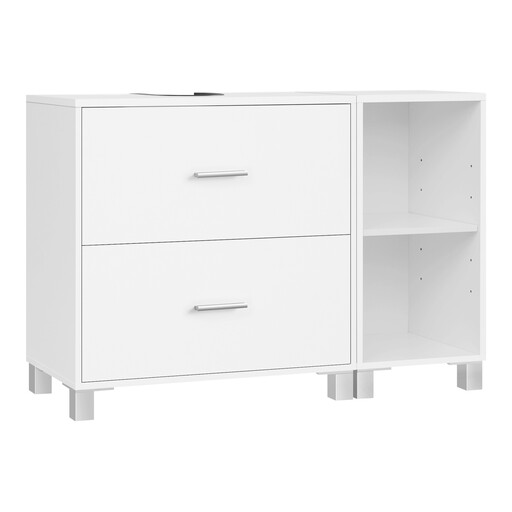
Why it stands out: This model combines a classic bathroom vanity with a versatile side cabinet. This modularity allows it to adapt to various bathroom layouts.
Pros:
Who is it for? For users seeking a flexible and expandable storage solution for a medium to large bathroom, who appreciate the ability to customise the layout.
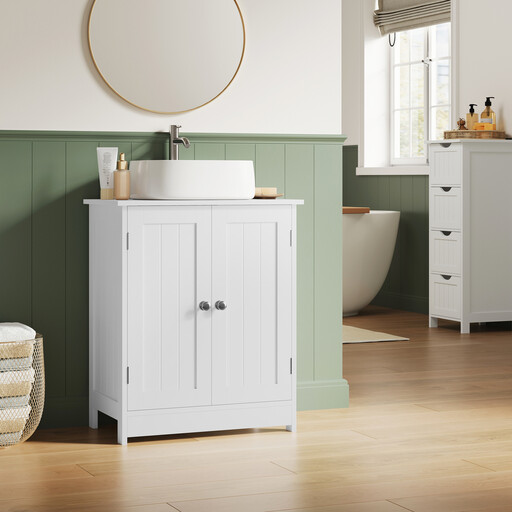
Why it stands out: A compact and minimalist white under-sink cabinet designed specifically for smaller bathrooms. Its clean design blends seamlessly into existing decor.
Pros:
Who is it for? Ideal for renters or homeowners with small bathrooms who are looking for a simple, functional, and budget-conscious solution to create order.
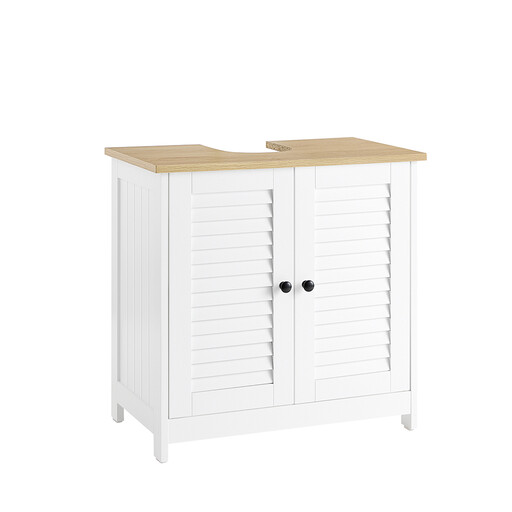
Why it stands out: The distinctive louvered doors not only provide an attractive look but also promote air circulation inside the cabinet.
Pros:
Who is it for? For users who prioritise good ventilation in their bathroom furniture to prevent mildew and prefer a design with a natural aesthetic.
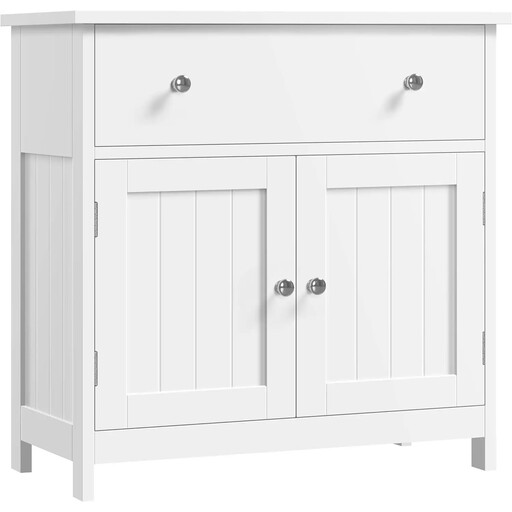
Why it stands out: This model combines functionality with the charm of the farmhouse style. The combination of a drawer and two doors offers structured storage options.
Pros:
Who is it for? For those who follow a specific interior design style and prefer a clear separation between drawer and cabinet storage for better organisation.
Was the perfect model for your needs not among our picks? If you are looking for different sizes, colours, or designs, you might find the right solution in our broader selection of bathroom furniture.
? Explore more models in the Storage Cabinet & Table category here
First, measure the maximum width available under your sink. Next, measure the depth from the wall to the front edge where you want the cabinet to end. Finally, determine the height from the floor to the underside of the sink. The siphon cutout is also crucial: measure the distance from the wall to the centre of the drain pipe, as well as the width of the pipe itself. Compare these measurements with the manufacturer's specifications for the cabinet.
A freestanding cabinet stands directly on the floor and is easy to position. It is often the more straightforward choice for renters. A wall-mounted vanity unit is fixed to the wall. This creates a floating look that makes the room appear larger and simplifies cleaning the floor underneath. However, installation requires a load-bearing wall and a bit more effort.
Wipe the surfaces regularly with a soft, slightly damp cloth to remove dust and water splashes. Dry the surfaces immediately afterwards to prevent moisture from seeping in. Avoid harsh or abrasive cleaning agents, as they can damage the coating. Also, periodically check that all screws and fittings are still tight.