Uniform wearers with limited space
If you iron uniform items regularly but need to store the appliance in a small corner afterwards, you’ll need to think about more than just the base: consider the hose, cable and a safe place to rest the iron too.


If you regularly iron several uniform items and have space for the base, hose and iron, a compact steam generator iron could be an option. Be sure to check both the space it takes up and how easy it is to manoeuvre around narrow areas. If you only occasionally smooth out a single sleeve, a standard steam iron avoids the need for a separate base. In either case, check the care label to see whether ironing and steam are suitable for the garment.
If you iron uniform items regularly but need to store the appliance in a small corner afterwards, you’ll need to think about more than just the base: consider the hose, cable and a safe place to rest the iron too.
When ironing narrow sleeve sections, cuffs and seams, important factors include a well-shaped iron tip, steam control and enough room to manoeuvre.
If your garments have different care instructions, check whether heat and steam are suitable for each item before ironing.
A good fit if: You regularly iron several uniform items and have space for the generator, hose and iron.
The trade-off: A separate base needs space both when in use and in storage. A small base on its own doesn’t tell you whether the complete setup will fit in your ironing area.
A good fit if: You only occasionally smooth out a sleeve and don’t want to make room for a separate generator.
The trade-off: There’s no separate generator tank, but you’ll still need to follow the care label and use a suitable ironing surface.
A good fit if: The label allows ironing without steam only, or says not to iron the garment.
The trade-off: If steam is prohibited, you can only use a dry method that’s suitable for the fabric. If ironing is prohibited, don’t use an iron on that garment.
| Priority | What to check before buying | Who it matters to |
|---|---|---|
| Space for use and storage | Measure the base and allow space for the ironing board, hose, cable and a safe place to rest the iron. | If I need to store the generator in a cramped corner after ironing, the space needed for the whole setup matters to me. Around 33 % of consumers put available space for use and storage first. |
| Control on narrow sleeves | Compare the iron tip, the weight of the hand unit and the adjustable steam and temperature settings. | When ironing cuffs and seams, I want to guide the iron precisely rather than focus only on a powerful steam boost. Around 27 % of consumers prioritise control on narrow areas. |
| Suitability for uniform fabrics | Check the ironing symbol on each garment and whether steam is prohibited. | When my uniform items have different care instructions, I need to follow the label on each one. Around 20 % of consumers consider fabric suitability their top buying priority. |
| Refilling and maintenance | Check how to access the tank, which water is suitable and the descaling process in the instructions for the specific model. | When I iron regularly, I want to know how to refill the tank and what care the appliance needs. Around 20 % of consumers put maintenance and refilling first. |
A small base doesn’t tell you how much room you’ll need for the sleeve, hose and iron while you’re working or resting the iron.
Measure the whole usable work area and allow room to manoeuvre, as well as a safe place to rest the iron.
For narrow areas, manoeuvrability, the iron tip and the right care settings matter too. Philips points out that steam can condense on the ironing board cover.
Compare the iron tip and steam control, and follow the care label rather than choosing based only on the most powerful steam boost.
An appliance setting doesn’t make a garment suitable for ironing. GINETEX lists care symbols that indicate when ironing or steam ironing is unsuitable.
Check the label before each use, even if the appliance controls the temperature automatically.
The Express Essential SV6115 combines a compact base with a precision tip and manual controls.
The CareStyle Compact IS 2144 BK is a vertically designed steam generator with several operating modes.
According to Philips, the PerfectCare 6000 PSG6023/20 has a removable tank and automatic temperature technology.
The Vaporella Simply VS10.10 is a steam generator option with a removable tank and temperature control on the iron.
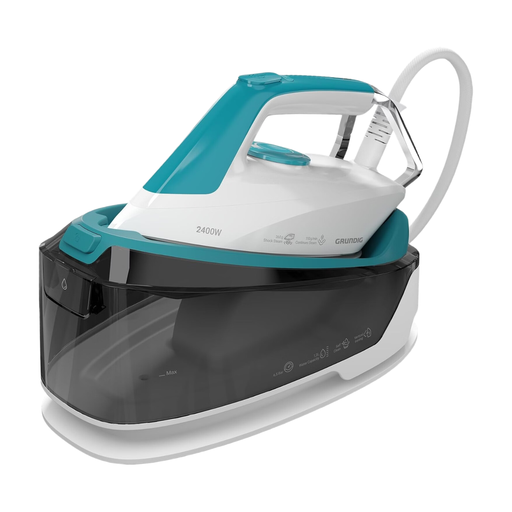
The Joybuy models below are steam generator irons with different tank capacities, steam controls and features to suit a range of needs. Also check whether your uniform’s care label allows ironing and steam, and whether the generator will fit in your available work and storage space.
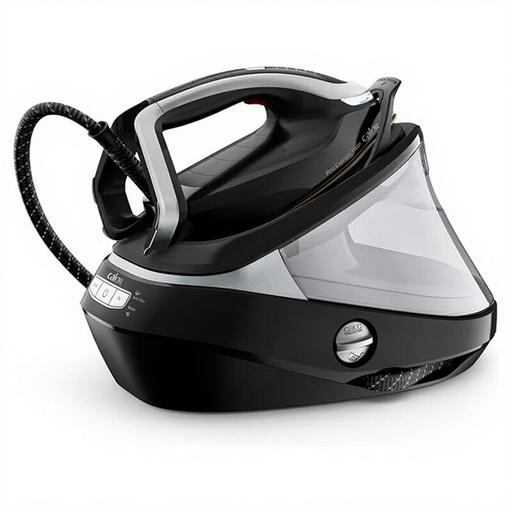 No image available
Could be worth considering for longer ironing sessions if tank capacity and continuous steam are important factors in your choice.
1,2-l tank; continuous steam of 180 g/min; steam boost of 800 g/min; 3000 W.
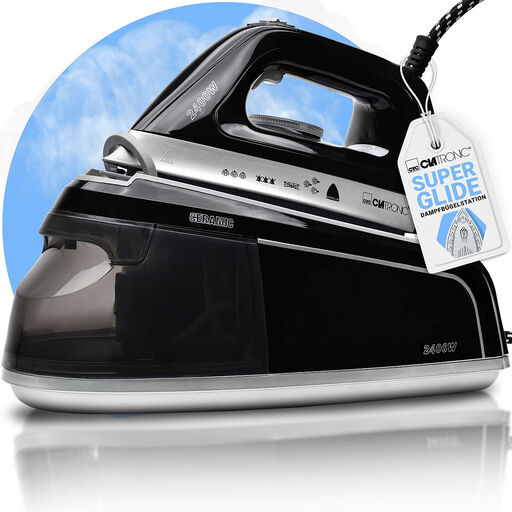 No image available
The listed vertical steaming function may be useful if you also want to freshen up hanging garments.
3,5 bar; steam output up to 90 g/min; removable 1,2-l tank; horizontal ironing and vertical steaming.
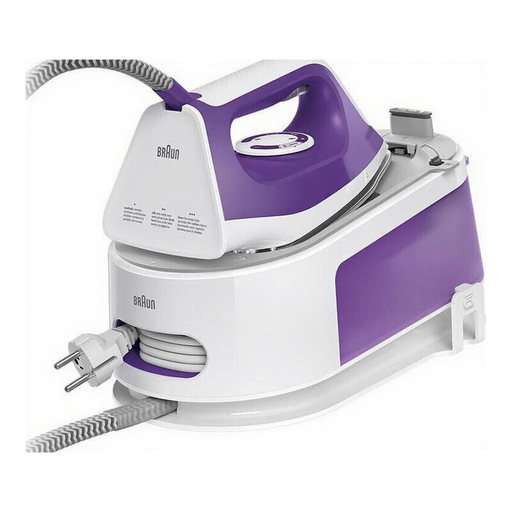 No image available
An option to compare if you’re looking for a separate tank and manual temperature selection.
1,5-l tank; continuous steam of 120 g/min; precision thermostat; vertical steaming.
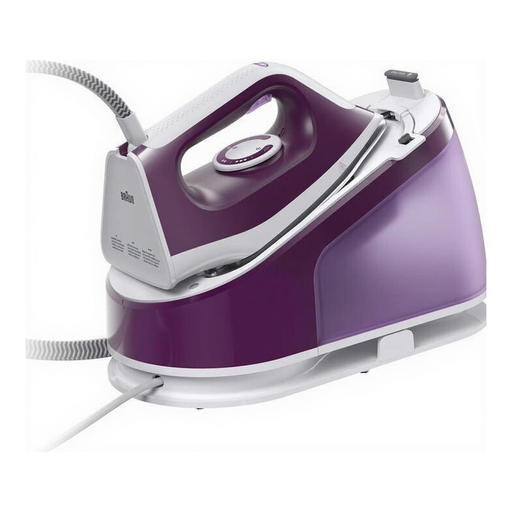 No image available
Could be worth comparing if tank capacity and multiple temperature settings matter for your ironing sessions.
1,7-l tank; continuous steam of 120 g/min; 6 bar; four temperature settings; vertical steaming.
 No image available
An option to compare if continuous steam and vertical steaming are among your requirements.
6,5 bar; continuous steam of 110 g/min; steam boost of 360 g/min; 1,2-l tank.
No. Always follow the care label for the garment in question. GINETEX points out that steam ironing at a maximum soleplate temperature of 120 °C can cause irreparable damage. There are also care symbols that mean a garment shouldn’t be ironed.
Allow space not just for the base, but also for the ironing surface, room to move the sleeve and a safe place to rest the iron. Philips points out that larger amounts of steam can condense on the ironing board cover; this doesn’t mean every board is suitable.
Follow the descaling instructions in the manual for your specific model. Philips explains that limescale build-up increases with water hardness; don’t assume that safety instructions in a Philips manual apply to other models without checking.
When you buy as a consumer, your statutory rights against the retailer are separate from any voluntary manufacturer’s warranty. The Verbraucherzentrale generally states that you have two years’ legal protection against defects that were present when the item was handed over. Online purchases usually also come with a 14-day right to cancel. The specific conditions depend on the contract and the law.
For electrical products covered by Germany’s Electrical Equipment Act, CE marking is required before they can be made available on the market. The European Union explains that CE is the manufacturer’s declaration that the product meets the relevant requirements; it isn’t a safety certificate issued by a central EU body. The marking alone therefore doesn’t prove that a particular product listing meets all the requirements.