Uniform wearers with delicate fabrics
After rain, the key thing is whether the specific uniform item can be ironed, and what temperature or amount of steam its care label allows. GINETEX explains the meaning of care symbols.


For a few uniform sleeves after a rain-soaked commute, a compact steam iron is an obvious place to start, provided the care label allows ironing and the use of steam you have in mind. If the sleeves are very wet, hang them up to dry first. If steam is prohibited or you only need a little, dry ironing at a permitted temperature is a better option. A steam generator iron is not automatically better for such a small job, and it takes up more space and effort to use.
After rain, the key thing is whether the specific uniform item can be ironed, and what temperature or amount of steam its care label allows. GINETEX explains the meaning of care symbols.
If you mainly smooth narrow areas, seams and hems, look for an easy-to-guide soleplate and a precision tip rather than comparing steam output alone.
When you only have a few items to iron after getting home, preparation, refilling and putting the iron away matter too. The German Environment Agency recommends hanging damp laundry up to dry.
Start with the care label and how damp the garment is; then consider how easy the iron is to guide around cuffs, how long you’ll use it for and how much maintenance it needs.
| Consideration | What to check when buying | Who is it especially relevant to? |
|---|---|---|
| Protecting fabric after rain | Care label, including any guidance on steam; temperature and steam settings on the specific appliance. | If my uniform is still damp, I want to know first whether it can be ironed at all, and whether I can use steam. Around 31% of consumers put fabric protection first. |
| Precision around sleeves and cuffs | Soleplate shape and precision tip; handling and cord placement on the exact model. | For narrow sleeves and cuffs, I want to guide the soleplate precisely along the seams rather than focus only on a high steam output. Around 31% of consumers say precise sleeve ironing is their main priority. |
| A quick session after the commute | Model-specific heat-up time, filling the tank and a safe place to rest the iron. | When I get home, I want to smooth a few sleeves without a long set-up or frequent refills. Around 25% of consumers put a quick ironing session first. |
| Limited space and minimal maintenance | Space to let the iron cool safely and the descaling instructions; check whether steam is allowed or needed for the fabric. | If I only iron the occasional item and have limited storage space, easy maintenance and straightforward storage matter more to me than a large tank. Around 13% of consumers prioritise maintenance and space. |
An iron with high steam output does not override a ban on ironing or a restriction on steam. According to GINETEX, an iron symbol with one dot means a maximum soleplate temperature of 110 °C and ironing without steam.
Check the care limits first, then choose your appliance and settings.
Anti-drip is a manufacturer’s claim that applies to a specific model; it does not guarantee that no water will escape in every situation. An independent test found water escaping from some other irons it tested, but that result cannot be applied to every model.
Let the iron heat up fully as instructed, and adjust the steam to suit the fabric and the task.
If water escapes, you may need to allow extra drying time before getting dressed.
The German Environment Agency does not consider a steam generator iron to offer a general advantage over a standard iron for domestic ironing time or energy use. For individual sleeves, set-up and available space matter too.
Only weigh up a steam generator iron against a handheld one if you regularly have significantly more laundry to iron, and have room for it and the time to set it up.
Setting up and storing a separate steam generator takes up extra space and effort.
Braun lists a 270 ml tank capacity for the SI 3055 Schwarz; a similarly named Joybuy listing gives 220 ml. The different specifications do not confirm that these are the same product version.
Before you decide to buy, check the full model version and compare the technical specifications.
The TexStyle-3 range includes steam irons for smaller everyday jobs. The SI 3055 Schwarz is described as having a precision tip, an anti-drip system and automatic shut-off.
The Ultimate Pure FV9844 is aimed at buyers looking for targeted steam, a precision tip and limescale care for fabrics that can be ironed.
The Azur 8000 DST8020/20 is an option for buyers who prefer a handheld iron with a fixed temperature setting and steam function.
The One Temperature 25090-56 is aimed at buyers who want to avoid adjusting the temperature control when ironing a range of suitable fabrics.
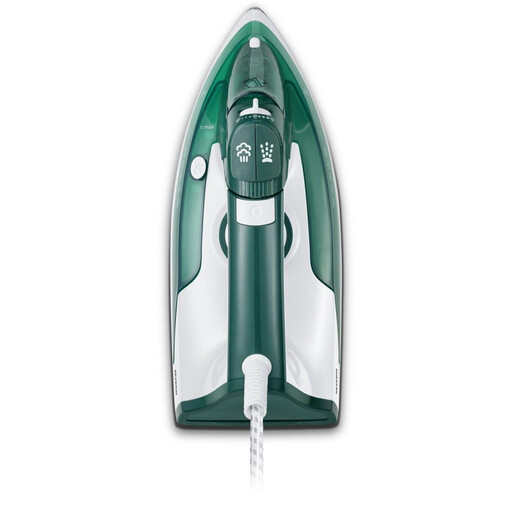
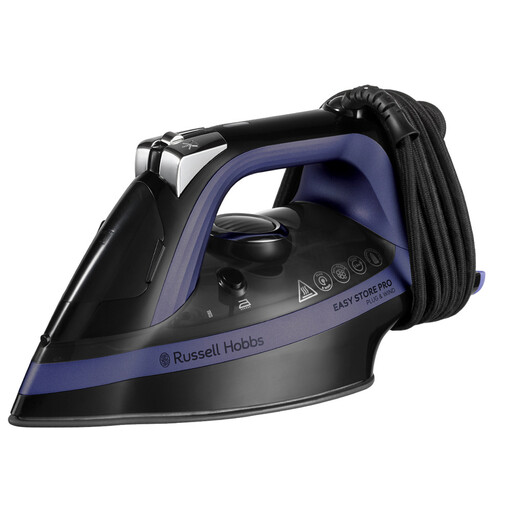
The Joybuy products below are individual steam irons for smaller ironing jobs. Only use steam if the care label allows it.
 No image available
An individual steam iron for sleeves, provided the care label allows steam.
2400 W; steam boost 85 g/min; variable steam output 30 g/min; removable 175 ml water tank; stainless steel soleplate and anti-drip function.
 No image available
An individual steam iron for smaller ironing jobs, if the care label allows steam.
2400 W; One-Temp technology; steam boost 200 g/min; ceramic soleplate; 320 ml water tank; integrated cord storage and automatic shut-off.
 No image available
A handheld steam iron for individual ironing jobs; set the temperature and steam according to the care label.
Non-stick soleplate; automatic cleaning function; anti-drip function.
 No image available
An individual steam iron for uniform sleeves, if the care label allows ironing and steam.
2500 W; continuous steam 40 g/min; steam boost 160 g/min; Eco function and anti-drip system.
 No image available
An individual steam iron for smaller ironing jobs, if the care label allows steam.
Steam boost 280 g/min; vertical steam; XL filling opening; stable heel rest; anti-scale technology, anti-drip system and automatic shut-off.
There’s no general answer without checking the care label and knowing the garment. First check how it can be ironed; the German Environment Agency recommends hanging damp laundry up to dry. An iron is not a substitute for a care method that isn’t permitted.
According to GINETEX, one dot means a maximum soleplate temperature of 110 °C and ironing without steam. Follow the label for the whole garment, rather than relying on a guess about the fibre.
Read the appliance instructions, check the cord and plug, and never leave a plugged-in iron unattended. Unplug it after use and keep it away from children and flammable materials while it cools; automatic shut-off does not replace these steps.
Use only as much steam as the fabric and creases require, and follow the descaling instructions for your specific model. The German Environment Agency notes that generating steam has a significant effect on a steam iron’s electricity consumption.
A new electric iron that falls under the relevant EU product rules requiring CE marking and is placed on the market in Germany must carry the required CE marking. It is the manufacturer’s declaration of conformity, not an independent quality seal; check the marking on the specific product listing.