What should you look for when buying?
Steam iron
A good fit if: you want to press seams, cuffs or a defined crease flat and can provide a suitable ironing surface.
Consider: you’ll need a heat-resistant work surface; vertical steaming does not automatically replace pressing fabric flat.
Compact handheld garment steamer
A good fit if: you mainly want to freshen dry uniform items while they’re hanging and can’t set up an ironing board.
Consider: there’s no evidence that steaming garments while hanging is an equivalent way to create sharply pressed creases; you may still need space for clothes to dry.
Steam generator iron
A good fit if: you regularly iron large loads and have space for both the unit and an ironing surface.
Consider: if you only have a few uniform sleeves to iron and space is limited, factor in the extra unit and the model-specific maintenance requirements.
First decide whether you want to press a crease flat or freshen clothes while they’re hanging. Then consider fabric care and the space available for ironing and drying separately.
| What you need |
What to check before buying |
Who is it most important for? |
| Precise sleeve pressing |
Check the shape and reach of the iron’s tip, as well as whether you have room for a heat-resistant surface. |
If I need to press seams, cuffs or a uniform crease flat and precisely, the right tip is essential. Around 36% of consumers put precise pressing first. |
| Space for ironing and drying |
Plan separately for work and storage space, and for a suitable place to hang clothes to dry. |
If you’re short on space, you may want to freshen clothes without an ironing board while still having somewhere to dry damp garments. Around 29% of consumers prioritise space requirements. |
| Protecting uniform fabric |
Read the care label and check whether you can set the temperature and steam appropriately, or switch steam off. |
If my uniform fabric is delicate, I follow its care limits rather than choosing a powerful steam setting. Around 21% of consumers prioritise fabric care. |
| Use and maintenance |
If you iron frequently, compare the water tank, cord length, automatic shut-off and care instructions for the specific model. |
If you iron regularly, you’ll want to factor ease of use and maintenance into your routine. Around 14% of consumers focus on use and maintenance requirements. |
Joybuy products for pressing sleeves flat
The following Joybuy models are steam irons for pressing fabric flat; you’ll need a suitable heat-resistant ironing surface. Before buying, also check the CE marking on the specific appliance, as a product listing alone doesn’t confirm it.
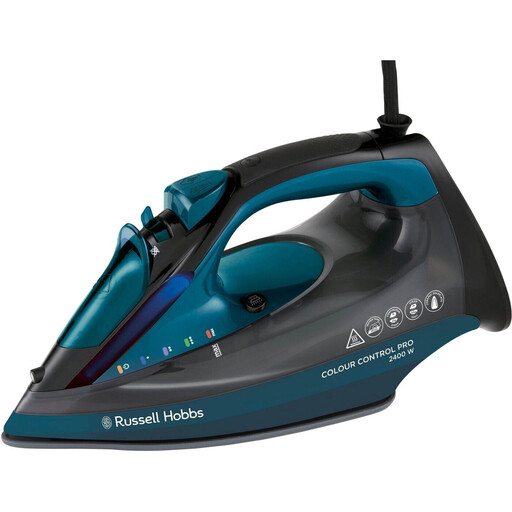 No image available
Russell Hobbs Colour Control Pro 27280-56 steam iron
A steam iron is suitable for pressing sleeves flat; make sure you have a suitable heat-resistant ironing surface.
Features listed include continuous steam, a steam shot, anti-drip function and automatic shut-off.
Joybuy
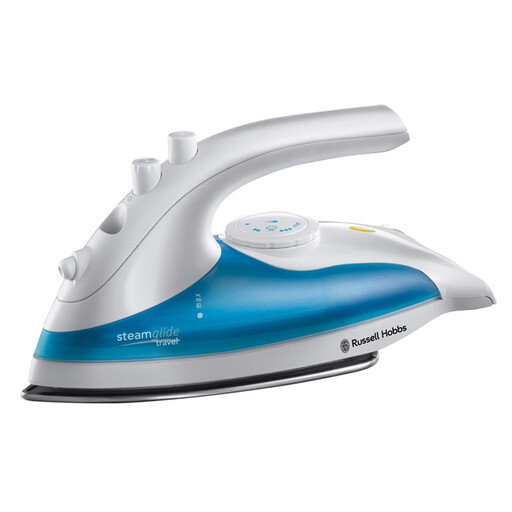 No image available
Russell Hobbs Travel Iron 22470, dual voltage
Described as a travel iron; you’ll still need a suitable heat-resistant ironing surface to press fabric flat.
The product description lists a dry-ironing option, variable steam output and a switchable voltage range of 110–120 V / 220–240 V.
The cord is listed as 1.5 m long.
Joybuy
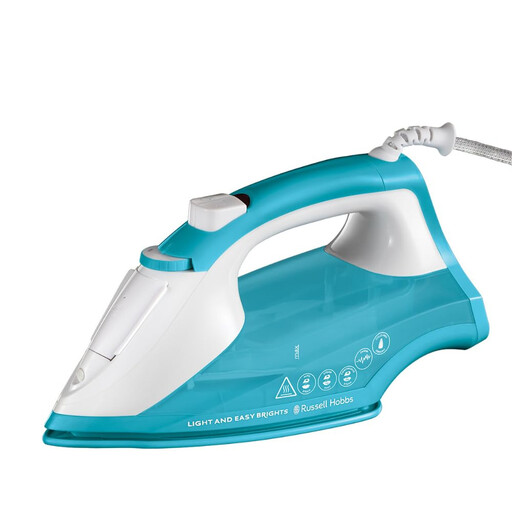 No image available
Russell Hobbs 26482-56 Light & Easy Brights steam iron
This type of iron is an option for pressing sleeves flat; you’ll still need a suitable heat-resistant surface.
Features listed include an automatic steam function, a steam shot and an anti-scale system. The model has a ceramic soleplate.
Joybuy
 No image available
Rowenta DW4320 Express Steam steam iron
You’ll need a suitable heat-resistant surface to press uniform sleeves flat; the additional vertical steam function doesn’t automatically replace one.
The product name lists 2500 W, continuous steam of 40 g/min, a steam shot of 160 g/min, an Eco function and an anti-drip function.
The model is described as having a stainless-steel soleplate.
Joybuy
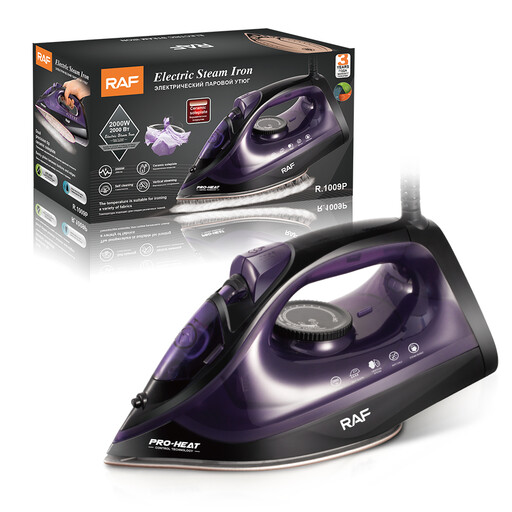 No image available
RAF 1600W steam iron with ceramic soleplate
A steam iron is suitable for pressing sleeves flat; you’ll need a suitable heat-resistant ironing surface.
The product name lists a steam shot, self-cleaning function, vertical steaming and a 210-ml water tank.
The model is described as having a ceramic soleplate.
Joybuy
Frequently asked questions
Can a garment steamer dry washed uniforms and replace drying space?
No. An appliance for freshening hanging clothes is not a proven substitute for drying washed clothes. If space is limited, make sure you still have a suitable place to dry clothes and adequate ventilation; Philips also notes that condensation can cause wet patches with certain steam systems.
What should I do if the care label says to use low heat or no steam?
Follow the care instructions for the specific garment when using heat and steam. GINETEX distinguishes, among other things, between ironing without steam and “Do not iron”; an advertised steam output doesn’t override these limits.
How should I care for a steam iron?
Follow the care and descaling instructions for the specific model. Philips explains that limescale can affect steam output and contribute to staining in the steam generator irons listed on its website; allow a damp ironing mat to dry before putting it away.
What applies in Germany if an appliance is faulty: guarantee or statutory rights?
Your statutory rights against the seller are separate from any voluntary guarantee. If a product is faulty, the first step may be to ask the seller to put things right by repairing or replacing it; the specific circumstances of the purchase and fault will determine what applies. The Verbraucherzentrale explains the difference.
Which safety marking is relevant for a new mains-powered iron?
New mains-powered irons and garment steamers placed on the market in Germany and covered by low-voltage regulations must meet the relevant conformity requirements, including the required CE marking. The Federal Institute for Occupational Safety and Health explains the scope and marking requirements; a product listing alone doesn’t confirm that the specific appliance you buy complies.


