
Lieferung heute & morgen

Qualitätsgarantie

Willkommens-Angebote freischalten: KOSTENLOSE Lieferung | Bis zu 80 % RABATT | Kostenlose 30-Tage-JoyPlus-Testphase
App herunterladen
The development of quadrupedal robots is advancing rapidly. Models once found only in research labs are now accessible to tech enthusiasts, developers, and industrial users. The Unitree robot dog, in particular, has established itself as a key player in the market. However, choosing the right model can be a challenge given the different specifications and use cases.
This article serves as an objective guide. It highlights the technical differences between the available Unitree models and provides a fact-based foundation for making an informed decision when you're looking to buy a Unitree Go2.
The decision to purchase a bionic robot dog depends on your specific requirements. Three key criteria will help guide your choice: the intended use case, the integrated sensor technology, and the relevant performance metrics.
The primary purpose determines the necessary features.
A key feature of modern robot dogs is their ability to navigate autonomously. Unitree uses its proprietary 4D LiDAR systems for this purpose.
Objective metrics are essential for a direct comparison.
Based on the criteria mentioned, here are some models from the Unitree portfolio.
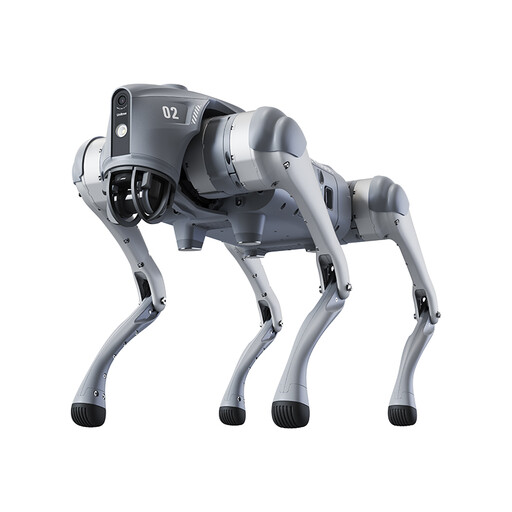
Why it stands out: The Go2 Air is positioned as an accessible entry-level model into the world of bionic robotics. It combines the core features of the Go2 platform with a feature set tailored for tech enthusiasts and hobbyists.
Advantages:
Who is it for? This model is an excellent choice for beginners and tech enthusiasts looking for an advanced AI Pet robot for interactive experiences and who want to learn the basics of quadrupedal robotics.
Why it stands out: The Unitree Go2 Pro significantly expands on the capabilities of the Air model. With higher speed, improved sensors, and additional interaction options, it targets demanding users and prosumers.
Advantages:
Who is it for? The Go2 Pro is designed for users who want to harness the full potential of a modern robot dog, whether for advanced hobby projects, demonstrations, or light surveillance tasks.
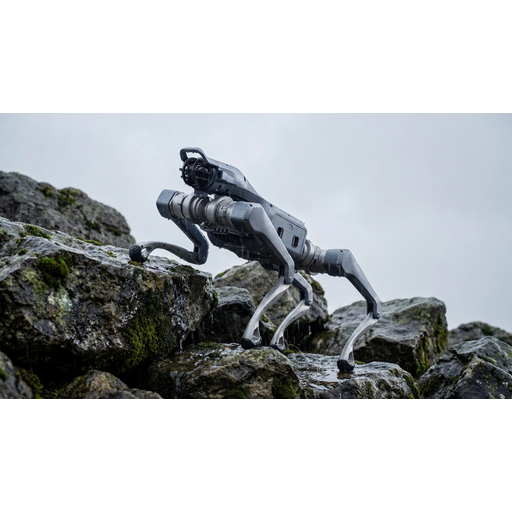
Why it stands out: The AS2 Air marks a step towards industrial applications. With more robust components and, according to the manufacturer, double the dynamic performance of the Go2, it targets the professional market.
Advantages:
Who is it for? This model is aimed at professional users in research institutions and industry who require a robust and high-performance quadrupedal robot for specific, demanding tasks.
The world of robotics is diverse and constantly evolving. If the models presented here don't exactly meet your needs, or if you'd like a broader overview of available technologies, there are other alternatives to explore.
Discover more models in our AI Pet Robot category.
The main difference lies in performance and additional features. The Unitree Go2 Pro offers a higher maximum speed (3.5 m/s vs. 2.5 m/s), a more advanced LiDAR sensor, integrated voice control, 4G connectivity, and a wider range of complex motion routines. The Go2 Air is designed as a more accessible entry-level model with the platform's core features.
The applications are wide-ranging. In the private sphere, it serves as an interactive AI Pet and a tech showpiece. In the professional sector, it is used for security and inspection patrols, data collection in hard-to-reach or hazardous environments (e.g., on construction sites or in industrial plants), and as a platform for research and development in robotics and artificial intelligence.
No programming skills are required for basic operation. Control, camera feed viewing, and action selection are handled via an included remote control and a smartphone app. The app also offers a graphical programming feature, allowing users to create their own motion sequences without writing code. According to the manufacturer, the models presented here do not support further secondary development.