
Lieferung heute & morgen

Qualitätsgarantie

Willkommens-Angebote freischalten: KOSTENLOSE Lieferung | Bis zu 80 % RABATT | Kostenlose 30-Tage-JoyPlus-Testphase
App herunterladen
A precise, reliable universal marker is an indispensable tool in many professional and creative environments. Whether for presentations on an overhead projector (OHP), labelling in a laboratory, or marking on smooth surfaces, the demands are high. Yet, the market is flooded with products that overpromise and underdeliver. The wrong purchase quickly leads to smeared results, illegible notes, or pens that become useless after a short time.
As your Joybuy Product Recommendation Officer, I'll help you identify the crucial features and avoid the common pitfalls. This guide will show you what to look for to find the right universal marker for your specific needs.
Before we dive into the technical details, let's identify the three most common problems that lead to frustration and unnecessary expense.
To avoid these mistakes, focus on three core parameters. These will determine whether a universal marker is suitable for your purposes.
This is the most fundamental decision. The choice depends entirely on your intended application.
The tip determines how fine or broad your writing will be. Manufacturers often use letters for classification:
High-quality pens often offer technological advantages that massively increase their everyday reliability.
Here are some recommendations tailored to specific user profiles, taking the above criteria into account.
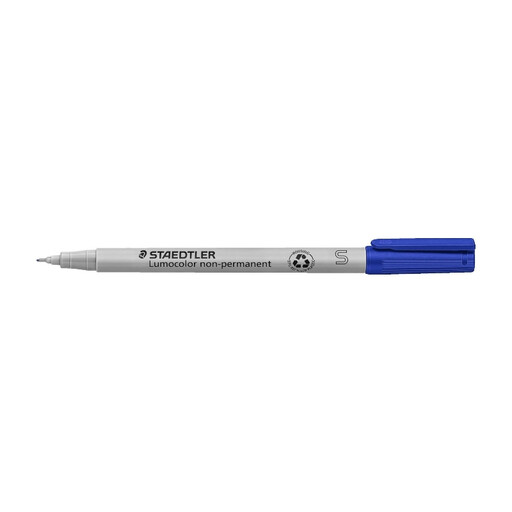
Why This Fits Their Persona: Ideal for lecturers and presenters who need to make detailed yet correctable notes on OHP transparencies or whiteboards. The superfine tip allows for clear diagrams and legible text, even in complex illustrations.
The water-soluble ink prevents the problem of permanent marks on reusable surfaces. A damp cloth is all it takes to clean it.
0.4 mm fine tip for maximum precision; quick-drying to prevent smudges; refillable for sustainable use.
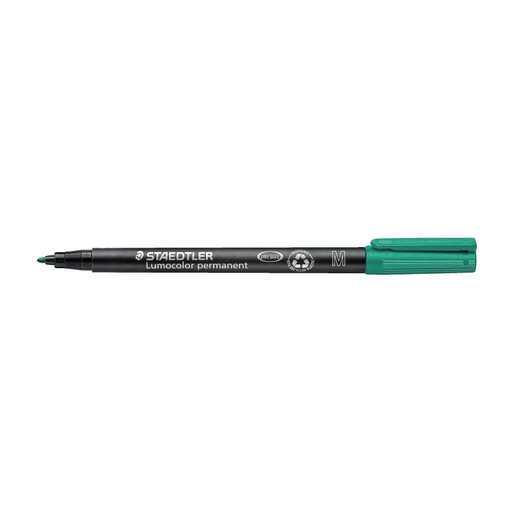
Why This Fits Their Persona: Perfect for professionals in workshops, labs, or logistics who need durable, smudge-proof, and water-resistant labelling on various materials like plastic, metal, or glass.
The DRY SAFE technology prevents it from drying out, even if the cap is forgotten in a hectic work environment. The permanent ink ensures nothing gets smudged.
Water-resistant and smudge-proof ink; low-odour and suitable for many surfaces; Airplane-Safe for use when travelling.
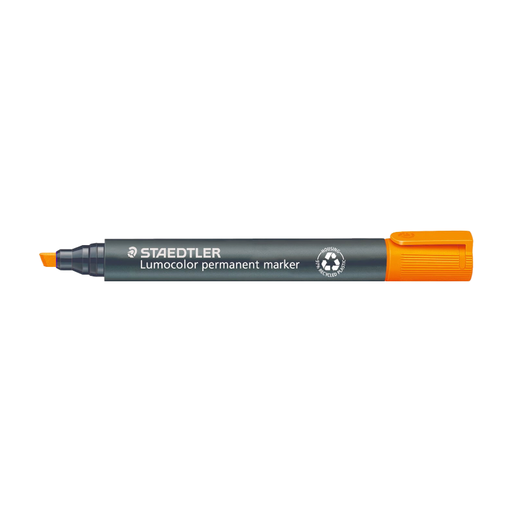
Why This Fits Their Persona: For anyone who needs variable line widths for creative projects, mind maps, or eye-catching labels. The chisel tip allows for a quick switch between broad lines and fine details.
The permanent ink is quick-drying and smudge-proof, which prevents smearing during fast work or for left-handers. The high colour vibrancy ensures visibility.
Variable line width (2-5 mm chisel tip); DRY SAFE technology for long cap-off time; refillable for a long service life.
We've compiled a complete, up-to-date list of products that fully meet these strict selection criteria.
1. What's the difference between a universal marker and a regular permanent marker? A universal marker, sometimes called a multi-surface marker, is specifically optimised for non-porous, smooth surfaces like transparencies, glass, or plastic. Its ink is formulated to adhere well to these materials and not "bead" up, which can happen with many standard markers.
2. Can you use a water-soluble universal marker on a whiteboard? Yes, this is possible. A non-permanent marker like the STAEDTLER Lumocolor adheres well to whiteboards. However, the key difference from a classic whiteboard marker is how it's erased: it cannot be dry-wiped but must be removed with a damp cloth.
3. How do you refill a STAEDTLER Lumocolor pen? Refilling is very simple and resource-friendly. STAEDTLER offers special refill stations (e.g., model 487 15 for water-soluble pens or 487 17 for permanent pens). You simply insert the pen tip-down into the bottle. The pen automatically draws the correct amount of ink without overflowing.