
Lieferung heute & morgen

Qualitätsgarantie

Willkommens-Angebote freischalten: KOSTENLOSE Lieferung | Bis zu 80 % RABATT | Kostenlose 30-Tage-JoyPlus-Testphase
App herunterladen
The classic UNO card game is a staple in many game collections across the country. It's synonymous with straightforward fun and quick rounds. However, the market has evolved and now offers a multitude of variants that expand on the well-known game principle. From UNO Flip to UNO Teams and UNO Junior – the selection can be overwhelming. This guide offers an objective look to help you find the perfect UNO version for your next game night, whether you're looking for a family game or a party game.
Before you decide on a version, the following criteria will help you make your choice.
The composition of your game group is crucial. Are you looking for a card game for kids? Then UNO Junior, with its simplified rules and animal themes, is a natural choice for children aged 3 and up. For a game night with friends or family where strategic coordination is the main goal, UNO Teams is an excellent fit. Classic rounds and parties benefit from the dynamic twists in UNO Flip or UNO Dos.
The original UNO stands out for its simplicity. The newer variants add additional layers:
Consider whether you are looking for a quick, straightforward round or a new strategic challenge.
Most UNO games are designed for 2 to 10 players. For larger groups or parties where interaction is key, variants like UNO Teams are particularly suitable as they encourage communication. For a smaller family group or a two-player game, all versions provide a solid foundation, though the classic rules are often the quickest to explain.
Here you will find a detailed presentation of different UNO games from Mattel, each tailored to different needs.
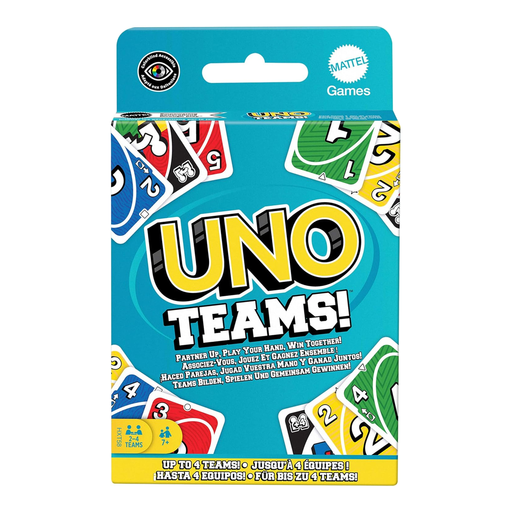
What sets it apart: UNO Teams revolutionises the classic game by having players compete in teams of two. The goal is for the team to collectively play all their cards first. Special team cards and rules promote cooperation and strategic discussion.
Advantages:
Who it's for: Families and groups of friends looking for a new, interactive challenge who enjoy playing in teams. Recommended for players aged 7 and up.
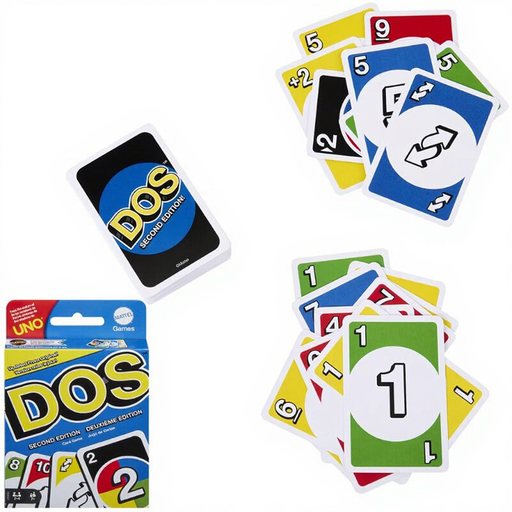
What sets it apart: In DOS, there aren't one, but two discard piles in the centre. Players can play their cards on one or both piles. When a player has only two cards left in their hand, they must shout "DOS!"
Advantages:
Who it's for: Players who enjoy the UNO principle but want to try a new variant with slightly different rules. Suitable for 2 to 10 players aged 7 and up.
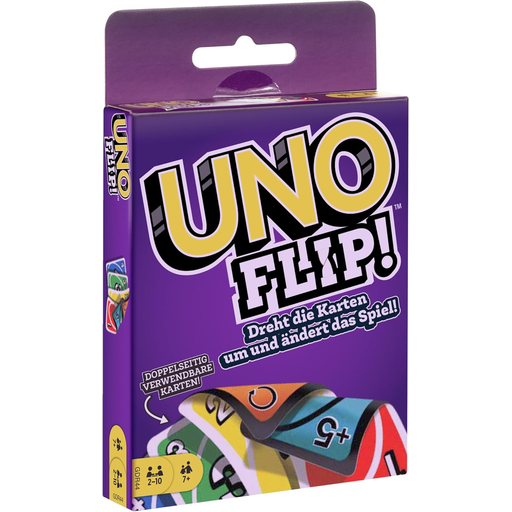
What sets it apart: This game uses double-sided cards. A special Flip card forces all players to turn over their hands and the draw pile. The "dark side" introduces new, tougher action cards, such as a "Draw 5" card.
Advantages:
Who it's for: Anyone looking for a dynamic party game who isn't fazed by sudden turns of events. Recommended for players aged 7 and up.
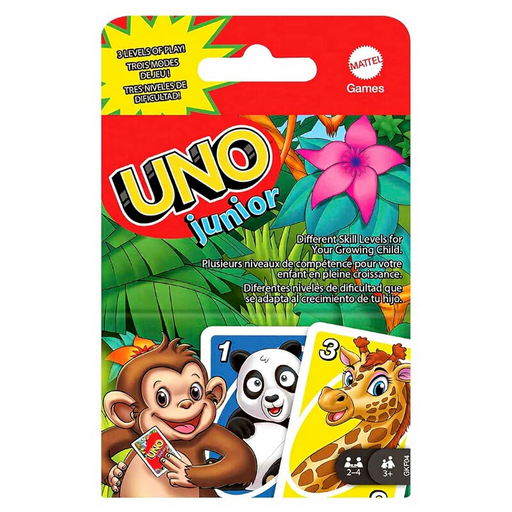
What sets it apart:UNO Junior is specifically designed for children aged 3 and up. In addition to numbers from 0 to 8, the cards feature cute zoo animals, making it easier to match by colour, number, or animal. The game offers three difficulty levels to grow with the child's abilities.
Advantages:
Who it's for: Families with young children looking for a first card game for kids that playfully introduces the principles of UNO.
Haven't found the right game for you yet, or do you want to buy more Mattel games? The universe of card games is vast and diverse.
Discover our entire selection of collectible and card games and find the next highlight for your game night. To the Collectible Toy Cards Category
The main difference lies in the double-sided cards of UNO Flip. While classic UNO is played with a single deck, in UNO Flip, a special "Flip" card can turn the entire game on its head. All players flip their cards to the "dark side," which features different action cards with stricter rules (e.g., "Draw 5" instead of "Draw 4"). This creates more unpredictability.
According to the manufacturer Mattel, the classic UNO card game is recommended for players aged 7 and up. For younger children, there is UNO Junior, which is designed for kids as young as 3. It uses simplified rules and animal themes to ease them into the game.
Yes, all the UNO variants presented here can also be played with two people. The official UNO rules include adjustments for two-player games. This often makes the gameplay faster and more direct, as action cards like "Skip" or "Reverse" have a more immediate impact on the single opponent.