
Lieferung heute & morgen

Qualitätsgarantie

Willkommens-Angebote freischalten: KOSTENLOSE Lieferung | Bis zu 80 % RABATT | Kostenlose 30-Tage-JoyPlus-Testphase
App herunterladen
A spilled drink on the sofa, pet stains on a favourite armchair, or simply the grime accumulated in car seats over the years—textile surfaces in the home and vehicle are exposed to daily wear and tear. A surface-level clean is often not enough to remove deep-seated dirt, stains, or odours. An upholstery cleaner, also known as a spot cleaner, offers a solution for deep-fibre cleaning.
This article serves as your guide. We'll explain how these devices work, outline important selection criteria, and present a range of models for different applications to help make your decision easier.
Choosing the right device depends on your specific needs. Whether you primarily want to clean your sofa, remove stubborn stains from your carpet, or clean your car seats, the following criteria will help guide your choice.
Most upholstery cleaners work using the spray extraction method. This process involves spraying a mixture of water and cleaning solution onto the textile surface under pressure. The liquid dissolves dirt deep within the fibres. A powerful nozzle then immediately vacuums up the dirty water. This principle is what distinguishes a spot cleaner from a standard wet vac, which primarily just vacuums up liquids without actively applying them.
A crucial feature is the tank system. Models with a dual-tank system are particularly convenient. They have separate containers for fresh and dirty water. This ensures that clean water is always used for the cleaning process, significantly increasing hygiene and effectiveness. Pay attention to the tank volume—larger tanks allow for longer cleaning sessions without needing to refill or empty them.
The motor power, often specified in watts, and the suction power are indicators of cleaning strength. For stubborn dirt, a spot cleaner with a heating function can be advantageous. Warm water can enhance the effectiveness of cleaning agents and better dissolve grease or dried-in stains. Some devices also offer steam functions, which can help with disinfection and act as a mite remover, a feature especially relevant for allergy sufferers.
Based on functionality and use cases, we have compiled a selection of models for you.
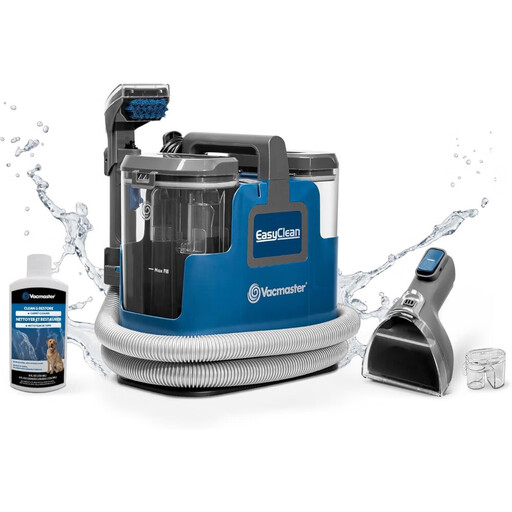
Why it stands out: The Vacmaster SCB0501 is a compact and versatile device, well-suited for basic upholstery and spot cleaning around the house. With its 500-watt motor and lightweight design, it is flexible and easy to use.
Advantages:
Who is it for? This model is a great choice for households looking for a straightforward device for occasional stain removal and refreshing upholstered furniture and car seats.
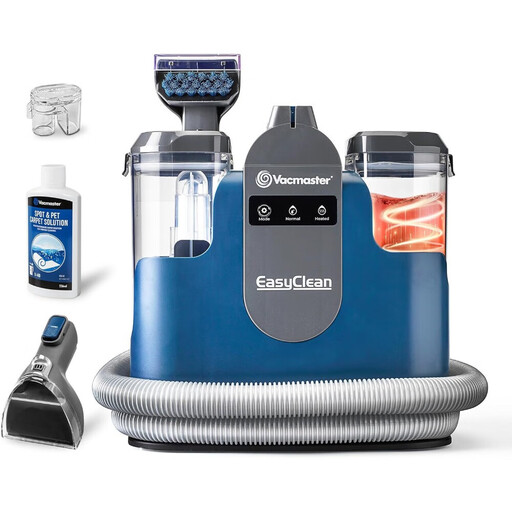
Why it stands out: The Vacmaster SCC1201H distinguishes itself with its selectable heating function. This feature heats the water to boost cleaning performance on stubborn or dried-in stains.
Advantages:
Who is it for? Ideal for families with children, pet owners, or anyone who regularly deals with challenging stains and requires superior cleaning performance.

Why it stands out: The Uwant B400 combines classic spray extraction with a powerful steam function. The steam, generated in 30 seconds, penetrates deep into the fibres, helping to dissolve dirt and bacteria without harsh chemicals.
Advantages:
Who is it for? Especially recommended for allergy sufferers and households where a high standard of hygiene is important. The steam function offers added value over conventional spot cleaners.
Was the right model for your specific needs not listed here? If you're looking for a wider selection of devices for various cleaning tasks in your home and vehicle, you can find more models and accessories in our Wet and Dry Vacs for Cars category.
1. How exactly does an upholstery cleaner (spot cleaner) work? A spot cleaner sprays a water-and-detergent solution onto the surface being cleaned. This liquid loosens dirt from the textile fibres. Simultaneously, or in a second step, the device vacuums up the dirty liquid and collects it in a separate dirty water tank. The result is a deep-down clean.
2. Can you also remove mites with an upholstery cleaner? Yes, models with a steam or heating function, in particular, can significantly reduce the dust mite population. The high temperature of the water or steam helps to kill mites and other microorganisms. For allergy sufferers, this is a key benefit for reducing allergens in mattresses, sofas, and carpets.
3. What should you be aware of when cleaning car seats? Before you begin, test the material's compatibility in an inconspicuous area. Do not use too much water to avoid oversaturating the upholstery, as this can lead to long drying times and odour build-up. Good ventilation in the vehicle after cleaning will speed up the drying process. A compact upholstery cleaner with a long hose is particularly suitable for the tight spaces in a car.