
Lieferung heute & morgen

Qualitätsgarantie

Willkommens-Angebote freischalten: KOSTENLOSE Lieferung | Bis zu 80 % RABATT | Kostenlose 30-Tage-JoyPlus-Testphase
App herunterladen
As a Joybuy Product Recommendation Officer, I see every day how quickly a spilled glass of red wine or muddy paw prints on a new sofa can cause frustration. Reaching for an upholstery cleaner seems like the logical solution. However, the market is flooded with devices whose marketing promises often fall short in practice. Many buyers invest in a machine that gathers dust in a closet after just a few uses because it's impractical, ineffective, or unsuitable for its intended purpose.
This guide will help you identify the key features and avoid the common pitfalls, so you can find an upholstery cleaning machine that reliably solves your cleaning challenges.
Before we dive into the technical details, let's look at the most common reasons for a poor purchase. Understanding these will help you search for a suitable model more effectively.
To avoid the pitfalls mentioned above, you should check three core technical parameters before buying. These determine whether a carpet washer performs its job efficiently and is user-friendly.
An effective upholstery cleaner works on the principle of spray extraction. This means it sprays a cleaning solution under pressure into the fabric to dissolve dirt and immediately vacuums up the liquid along with the dirt. Look for a balanced ratio:
For hygienic cleaning, a system with two separate tanks is essential. One tank holds the clean water (often with a cleaning solution), and the other collects the dirty water.
The practical usability of a device heavily depends on its reach.
Based on the criteria above, we have identified a few models that are particularly well-suited for specific user groups.
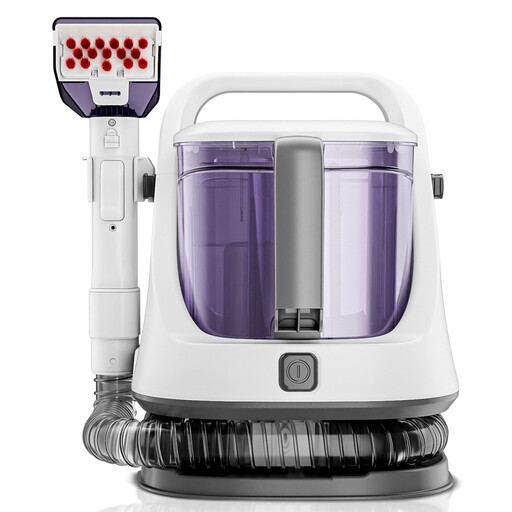
Why This Fits Their Persona: Ideal for users seeking a functional device for occasional stains on the sofa or in the car without a large budget. It offers the necessary core functions in a compact package.
With a 1.4-litre fresh water tank and a 1.2-litre dirty water tank, this model avoids the pitfall of impractically small tanks. The dual-tank system ensures hygienic cleaning.
Offers 12 kPa of solid suction power for most everyday messes. The price-to-performance ratio is excellent for the core features provided.
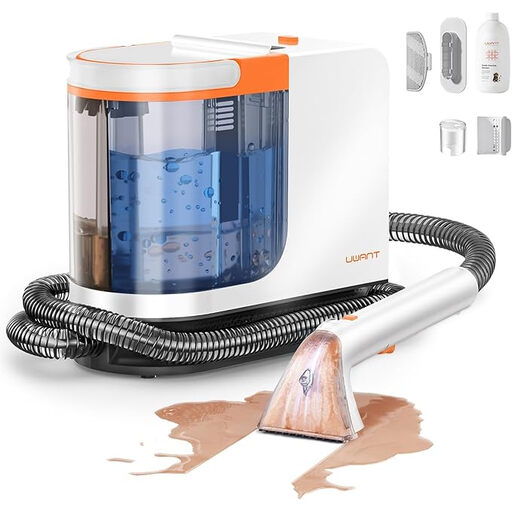
Why This Fits Their Persona: Households with children and pets need high cleaning performance for stubborn and frequent stains. This model is designed for powerful deep cleaning.
The high suction power of 18 kPa is not an empty marketing promise here but a necessity for removing deep-seated dirt like mud or dried-on food. It avoids the pitfall of weak performance.
Very high suction power for effective deep cleaning. The hose's self-cleaning function simplifies maintenance after tackling organic messes.
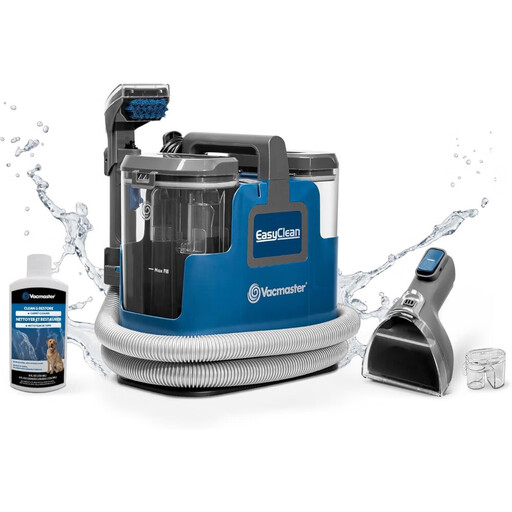
Why This Fits Their Persona: Anyone who wants to professionally detail their own car needs a flexible device with a long reach to thoroughly clean tight footwells, seats, and the boot.
With an integrated 1.8-metre hose, this model offers above-average reach, avoiding the pitfall of short hoses that make car cleaning frustrating.
The combination of a long hose, strong 17 kPa suction power, and a compact body makes it a highly suitable tool for vehicle interior detailing.
We have compiled a complete, up-to-date list of products that fully meet these strict selection criteria and rigorous safety standards.
1. Can I use regular laundry detergent in an upholstery cleaner? This is strongly discouraged. Conventional detergents can create excessive foam and damage the machine's motor. They also often leave behind sticky residues in the fabric that attract new dirt. Only use cleaning agents specifically designed for spray extraction machines.
2. Does a wet vacuum for upholstery leave the surface very wet? A high-quality device with strong suction power (e.g., over 12,000 Pa) extracts most of the moisture. The surface will only feel slightly damp afterwards. Drying time varies depending on the fabric, room temperature, and ventilation, but it typically ranges from two to six hours.
3. How often should you deep clean a sofa with an upholstery cleaner? For general maintenance and hygiene, a deep clean is recommended once or twice a year. In households with children or pets, more frequent cleaning every three to six months may be beneficial to remove odours and deep-seated dirt. Spot stains should always be treated immediately.