
Lieferung heute & morgen

Qualitätsgarantie

Willkommens-Angebote freischalten: KOSTENLOSE Lieferung | Bis zu 80 % RABATT | Kostenlose 30-Tage-JoyPlus-Testphase
App herunterladen
A spilled glass of wine on the new sofa, dirty paw prints from a pet on a favourite armchair, or stubborn stains on car seats—situations like these demand an effective solution. An upholstery cleaner promises a quick fix, but the market is flooded with devices making bold promises. Choosing the wrong model often leads not only to unsatisfactory results but also to wasted money.
As your Joybuy Product Recommendation Officer, I'm here to help you identify the crucial features and sidestep marketing traps. This guide will show you what to look for to find a device that truly meets your needs.
Many buyers focus on prominently advertised metrics that have little practical significance. Watch out for these typical pitfalls:
To make an informed decision, you should focus on three core technical aspects. These determine whether a wet cleaner for upholstery will reliably do its job.
The cleaning performance of an upholstery cleaner, often called an upholstery washer vacuum, is based on the interplay of water, cleaning solution, and suction. The suction power, specified in Pascals (Pa) or Kilopascals (kPa), is a key metric here. It describes the strength of the vacuum the device uses to pull the dirty water out of the fabric.
The motor power in Watts (W) indicates how much energy the motor consumes. An efficiently designed device can generate high suction power with a moderate wattage. Therefore, pay attention to the ratio of both values rather than just a high watt rating.
A high-quality sofa cleaning device always features a system with two separate containers: one for fresh water (often with a cleaning solution) and one for the suctioned dirty water. This principle prevents already dissolved dirt from being spread back onto the surface being cleaned. Pay attention to the following points:
The effectiveness of a device depends heavily on the included nozzles and brushes. A good electric upholstery stain remover should offer at least two basic attachments:
Models with integrated brushes are particularly effective as they mechanically work the cleaning solution into the fibres, thus loosening even stubborn dirt.
Instead of making a one-size-fits-all recommendation, we have identified products tailored to specific needs.
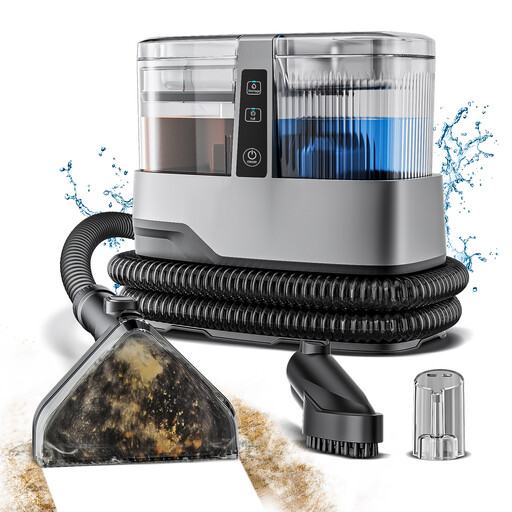
Why This Fits Their Persona: Ideal for households that need to react quickly to small accidents. The compact design allows for easy storage and immediate readiness without having to pull out a large appliance. Perfect for targeted stain removal on the sofa or in the car.
This model bypasses the "wattage trap" by combining high suction power of 17 kPa with an efficient 600-watt motor. It delivers powerful results without relying solely on high power consumption.
The combination of strong suction and a compact, handheld design makes it a very practical tool for quick and targeted stain fighting.
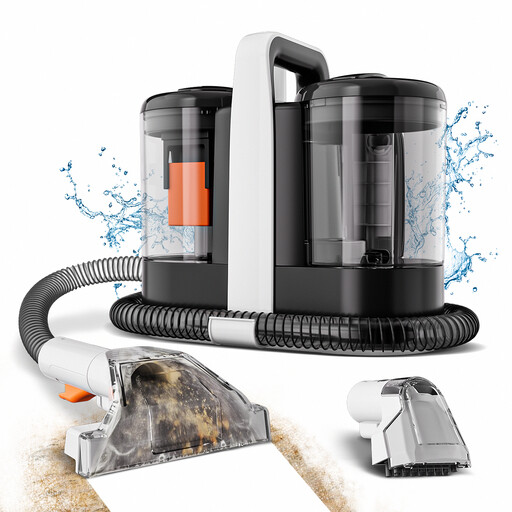
Why This Fits Their Persona: For users planning a complete deep clean of upholstery, carpets, or the entire car interior. The large tanks and long operating radius are designed for extended use.
With a 1.5-litre fresh water tank and a 0.8-litre dirty water tank, this device directly addresses the trap of impractical tank sizes. This allows for long working sessions without constant interruptions.
The generous tank capacity, combined with a long hose and power cord, ensures maximum operating radius and efficiency for large cleaning projects.
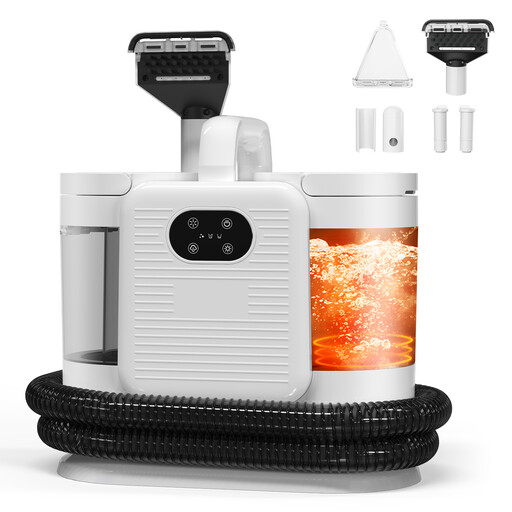
Why This Fits Their Persona: Perfect for allergy sufferers, families with small children, or anyone who prefers hygienic cleaning without the use of chemicals. The hot steam dissolves grease and dirt while also having a sanitising effect.
This device avoids the trap of limited versatility by combining two technologies: high-temperature steam (≥90°C) for loosening and sanitising, and a suction function to remove the moisture.
The ability to clean with pure water vapour makes it an eco-friendly option suitable for sensitive individuals. The simultaneous suction ensures faster drying times.
We've compiled a complete, up-to-date list of products that fully meet these strict selection criteria and UK safety regulations.
1. Does a wet cleaner for upholstery leave water marks? When used correctly and with a device that has sufficient suction power, water marks are avoided. The suction function is designed to immediately remove the majority of the moisture along with the dirt from the fabric. To be on the safe side, it is recommended to always clean an entire surface (e.g., a complete seat cushion) from seam to seam, rather than just treating a single spot.
2. Can I use normal tap water in the upholstery cleaner? Yes, in most cases, normal tap water can be used. However, in regions with very hard (calcareous) water, using distilled water may be beneficial to prevent limescale buildup in the device over the long term. Please refer to the manufacturer's specific recommendations in the user manual.
3. How often should you use an upholstery cleaner? For targeted stain removal, the device should be used as soon as possible after the mishap occurs. A deep cleaning of heavily used furniture like sofas or car seats is recommended once or twice a year, depending on use, to remove deep-seated dirt and allergens and to extend the life of the upholstery.