
Lieferung heute & morgen

Qualitätsgarantie

Willkommens-Angebote freischalten: KOSTENLOSE Lieferung | Bis zu 80 % RABATT | Kostenlose 30-Tage-JoyPlus-Testphase
App herunterladen
As a Joybuy Product Recommendation Officer, I see every day how quickly a spilled drink on the sofa or muddy paw prints in the car can cause frustration. An upholstery cleaner promises a quick fix, but the market is flooded with devices making bold advertising claims. Many buyers soon find that their new machine only treats stains superficially or develops an unpleasant odour after just a few uses.
To help you make an informed decision, I'll show you the most common pitfalls to avoid when buying and which technical features truly matter.
Manufacturers often advertise with impressive numbers and features. But not all that glitters also cleans deeply. Pay special attention to these two points to avoid a bad investment:
To truly deep clean upholstery, carpets, or car seats down to the fibres, you should look for the following technical specifications.
A true upholstery cleaner, often called a spot cleaner or suction extraction device, works on a simple but effective principle:
This process is crucial for removing not only surface dirt but also deep-set stains, allergens, and odours. A simple portable vacuum cannot do this.
A hygienic and effective device always features a dual-tank system:
This strict separation ensures that only a clean solution is used for cleaning. Make sure that both tanks are easy to remove, fill, and, most importantly, clean. A sufficient capacity (e.g., over 1 litre for fresh water) reduces the need to constantly interrupt your work for refills, which is particularly advantageous when cleaning a sofa or larger areas.
The choice between a corded and a cordless model depends heavily on the intended use:
Here are some models that represent a considered choice for specific needs, based on their technical specifications and design.
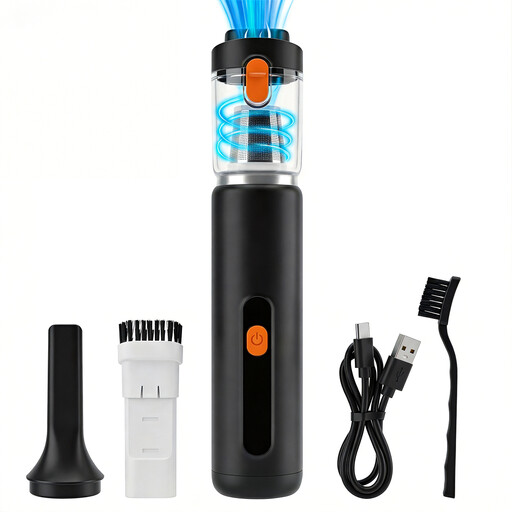
Why This Fits Their Persona: Ideal for car owners and anyone needing a quick solution for dry messes like crumbs, dust, or pet hair. Its slim design fits in a car's cup holder, and it's always ready to go thanks to its cordless operation and USB-C charging.
This device is a dry-only vacuum, bypassing the hygiene trap of poorly designed wet cleaners. It focuses on one job—powerfully suctioning loose debris—and does it very well with up to 10,000 Pa of suction power.
High Portability: Compact, cordless, and lightweight. Two Suction Modes: A standard mode for longer runtime and a MAX mode for stubborn dirt.
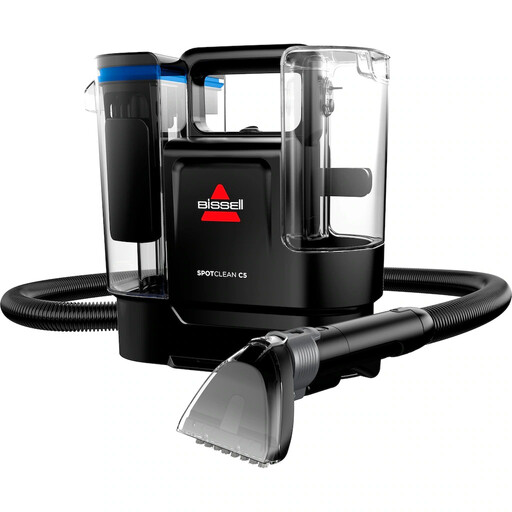
Why This Fits Their Persona: For families and pet owners who regularly deal with stains on carpets, sofas, and car seats. This corded device offers consistent power for targeted stain removal.
This model directly addresses the hygiene trap with a clear dual-tank system and a HydroRinse self-cleaning tool. This flushes the hose after use, preventing the build-up of odours and bacteria.
Triple-Action System: Sprays, scrubs, and suctions in one go. Powerful Suction: With over 15 kPa, its power is designed for extracting dirty water.
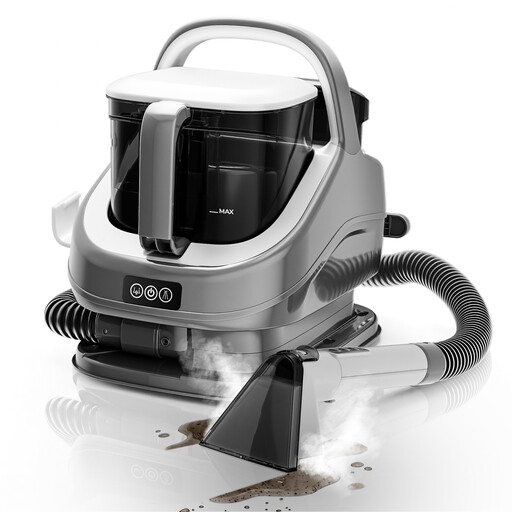
Why This Fits Their Persona: For users seeking a versatile solution for various types of stains. Whether it's fresh spills, set-in stains, or greasy residues, the three modes (cold water, hot water, steam) offer a tailored cleaning strategy.
This device avoids the suction power trap not just by relying on kPa values, but by offering additional physical cleaning methods with hot water and steam. These more effectively break down grease and tough dirt, making extraction easier.
3 Cleaning Modes: Maximum flexibility for different types of stains. Large Water Tanks: With a 1400 ml fresh water and 1200 ml dirty water tank for longer cleaning sessions.
We've compiled a complete, up-to-date list of products that fully meet these strict selection criteria and rigorous safety standards.
For basic hygiene, a deep clean is recommended once or twice a year. In households with children, pets, or allergy sufferers, more frequent cleaning, such as every three to six months, may be beneficial. Stains should always be treated as quickly as possible.
Yes, most upholstery cleaners are also excellent as a carpet cleaner for spot cleaning or for cleaning smaller rugs and runners. For cleaning entire rooms, larger carpet cleaning machines are often more suitable, but for individual stains, an upholstery cleaner is ideal.
Only use cleaning solutions recommended by the device manufacturer or those explicitly designed for use in spot cleaners and suction extraction devices. Conventional household cleaners or dish soap can create too much foam and damage the device's motor or leave sticky residues in the upholstery that attract new dirt.