
Lieferung heute & morgen

Qualitätsgarantie

Willkommens-Angebote freischalten: KOSTENLOSE Lieferung | Bis zu 80 % RABATT | Kostenlose 30-Tage-JoyPlus-Testphase
App herunterladen
A spilled glass of wine on the new sofa, muddy paw prints on the carpet, or simply the dinginess that has settled on car seats over the years—these types of stains are stubborn. A conventional vacuum cleaner is powerless against them. An upholstery cleaner, also known as a spray extraction device, promises a deep-fibre clean. But the market is flooded with devices whose marketing claims often outshine their actual cleaning results.
Before you make a purchase, it's crucial to understand the most common pitfalls that lead to disappointment and unnecessary expense:
To make an informed decision, you should focus on the technical parameters that directly influence cleaning performance. These objective criteria will help you separate the wheat from the chaff.
An upholstery cleaner operates on the principle of spray extraction. A nozzle sprays a mixture of water and cleaning solution under pressure onto the textile surface. This dissolves dirt deep within the fibres. Almost simultaneously, a powerful suction nozzle vacuums up the liquid along with the dissolved dirt.
The crucial factor for a thorough clean and short drying time is the suction power, specified in Pascals (Pa). A higher value means more water is pulled from the fabric, which not only increases cleaning efficiency but also minimises the risk of mould and unpleasant odours. Look for values of at least 12,000 Pa (12 kPa) for effective upholstery cleaning.
A high-quality upholstery cleaner is always equipped with a two-tank system:
This system ensures you are always working with a clean solution. The tank capacity (in litres) is an important convenience factor. Larger tanks mean you have to refill water or empty the dirty water tank less often, which is particularly advantageous when cleaning large areas like carpets. For targeted spot cleaning on upholstery or in the car, more compact tanks are often sufficient and make the device more manageable.
The versatility of an upholstery cleaner depends directly on its accessories. For comprehensive use, the following attachments should be included or available as accessories:
Instead of making a blanket recommendation, we have identified models tailored to specific user profiles and their requirements.
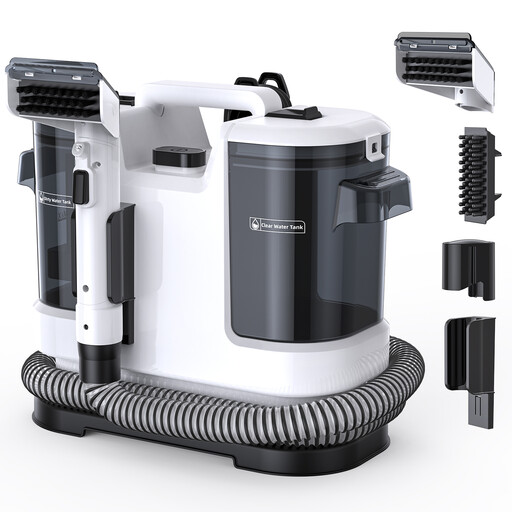
Why This Fits Their Persona: Ideal for users who want to spot-clean individual stains on their sofa, carpet, or in their car without investing in a large, expensive machine. Its compact design makes it easy to store.
The device specifies a clear suction power of 13,500 Pa and features a dual-tank system. This helps it bypass the typical weaknesses of entry-level models that have vague performance specs and unhygienic tanks.
Compact, lightweight design. Focused power for targeted stain removal as a dedicated upholstery spot cleaner.

Why This Fits Their Persona: Perfect for cleaning car interiors, carpeted stairs, or RVs. The cordless design offers maximum freedom of movement in places without direct access to a power outlet.
Despite being battery-powered, the device delivers a strong suction power of 15 kPa. Its integrated hose self-cleaning function also prevents the build-up of odours and residue—a common problem with upholstery cleaners.
Cordless freedom for maximum mobility. Hygienic hose self-cleaning function for lower maintenance.
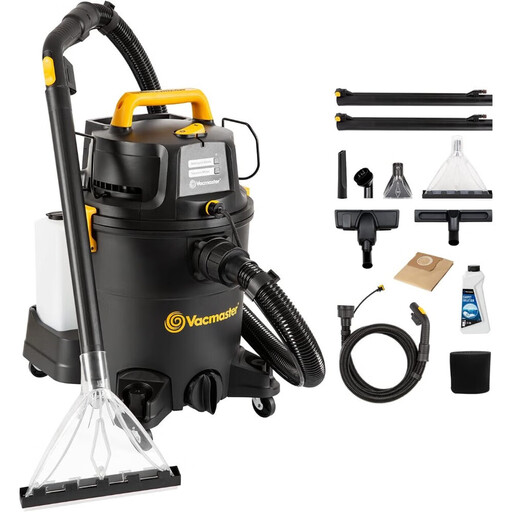
Why This Fits Their Persona: For homeowners and families looking for a multifunctional powerhouse for various cleaning jobs—from annual deep carpet cleaning to vacuuming up liquids in the basement or garage.
This model is a full-fledged wet/dry vacuum with a washing function. Its large 23-litre capacity and robust dual-tank design make it far more powerful and versatile than pure upholstery cleaners.
3-in-1 functionality (washing, wet vacuuming, dry vacuuming). Large tank volume for extended cleaning jobs without interruption.
We have compiled a complete, up-to-date list of products that fully meet these strict selection criteria and German safety regulations.
Tap water is generally not a problem. However, it is crucial to use only cleaning agents that are approved by the manufacturer for spray extraction devices. Conventional household cleaners or dish soap can create excessive foam and damage the device's motor. Always follow the instructions in the user manual.
The cleaning effort is manageable and important for the device's longevity. After each use, the dirty water tank and fresh water tank should be emptied and rinsed with clean water. The nozzle and hose should also be briefly rinsed to remove any residual dirt and cleaning solution. This prevents the build-up of unpleasant odours.
For a general hygienic deep clean and to refresh colours, using it once or twice a year is recommended. In households with children, pets, or for allergy sufferers, a quarterly cleaning can be beneficial to reduce allergens and deep-seated dirt. Acute stains should always be treated as quickly as possible.